Clear Sky Science · en
Biogenic selenium extract-mediated and total Convolvulus oxyphyllus extracts suppress IL6 and COX2 expression: insights from LC–MS metabolite profiling and molecular docking
Why this matters to everyday health
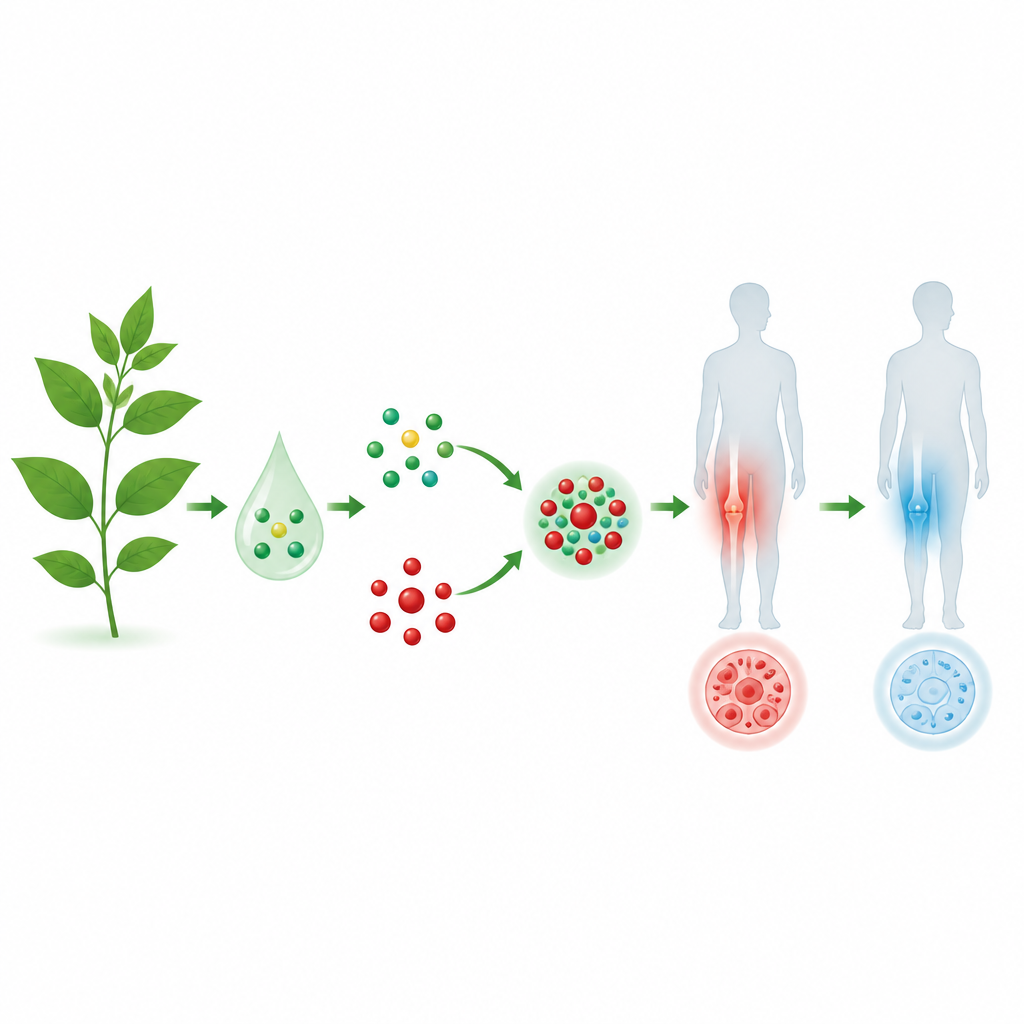
Many long term illnesses, from heart disease to arthritis, are fueled by slow, smoldering inflammation inside the body. Today, common painkillers help by dialing down this response, but they can irritate the stomach, strain the kidneys, and affect the heart when used often. This study looks at a desert plant, Convolvulus oxyphyllus, and a trace mineral, selenium, to see whether their combination might gently quiet key inflammatory signals inside immune cells, hinting at future natural helpers for managing inflammation.
A desert plant under the microscope
Convolvulus oxyphyllus is a little studied member of the morning glory family that folk healers have used for pain and swelling. To understand what is inside this plant, the researchers prepared an alcohol extract from its aerial parts and ran it through a highly sensitive chemical scanner called LC–MS. This tool separated and identified dozens of natural molecules. They found that flavonoids, a large family of plant pigments also present in berries and tea, dominated the mixture. Among the most abundant were quercetin and several complex flavonoid sugars, along with smaller amounts of phenolic acids, coumarins, alkaloids, and other constituents that together form a rich chemical cocktail.
Tiny selenium carriers from a green process
The team then used the plant extract itself to build selenium nanoparticles, tiny spheres made of the essential trace element selenium. Instead of harsh chemicals, they relied on compounds in the plant extract plus vitamin C to reduce selenium salt into bright red particles only a few billionths of a meter across. Detailed imaging showed mostly round, well dispersed particles, while light scattering and X ray measurements confirmed their size and crystal structure. The difference between the compact metal core seen by electron microscopy and the larger size measured in liquid suggested that plant molecules coat the particles, helping them stay stable in water and potentially improving how they travel in biological fluids.
Testing the plant and nanoparticles on immune cells
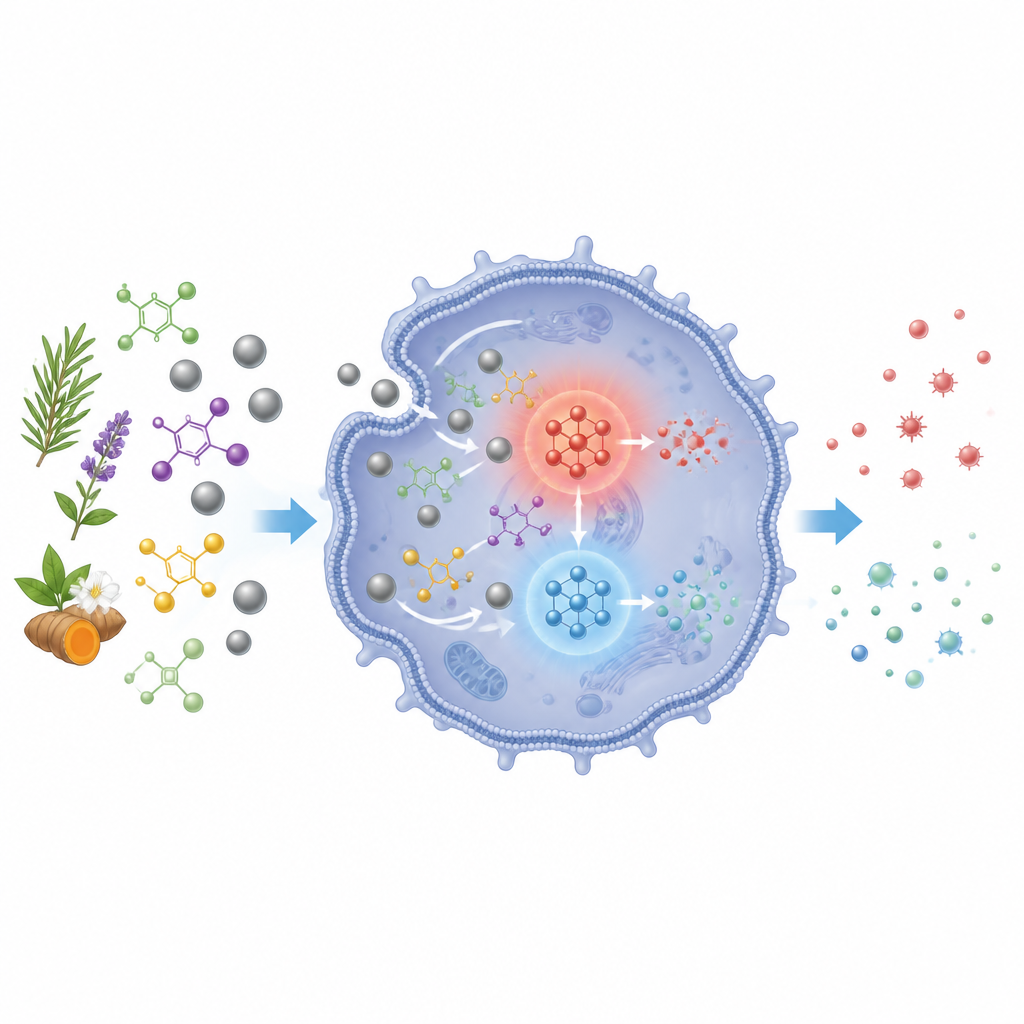
To see whether these preparations actually affect inflammation, the scientists turned to a common laboratory model: mouse macrophages, immune cells that pump out alarm signals when challenged by bacterial components. They exposed these cells to a strong inflammatory trigger and then treated them with either the plain plant extract, the selenium nanoparticles made with the extract, or the prescription drug celecoxib for comparison. After a day, they measured how much the cells had dialed back two important inflammatory messengers inside their genetic machinery, IL 6 and COX 2. Both the plant extract and the selenium nanoparticles sharply reduced the activity of these genes, with the nanoparticle form achieving reductions similar to celecoxib, suggesting that packaging the plant compounds on selenium carriers makes them more potent inside cells.
Peeking at how the molecules might fit
Because it is difficult to watch tiny molecules interact directly with their targets, the researchers also used computer modeling to predict how major flavonoids from the plant might sit within the three dimensional shapes of IL 6 and COX 2. By virtually docking these plant compounds into the known structures of the proteins, they estimated how snugly each one might bind. Some flavonoid sugars showed predicted binding strengths that matched or even surpassed celecoxib at COX 2, and one had the best predicted fit at IL 6. These models do not prove that the compounds actually block these proteins in the body, but they help explain why the plant extract and its nanoparticle form could influence inflammatory pathways and highlight which molecules deserve further testing.
What this could mean for future care
In simple terms, this work suggests that a traditional desert plant, especially when paired with tiny selenium carriers, can nudge overactive immune cells to quiet two central inflammatory switches. The study does not show that these preparations are safe or effective treatments for people, and the authors stress that full animal studies and careful testing of protein levels, doses, and safety are still needed. Still, by combining modern chemical profiling, cell biology, and computer modeling, the research points toward plant based and nano sized approaches that might one day complement existing anti inflammatory drugs with gentler, multi target options.
Citation: El-Halim, M.D.A., Mohamed, N.H., El-Meligy, R.M. et al. Biogenic selenium extract-mediated and total Convolvulus oxyphyllus extracts suppress IL6 and COX2 expression: insights from LC–MS metabolite profiling and molecular docking. Sci Rep 16, 14967 (2026). https://doi.org/10.1038/s41598-026-49047-4
Keywords: plant flavonoids, selenium nanoparticles, chronic inflammation, IL6 COX2, natural anti inflammatory