Clear Sky Science · en
Evaluation of innovative dual-layer modified polyethersulfone membranes in the control of biofouling
Cleaning Saltwater for a Thirsty World
As freshwater becomes scarcer, many regions are turning to the sea for drinking water. Desalination plants already supply millions of people, but their filters often clog with layers of living slime made by bacteria. This hidden buildup, known as biofouling, makes water treatment slower, more expensive, and more energy hungry. The study in this paper explores a new, greener way to coat desalination membranes so they stay cleaner for longer by both discouraging bacteria from settling and quietly killing those that come too close. 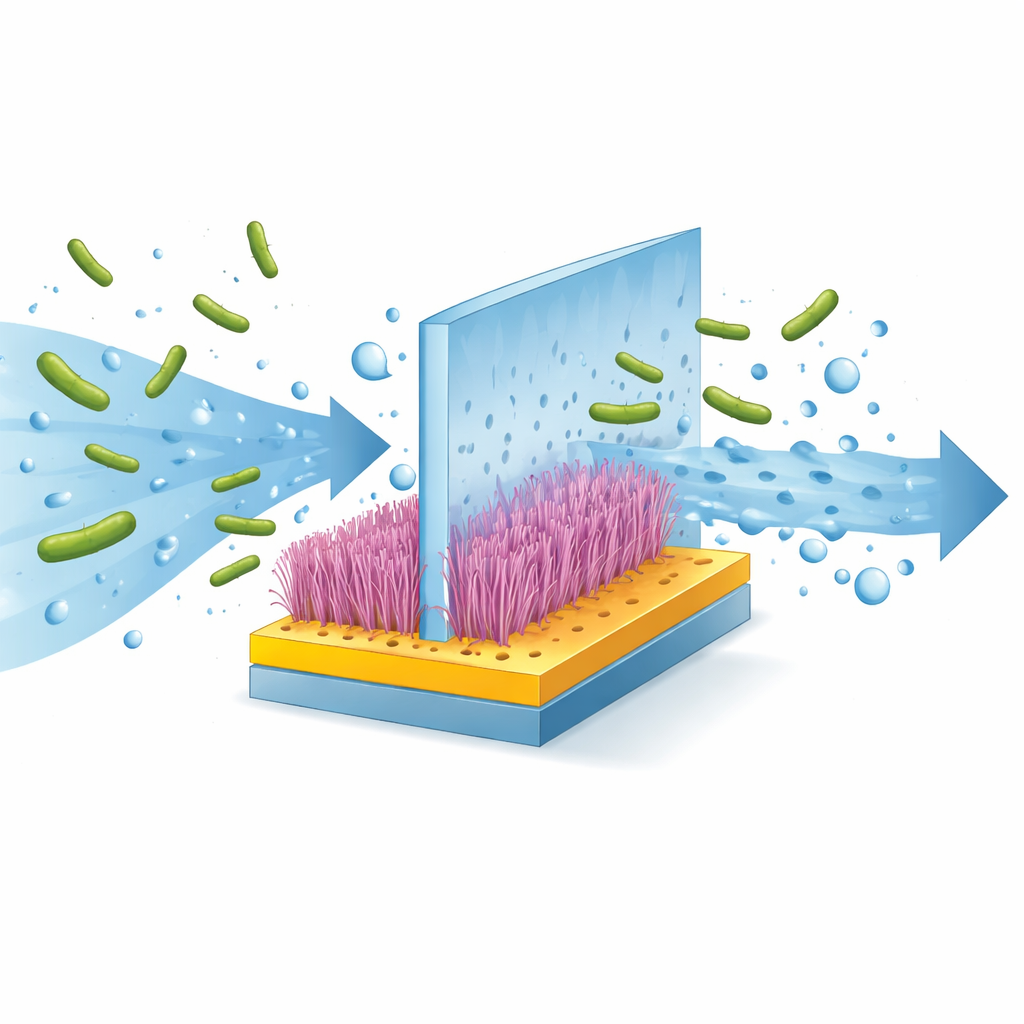
Why Filters Get Slimy
Modern desalination plants rely on thin plastic-like sheets called membranes that let water molecules pass while holding back salt and other impurities. Over time, bacteria drifting in seawater land on these surfaces and secrete a sticky mixture of sugars and proteins, creating a tough film that clogs the pores. Traditional defenses include harsh chemicals, frequent cleaning, and metal-based additives, all of which raise costs and can harm the environment. The authors focus on polyethersulfone (PES), a widely used membrane material that is strong and stable but naturally tends to attract foulants because it is relatively water-repelling, giving bacteria and proteins an easy foothold.
Building a Two-Layer Protective Coat
The team designed a new surface treatment that acts like a double shield on top of the PES membrane. First, they use an enzyme called laccase, borrowed from a wood-rotting fungus, to gently attach a layer made from a small molecule called 3-aminophenol. This base layer forms brush-like structures that stand up from the surface, increasing how much the membrane “likes” water and physically pushing away incoming cells and particles. Next, they use the same enzyme strategy to graft a second, outer layer made from plant-derived phenolic acids, including 4-hydroxybenzoic, gallic, syringic, and vanillic acids. These natural compounds are known for their ability to disrupt bacterial membranes, interfere with energy production, and disturb the chemical signals bacteria use to organize into biofilms.
Putting the Coating to the Test
To see how well the new coatings worked, the researchers exposed small discs of unmodified and modified membranes to a mixed community of five bacterial strains, some taken from the Mediterranean Sea and others common medical and laboratory species. They tested the membranes under different temperatures, salt levels, and pH values that mimic real seawater conditions. Several independent methods were used to track how many bacteria attached, how many survived, and how much biofilm formed. They measured cloudiness of the water, counted living colonies on growth plates, used a hemocytometer to count total cells, and visualized the surfaces with high-powered electron and atomic force microscopes. 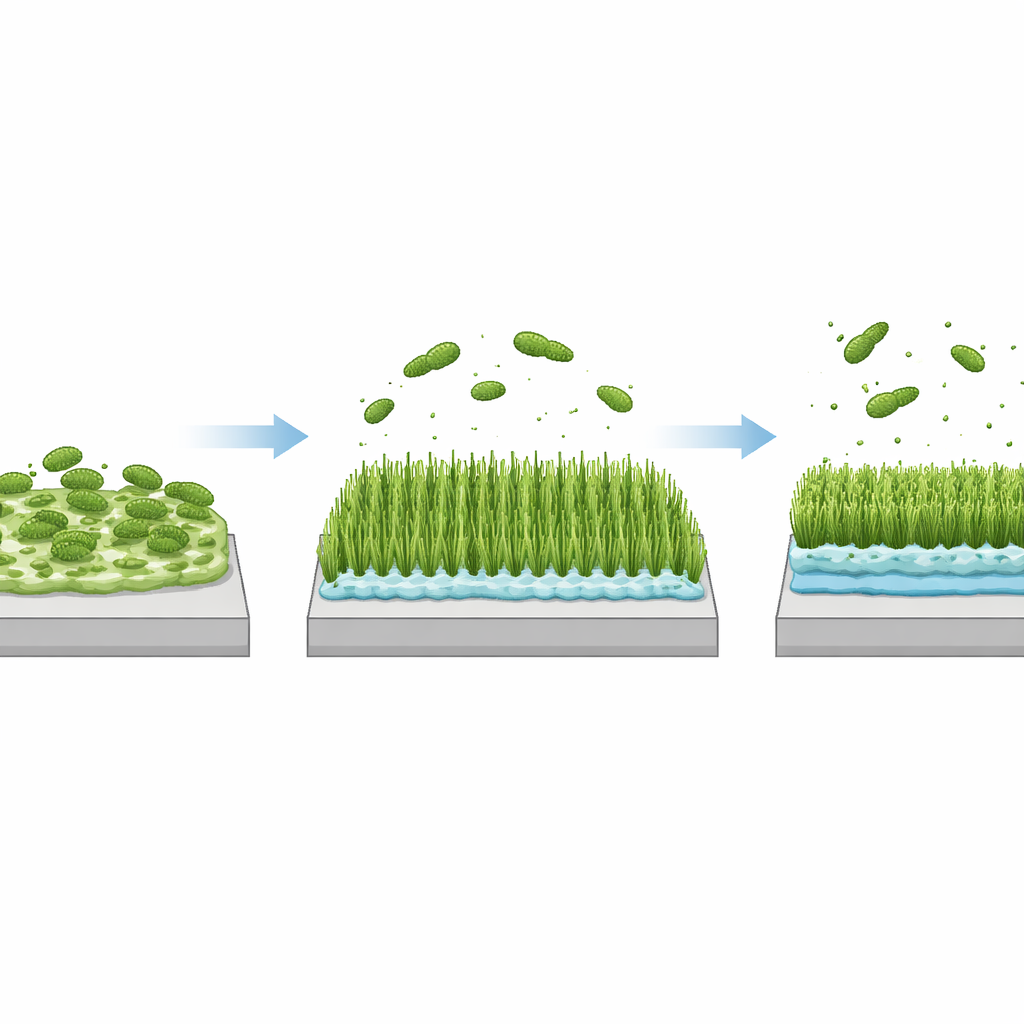
What Changed on the Membrane Surface
Physical tests showed that the dual-layer coatings significantly changed the way water and bacteria interacted with the membranes. The treated surfaces became much more water-loving, with water droplets spreading out instead of beading up—an important sign that they are less inviting to sticky foulants. Some versions, especially those with 4-hydroxybenzoic acid or syringic acid as the top layer, also became rougher on the nanoscale and developed complex “brush” or “pancake” surface patterns. Despite the extra roughness, which is often linked to worse fouling, these particular textures worked together with the chemistry of the plant acids to reduce bacterial attachment. In some cases, bacterial inhibition reached 99.9%, and one design cut the number of living cells able to detach from the surface by about three-quarters.
Cleaner Filters and Clearer Water
For non-specialists, the key takeaway is that the researchers have created a membrane coating that both keeps bacteria at arm’s length and delivers a gentle antimicrobial hit where it is needed most—right at the surface of the filter. The 3-aminophenol base layer acts like a soft, hydrated cushion that makes it harder for cells to stick, while the outer phenolic acid layer quietly weakens or kills bacteria that linger. This dual action reduces the thick biological films that normally clog desalination membranes, which could help plants run longer between cleanings, use less energy, and lower operating costs. Because the approach relies on enzyme-driven reactions and plant-based chemicals rather than harsh industrial reagents, it also points toward more sustainable ways to keep water treatment systems clean in a warming, more crowded world.
Citation: Nasser, N., Hassouna, M.S.ED., Salem, N. et al. Evaluation of innovative dual-layer modified polyethersulfone membranes in the control of biofouling. Sci Rep 16, 14655 (2026). https://doi.org/10.1038/s41598-026-48923-3
Keywords: desalination membranes, biofouling control, antibacterial coatings, enzyme-catalyzed surface modification, water treatment technology