Clear Sky Science · en
Molecular and immunohistochemical characterization of intestinal macrophages subsets in goldfish
A Closer Look at the Goldfish Gut
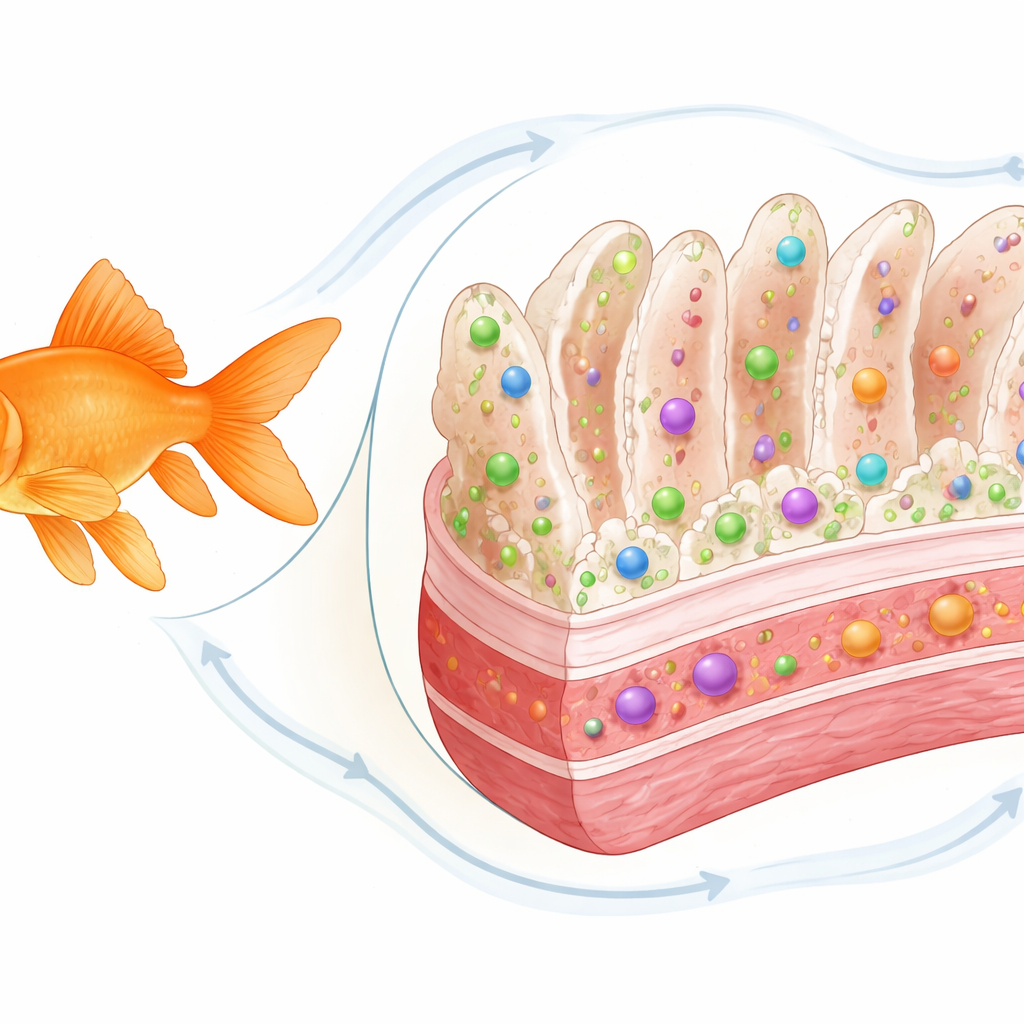
The gut is not just a simple food tube—it is one of the body’s busiest front lines, packed with nerves and immune cells that constantly negotiate peace with trillions of microbes. This study peeks into that hidden world in an unexpected animal: the common goldfish. By mapping key immune cells inside the fish intestine and the signals they use, the researchers show how gut immunity and gut motion may be tightly linked, with lessons that reach beyond aquariums to general vertebrate biology.
Why Gut Immune Cells Matter
The intestine has a huge surface area that must absorb nutrients while keeping harmful germs at bay. To do this, it relies heavily on resident immune cells called macrophages. These cells gobble up invaders, help repair tissue, and talk to nearby nerves and muscle. In mammals, macrophages in the thin inner lining differ from those buried deeper in the intestinal wall, where they can influence how the gut moves. Much less is known about this division of labor in fish, even though fish face a constant microbial onslaught in the water around them and are increasingly raised in dense aquaculture settings where gut health is crucial.
Key Signals Guiding Gut Defenders
The team focused on chemical signals known as colony-stimulating factors, which act like growth and survival cues for macrophages. In goldfish, they identified two closely related versions of a signal called CSF1 and two matching receptor genes that sit on macrophage surfaces. By comparing gene sequences from goldfish to those in other related fish, they confirmed that these are conserved players in the immune toolkit. Measurements of gene activity showed that three of the four genes are most active in the brain, where they likely support brain-resident immune cells, while one receptor version is especially abundant in the intestine, hinting at a gut-specialized macrophage population.
Mapping Hidden Cell Neighborhoods
To see where these cells actually sit, the researchers used fluorescent antibody staining on thin slices of goldfish intestine. They found macrophages scattered through three main layers: the inner mucosa that faces the gut contents, the supportive submucosa, and the outer muscle coat that drives gut movement. Many macrophages carried markers for CSF1 and its receptor, but not all did, revealing a mix of subtypes. Additional markers such as CD14 and CD86, commonly used to define immune cell flavors, further underscored this diversity. Some macrophages were nestled just under the surface lining, where they may patrol for microbes, while others clustered deep in the muscle layer.
Links Between Immune Cells and Gut Motion
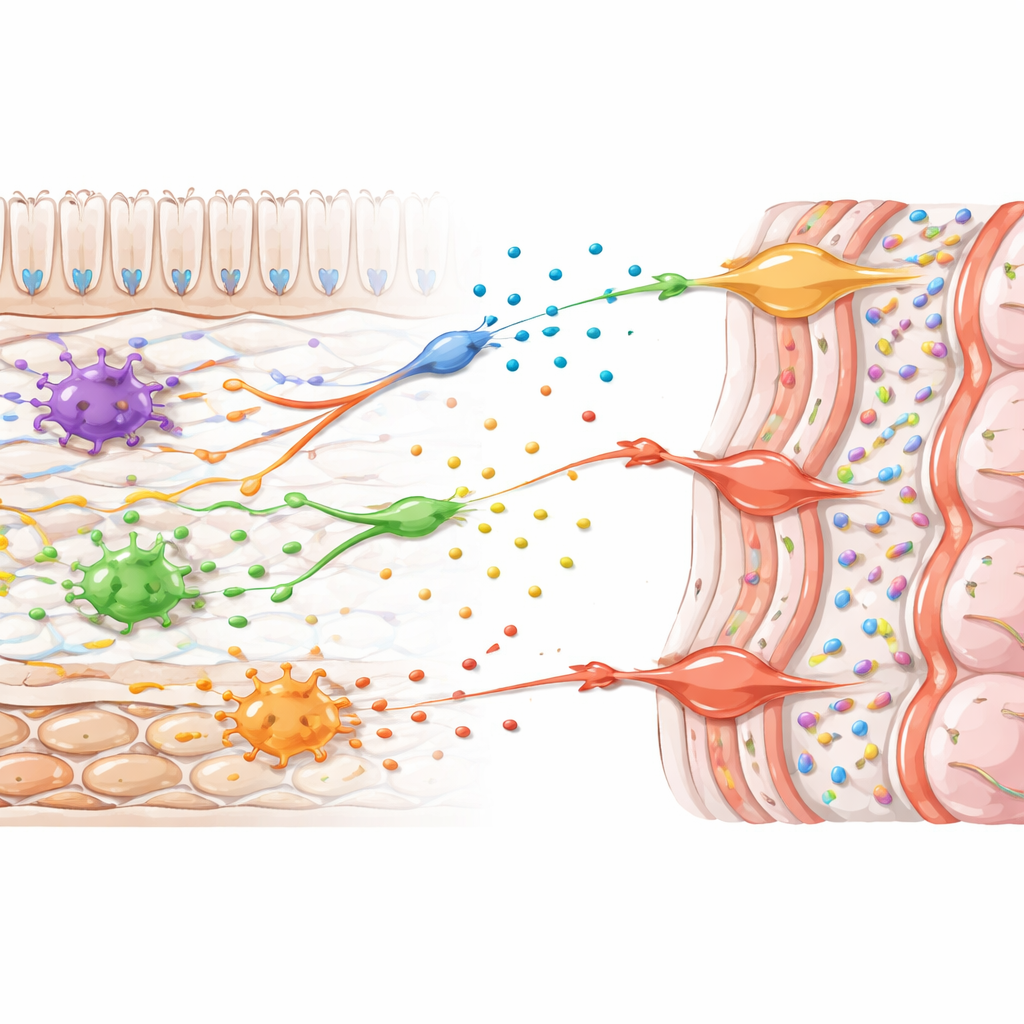
A particularly intriguing finding involved a signal called BMP2, previously known in mammals to connect gut macrophages and enteric neurons, the nerve network that runs the digestive tract. In the goldfish, a subset of macrophages in the outer muscle layer produced BMP2 and lay close to nerve fibers coursing between the muscle bands. Other macrophages sat near nerve-like structures labeled with a structural protein, suggesting physical contact points where immune cells and nerves might exchange signals. When the team counted stained cells, they found that nearly half of the CD14-positive macrophages bore the CSF1 receptor, with substantial fractions also positive for CSF1 or BMP2, reinforcing the idea of several coexisting, specialized macrophage groups.
What This Means for Fish and Beyond
Overall, the study paints a detailed picture of a layered macrophage network in the goldfish intestine. One gene variant of the CSF1 receptor appears tuned to the gut, and macrophages are distributed in distinct niches from the mucosal surface down to the muscle. The presence of BMP2-producing macrophages near gut nerves suggests that, as in mammals, immune cells may help fine-tune how the intestine contracts and maintains balance with microbes. While the work stops short of testing function directly, it lays a molecular and anatomical foundation for future experiments. For lay readers, the takeaway is that even a small aquarium fish has a remarkably sophisticated gut immune system, offering a model to understand how nerves, immune cells, and microbes cooperate to keep digestive tracts healthy across vertebrates.
Citation: Zaccone, G., Mokhtar, D., Albano, M. et al. Molecular and immunohistochemical characterization of intestinal macrophages subsets in goldfish. Sci Rep 16, 14397 (2026). https://doi.org/10.1038/s41598-026-48801-y
Keywords: intestinal macrophages, goldfish immunity, gut–brain axis, fish gut health, neuroimmune crosstalk