Clear Sky Science · en
Decreased serum MG53 levels are associated with SHBG and androgen excess in women with polycystic ovary syndrome
Why this hormone puzzle matters
Polycystic ovary syndrome, or PCOS, affects millions of women and is best known for irregular periods, excess body hair, and trouble getting pregnant. But it is also tied to weight gain, blood sugar problems, and long term heart risks. This study asks whether a little known repair protein in the blood, called MG53, might help link the hormone changes in PCOS with its metabolic side, offering clues to better risk tracking in the future. 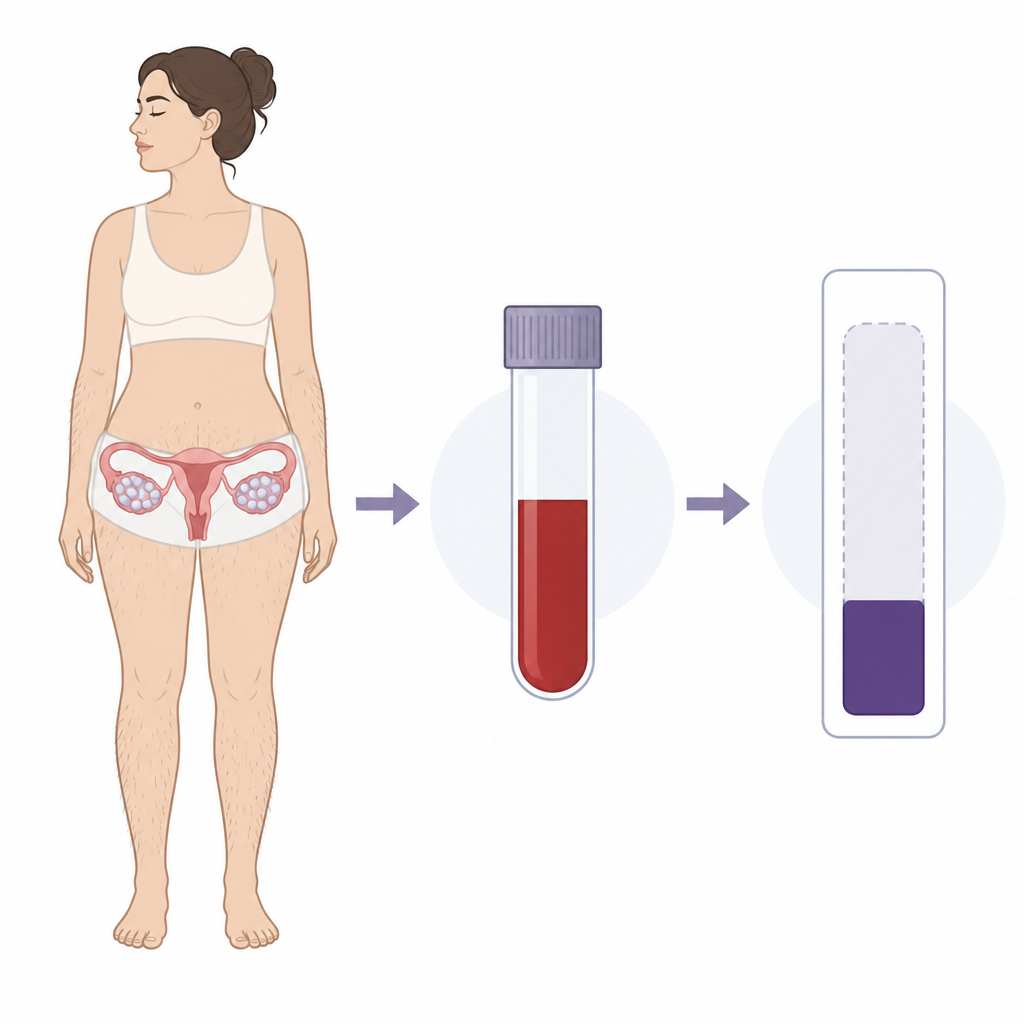
A closer look at PCOS and a repair protein
PCOS is a complex condition where the ovaries often contain many small follicles that do not mature properly, while male type hormones are relatively high and periods are irregular. At the same time, many women with PCOS struggle with insulin resistance and low grade inflammation. MG53 is a protein first discovered in muscle cells that helps repair damaged cell membranes and also interacts with pathways involved in insulin signaling, oxidative stress, and tissue scarring. Because these same processes are disturbed in PCOS, the researchers wondered whether MG53 levels in the blood might be altered in affected women.
How the study was carried out
The team enrolled 64 women with PCOS and 64 women without PCOS who were similar in age. All volunteers gave fasting blood samples, and the investigators measured MG53 alongside standard hormone and metabolic markers, such as sex hormone binding globulin (SHBG), testosterone, cholesterol, and insulin. They also carried out detailed ultrasound scans of the ovaries to record their size and the number of follicles. Statistical methods were used to compare the two groups and to test how MG53 related to hormone levels, features of androgen excess like unwanted hair growth, and ovarian structure.
What the researchers found
Women with PCOS had clearly lower MG53 levels in their blood than women without the condition. At the same time, they had higher levels of male type hormones, more insulin resistance, larger ovaries, and more visible signs of androgen excess such as hirsutism and acne. When the team looked at relationships across all participants, higher MG53 went hand in hand with higher SHBG, a liver made protein that binds sex hormones and keeps free testosterone in check. Lower MG53 was linked to more ovarian follicles and larger ovarian volume, as well as more severe hirsutism. These links held up even after accounting for age and body mass index, suggesting that MG53 tracks with both hormonal balance and ovarian appearance rather than simply reflecting weight. 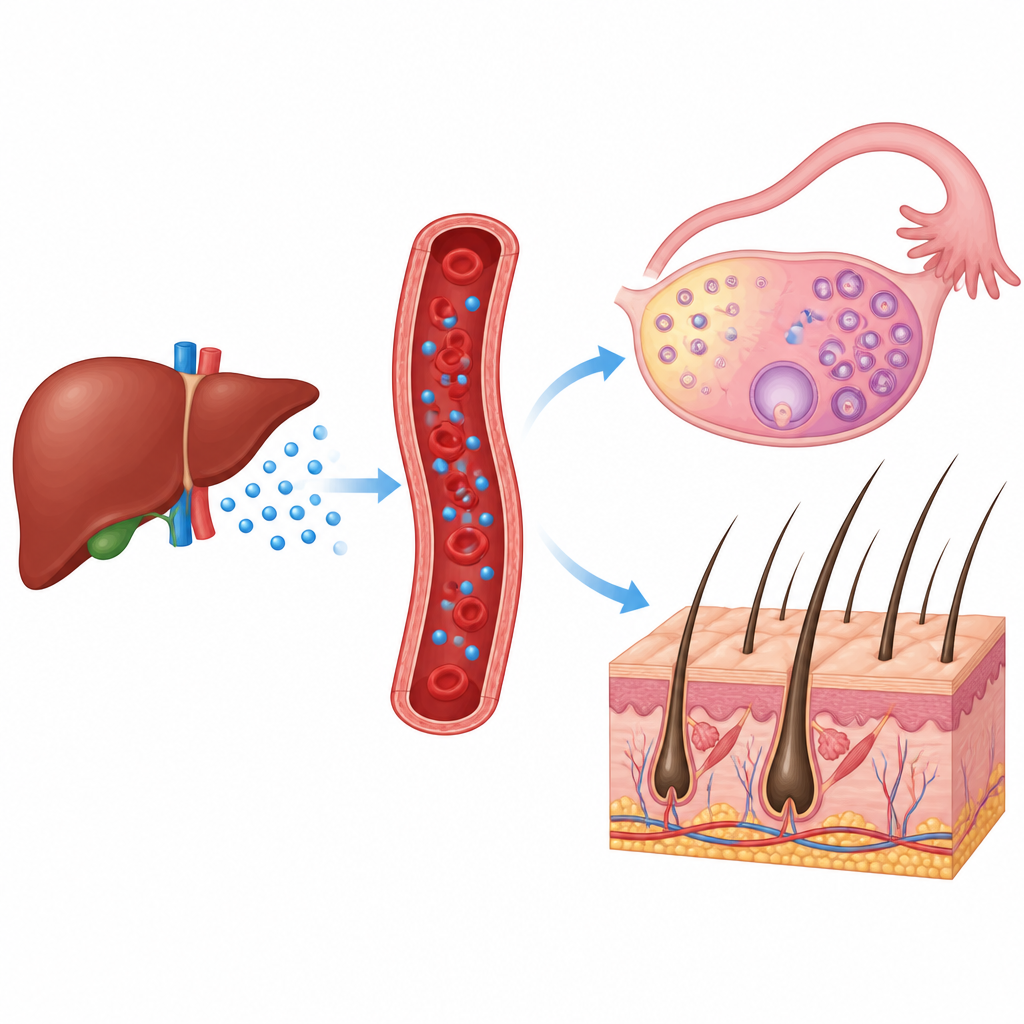
How well MG53 signals PCOS
The researchers also asked whether MG53 alone could help tell apart women with and without PCOS. Using a standard diagnostic curve, they found that MG53 had only modest power to distinguish the two groups. A suggested cut off level captured a little over half of women with PCOS while correctly classifying about three quarters of women without the condition. This level of accuracy is not strong enough for a stand alone test and will need to be checked in other groups of patients before any clinical use can be considered.
What this could mean going forward
For a lay reader, the take home message is that women with PCOS tend to have lower blood levels of MG53, a protein that helps manage stress and repair in cells, and that this drop is tied to both hormone carriers like SHBG and visible signs of excess androgens such as unwanted hair and enlarged, follicle packed ovaries. The work points to MG53 as a possible marker of how reproductive and metabolic problems intersect in PCOS, rather than a simple yes or no diagnostic test. Larger and longer studies will be needed to see whether tracking MG53 over time can help identify which women are at higher risk of metabolic complications or might respond differently to treatment.
Citation: Coşkun, E.S., Gencer, F.K., Salman, S. et al. Decreased serum MG53 levels are associated with SHBG and androgen excess in women with polycystic ovary syndrome. Sci Rep 16, 15753 (2026). https://doi.org/10.1038/s41598-026-48800-z
Keywords: polycystic ovary syndrome, MG53, androgen excess, sex hormone binding globulin, metabolic dysfunction