Clear Sky Science · en
Comparative toxicity and biochemical impacts of certain recommended insecticides against Spodoptera littoralis (Lepidoptera: Noctuidae)
Why this moth matters to your dinner table
The cotton leafworm is a small caterpillar with an outsized impact. It devours cotton, vegetables, and many other crops, threatening harvests and farmers’ livelihoods across more than 100 countries. As growers increasingly rely on chemical sprays to keep this pest in check, the insect fights back by evolving resistance. This study asks a vital question for food and fiber production: when we use modern insecticides against the cotton leafworm, which ones work best, and what hidden changes do they trigger inside the insect’s body?
Comparing four modern pest killers
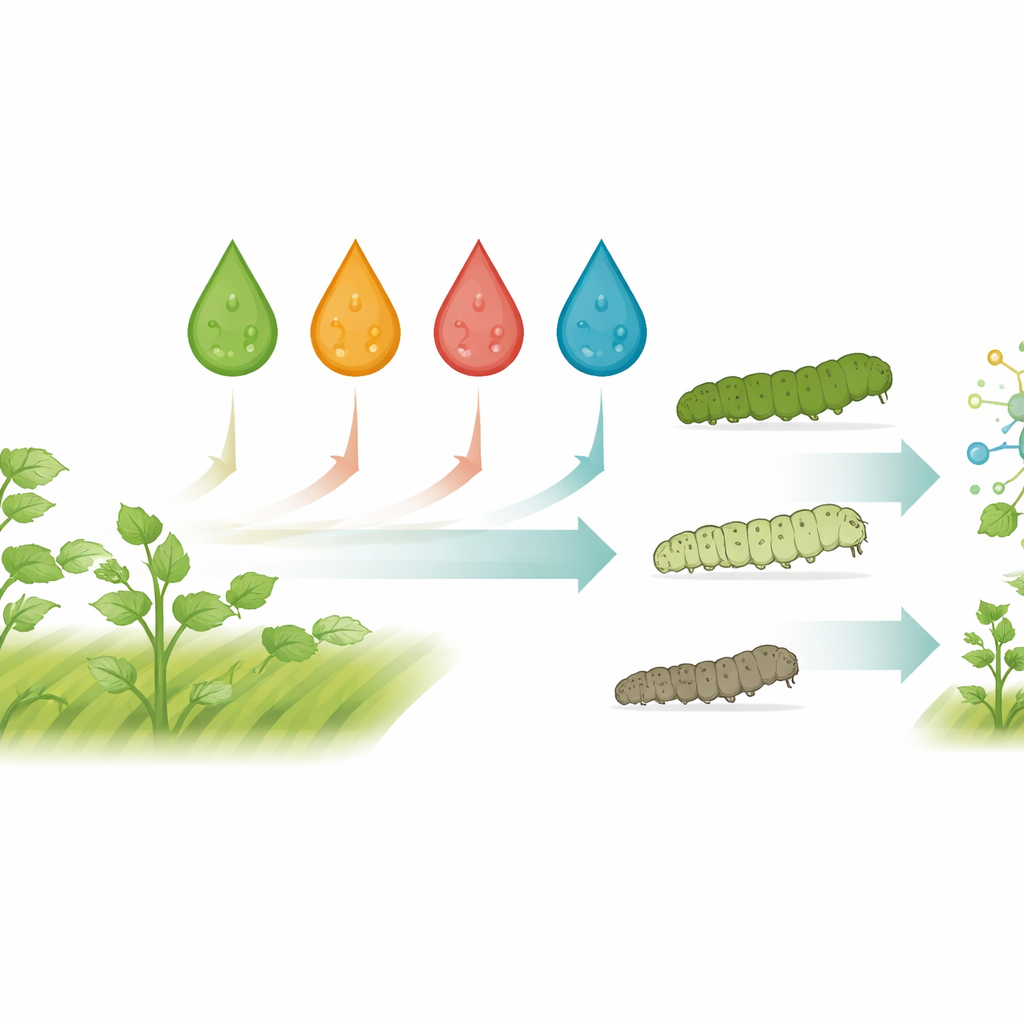
The researchers focused on four widely used products that represent different “families” of insecticides: emamectin benzoate, chlorantraniliprole, lufenuron, and indoxacarb. All were tested on the same life stage—the fourth-instar caterpillar—because it feeds heavily and has a busy internal chemistry, making it a good model for measuring both survival and stress. Leaves were dipped in solutions of each insecticide, then fed to individual larvae under carefully controlled temperature and humidity. By tracking how many caterpillars died at different doses, the team calculated standard toxicity values, revealing which compounds were most and least lethal.
Who is strongest against the leafworm?
The head-to-head comparison showed a clear winner. Emamectin benzoate killed larvae at far lower concentrations than the other three products—over 30 times more potent than indoxacarb, the weakest of the group. Chlorantraniliprole and lufenuron fell in between. While all four compounds could kill the caterpillars at higher doses, the differences in potency matter in real fields, where using a more effective product can reduce the amount sprayed and slow the buildup of resistance. Yet outright death was only part of the story. The authors also wanted to know how low, nonlethal doses quietly reshape the insects’ internal chemistry in ways that might affect growth, reproduction, and future resistance.
What happens inside the caterpillar
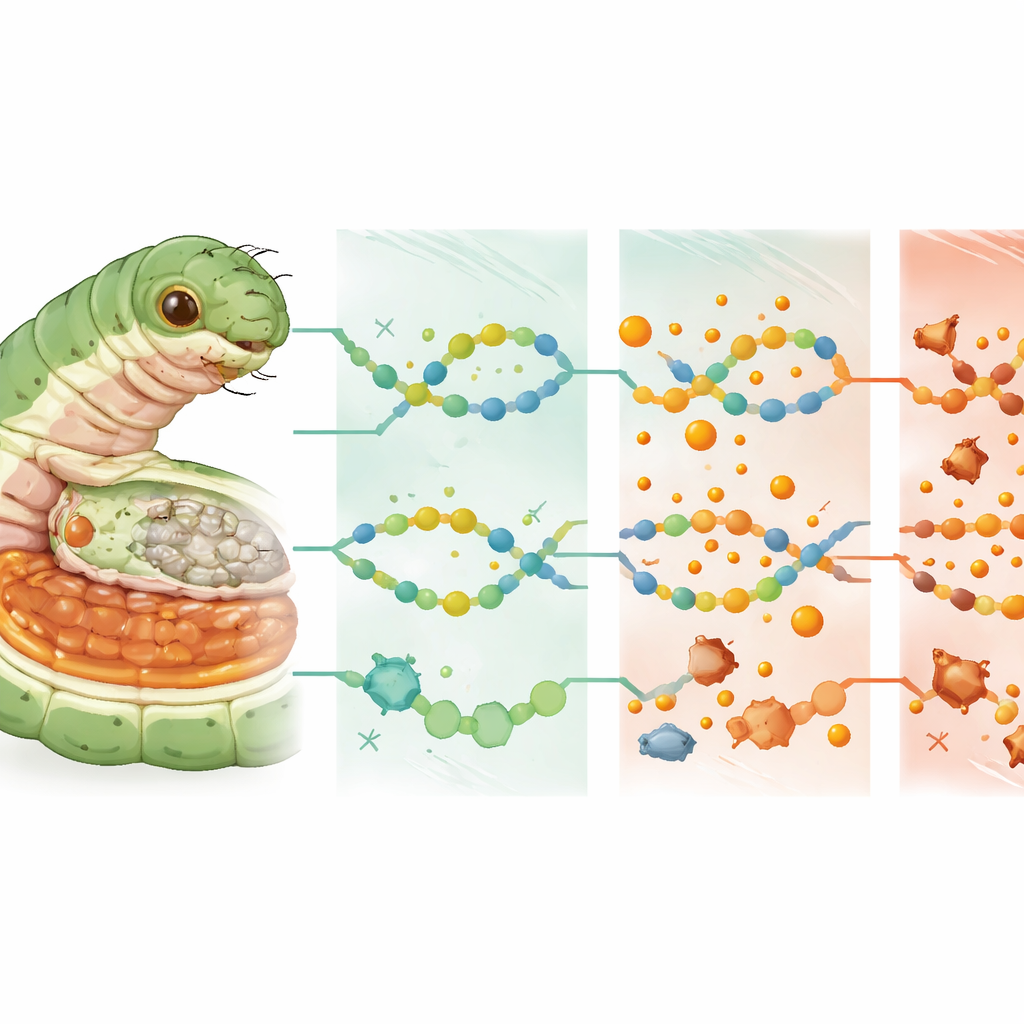
To explore these hidden impacts, the team exposed larvae to quarter-strength doses of each insecticide and then measured their internal chemistry over five days. They tracked overall levels of proteins and carbohydrates—the basic building blocks and fuel of the body—as well as several key enzymes that break down sugars, process nutrients, and detoxify foreign chemicals. In untreated caterpillars, these measures stayed relatively stable. In treated larvae, however, three of the insecticides caused sharp drops in both protein and carbohydrate reserves, signs that feeding and metabolism were being badly disrupted.
Chlorantraniliprole and indoxacarb were especially harsh on the caterpillars’ energy machinery, strongly suppressing enzymes that digest key sugars and starches. Emamectin benzoate also reduced these activities, but somewhat less dramatically and with partial recovery over time. Lufenuron stood out as gentler on day-to-day metabolism: it left total proteins and carbohydrates close to normal and caused only modest shifts in digestive enzymes. Instead, lufenuron triggered a striking rise in alkaline phosphatase, an enzyme linked to the gut lining and tissue remodeling, consistent with its known role as a growth regulator that interferes with molting rather than immediate feeding.
The caterpillar’s chemical defenses
The study also examined alpha-esterase, an enzyme that helps insects detoxify chemicals and is often linked to resistance. In larvae treated with emamectin benzoate and indoxacarb, alpha-esterase activity soared, suggesting that the caterpillars were ramping up their internal defenses to cope with the chemical assault. Chlorantraniliprole, in contrast, actually suppressed this detox enzyme, potentially leaving larvae less able to adapt. Lufenuron again showed a milder profile, with only a gradual rise in detox activity. Together, these patterns reveal that different insecticides not only kill in different ways but also provoke very different biochemical responses that may shape how resistance evolves.
What this means for safer, smarter pest control
In plain terms, the study finds that emamectin benzoate is the most powerful of the four products against cotton leafworm caterpillars, while indoxacarb is the weakest. But the work goes beyond a simple ranking of “strong” and “weak” sprays. By mapping how each insecticide drains energy stores and scrambles crucial enzymes, the authors show that some products put the insect under intense metabolic stress, whereas others act more through growth disruption. These insights can help farmers and crop advisers choose and rotate insecticides more intelligently, using combinations and timing that slow resistance and reduce unnecessary chemical use. In the long run, such biochemical “fingerprints” can guide more sustainable pest management that protects crops while easing pressure on beneficial insects and the wider environment.
Citation: El-morshedy, A.E., Shalaby, A.A.M., Al-Shannaf, H.M.H. et al. Comparative toxicity and biochemical impacts of certain recommended insecticides against Spodoptera littoralis (Lepidoptera: Noctuidae). Sci Rep 16, 13627 (2026). https://doi.org/10.1038/s41598-026-48788-6
Keywords: cotton leafworm, insecticide toxicity, pest resistance, crop protection, biochemical effects