Clear Sky Science · en
Prediction of premature rupture of fetal membranes using deep learning in East China
Why this research matters for families
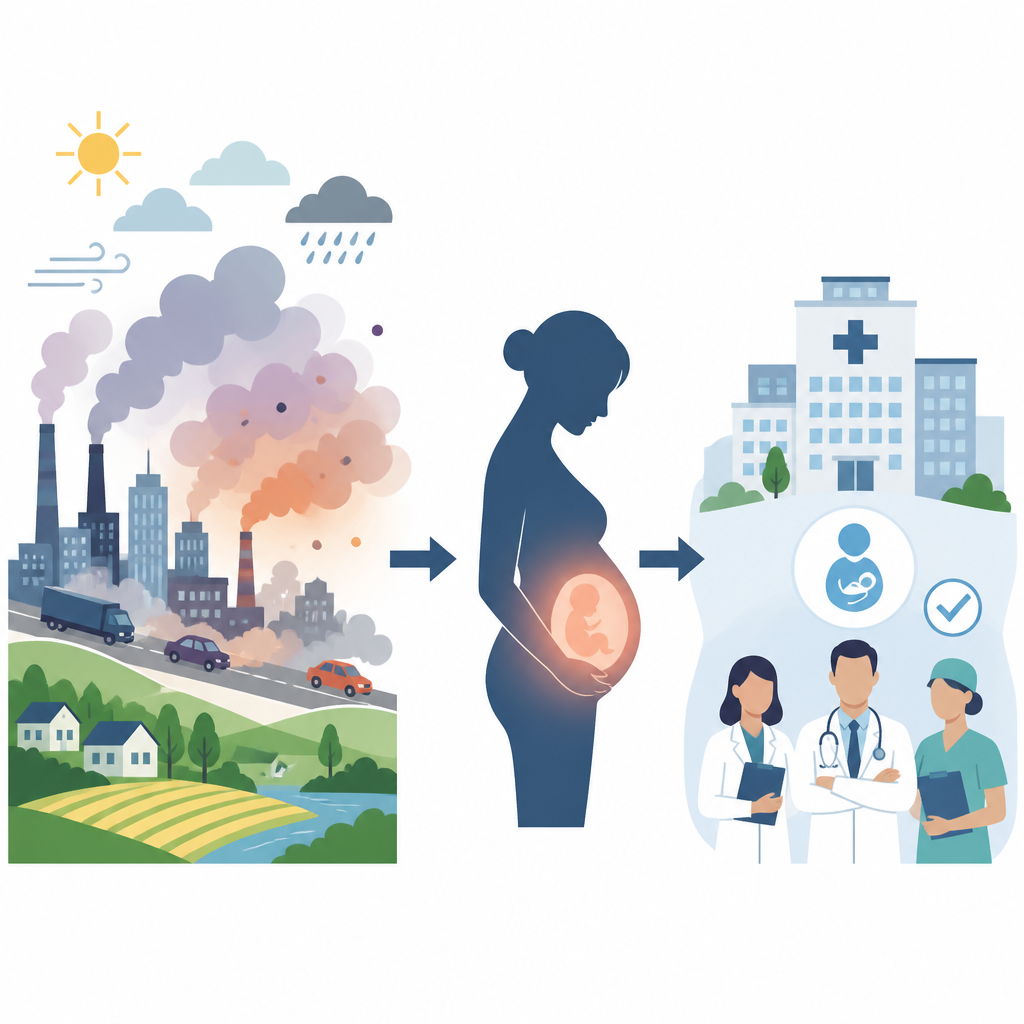
When a pregnant woman’s water breaks too early, doctors call it premature rupture of membranes, or PROM. This event can lead to early birth, infection, and serious health problems for newborns. The study behind this article asks a simple but powerful question: can we predict which women are most likely to experience PROM, early enough to adjust their care and move limited medical resources to where they are needed most, especially in parts of China where hospitals and specialists are unevenly distributed?
Looking at many pieces of the pregnancy puzzle
To tackle this question, researchers analyzed electronic medical records from more than 20,000 mothers and their babies in Hangzhou, a major city in East China. All births in this group were at term, meaning the babies were not unusually early, but some pregnancies were complicated by PROM. The team did not only look at basic facts such as age, weight, and number of previous pregnancies. They also included health conditions like diabetes and high blood pressure, laboratory test results such as white blood cell counts and C reactive protein, and information about habits during pregnancy including smoking and drinking alcohol. On top of this, they estimated each woman’s exposure to outdoor air pollution and weather conditions based on her home and work addresses.
Hidden links between daily life and early water breaking
Using statistical models, the researchers found 32 clinical factors that were linked to PROM, even after accounting for chance. Some of these links were intuitive, while others were more surprising. For example, women who reported drinking alcohol during pregnancy or who used certain medications such as antibiotics and a steroid called dexamethasone were more likely to have PROM. In contrast, being slightly older, having had more pregnancies or miscarriages, or having conditions like diabetes and high blood pressure were linked with a lower chance of PROM in this specific data set. Blood markers of inflammation and infection showed complex patterns: very low or very high white blood cell counts and C reactive protein were associated with greater odds of PROM, suggesting that both weak and overactive immune responses may matter.
Air and weather as quiet contributors
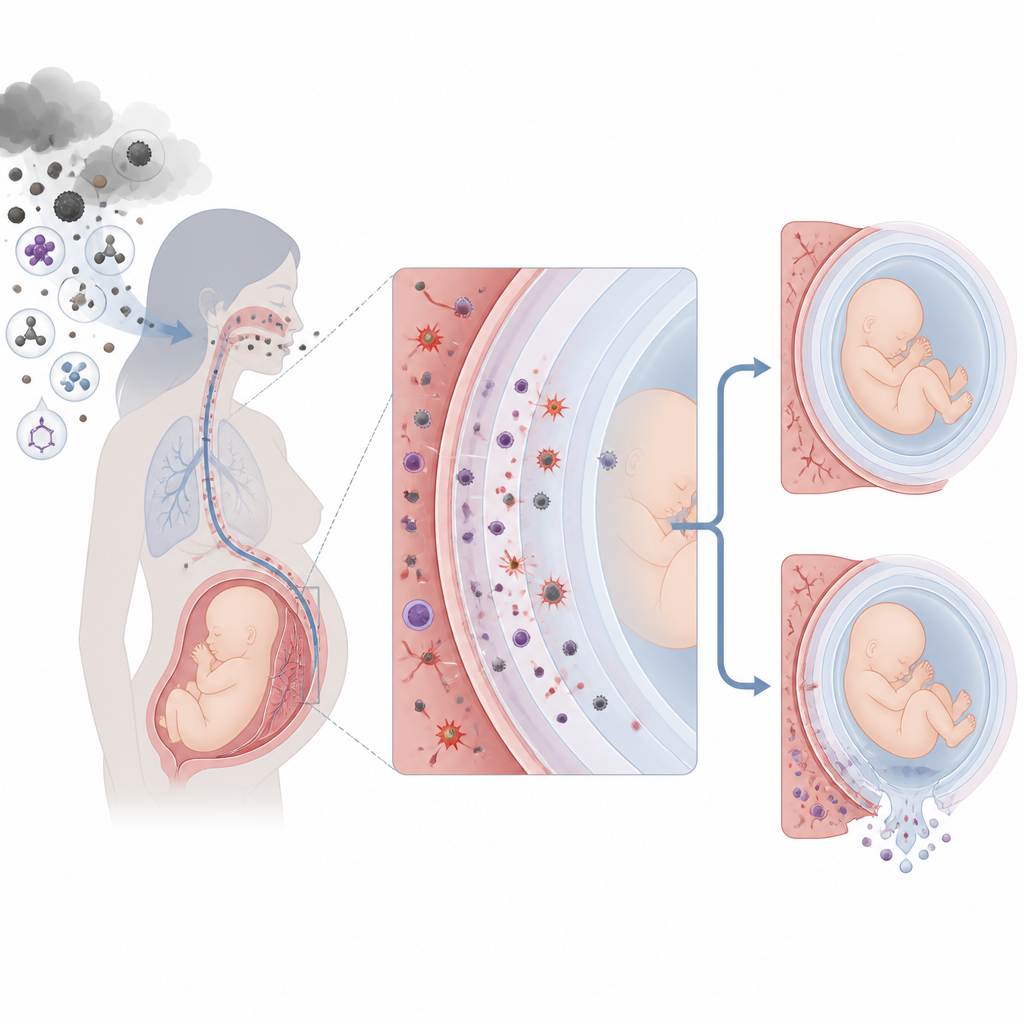
The team also asked whether the air women breathe and the weather around them might play a role. They examined common pollutants, including fine particles (PM2.5 and PM10) and gases such as nitrogen dioxide and ozone, as well as temperature, humidity, wind, and rainfall. They found that higher long term exposure to nitrogen dioxide, ozone, and particle pollution during pregnancy was associated with a small but measurable increase in the odds of PROM. Short term spikes in sulfur dioxide and particles in the weeks just before birth also appeared to raise risk. On the weather side, lower relative humidity, meaning drier air, was linked with higher odds of PROM, while other weather factors had weaker or less consistent relationships. These results do not prove cause and effect, but they point to environmental conditions as possible contributors.
Teaching computers to flag higher risk pregnancies
To see whether these many factors could be combined into a useful early warning tool, the researchers turned to modern computer methods known as machine learning. They trained several models, including systems that use layered “neurons” and decision trees, on most of the data and then tested them on the remaining records. When the models were fed clinical information, pollution levels, and weather data that can be known before birth, they were able to separate pregnancies with PROM from those without better than random guessing. One model reached an area under the receiver operating curve of about 0.78, indicating moderate skill at ranking who is more or less likely to experience PROM. By lowering the threshold at which the model raises an alarm, it could identify as many as about 86 percent of eventual PROM cases, but at the cost of many false alarms.
Balancing early warning with false alarms
For everyday readers, the key message is that computers can already find patterns in routine medical and environmental data that hint at which pregnancies are more fragile, weeks before labor starts. This could help doctors in resource stretched regions schedule extra checkups, move patients to better equipped hospitals in time, or start preventive treatments where appropriate. However, the study also shows a trade off: catching more true PROM cases means sounding the alarm for many women who will ultimately have normal deliveries. The authors argue that, despite this paradox, early prediction still has value, especially in rural China where reaching advanced care quickly is difficult. Their work lays out a practical framework for using deep learning to forecast PROM, while stressing that these tools should support, not replace, careful medical judgment and further research into the true biological causes.
Citation: Yang, C., Feng, R., Wang, X. et al. Prediction of premature rupture of fetal membranes using deep learning in East China. Sci Rep 16, 14661 (2026). https://doi.org/10.1038/s41598-026-48769-9
Keywords: premature rupture of membranes, pregnancy risk prediction, air pollution and pregnancy, deep learning in healthcare, maternal health in China