Clear Sky Science · en
Comparative AI-optimized HPLC–DAD strategy for the simultaneous determination of ranolazine, amlodipine, and diltiazem with pharmacotherapeutic relevance and multi-trait sustainability assessment
Why this matters for heart patients
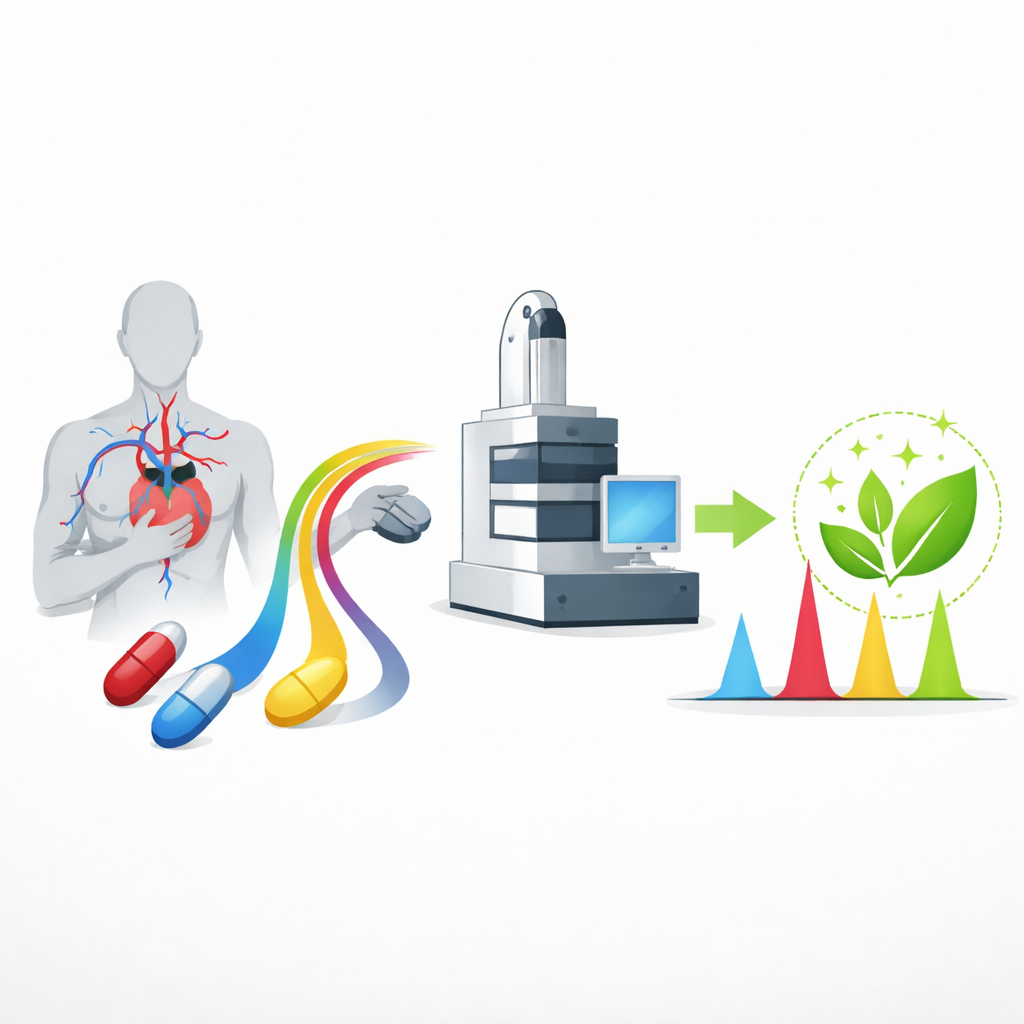
People living with chronic chest pain (angina) and high blood pressure are often prescribed several heart drugs at once. Doctors and pharmacists need simple, reliable ways to check that these medicines are present in the right amounts in tablets and in the bloodstream. This study describes a new laboratory test that can measure three such drugs together in a single run, while also cutting chemical waste and development time by using artificial intelligence (AI) and modern sustainability tools.
Three medicines working together
The work focuses on ranolazine, amlodipine, and diltiazem, a trio commonly used to relieve chest pain, control blood pressure, and steady the heartbeat. Ranolazine helps the heart muscle use oxygen more efficiently without strongly changing heart rate or blood pressure. Amlodipine and diltiazem relax blood vessels and influence how fast the heart beats. Because these medicines are often given together, a single test that can quantify all three at once is highly valuable for checking pill quality, supporting future combination products, and studying how the drugs behave in the body.
A smarter way to separate and measure drugs
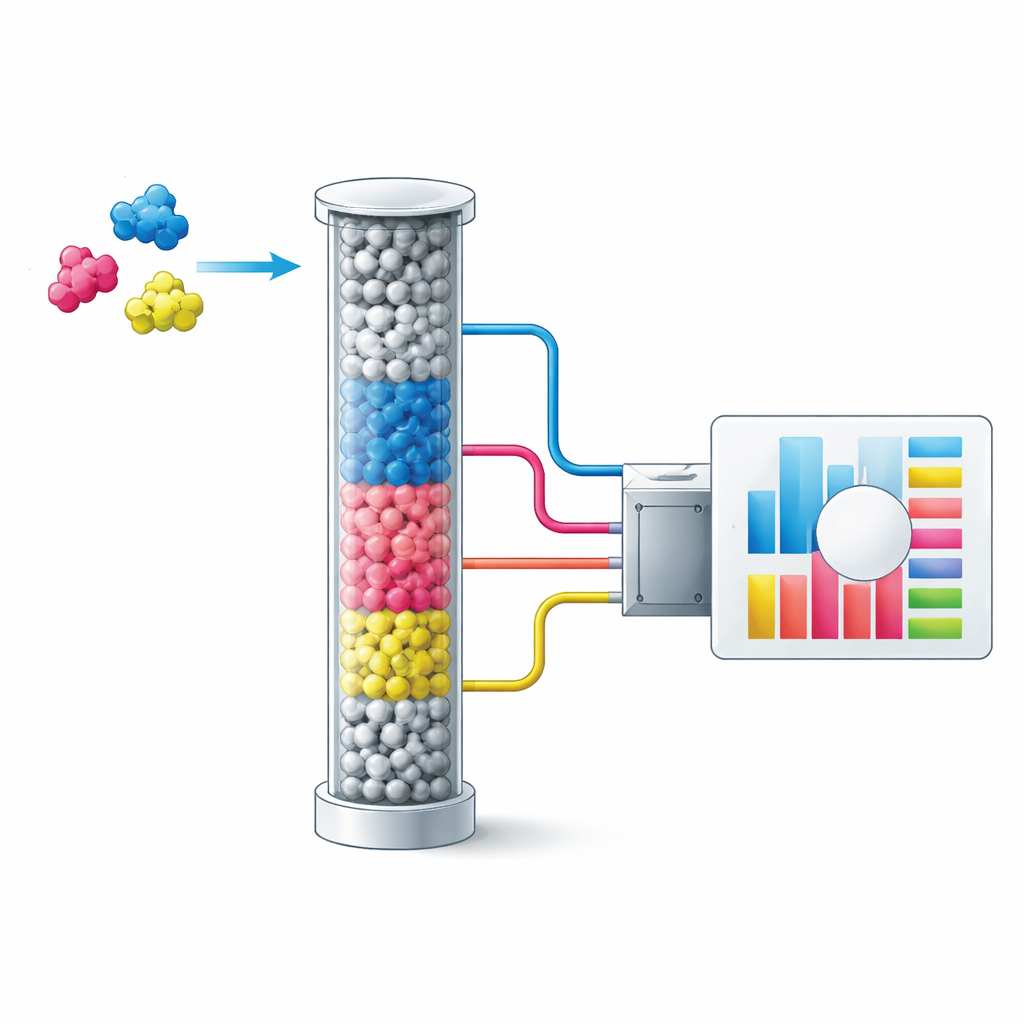
The researchers built an improved version of a common lab technique known as high‑performance liquid chromatography with a diode array detector (HPLC–DAD). In simple terms, this method pushes a liquid sample through a narrow tube filled with a special material that slows each drug down to a different degree, so they emerge one after another and can be measured. The team carefully chose the tube type, the mix of water and organic solvents, and the acidity of the liquid so that all three drugs separate cleanly in about six minutes with sharp, well‑resolved peaks, even when their chemical properties overlap.
How AI sped up and cleaned up the process
Instead of relying only on slow trial‑and‑error experiments, the scientists also used an AI‑assisted tool designed specifically to suggest starting conditions for HPLC. They fed the program basic details about the three drugs and the type of column they preferred. The AI proposed a workable starting recipe and a logical series of fine adjustments. In the lab, these suggestions required only a few tweaks to reach an excellent final method, dramatically reducing the time, solvent use, and effort compared with fully manual optimization. The finished method met international guidelines for linearity, sensitivity, accuracy, precision, and selectivity, and it worked not only on pure drug samples and commercial tablets but also on rat plasma samples spiked with all three medicines.
Checking both performance and planet‑friendliness
To move beyond the simple idea of “green chemistry,” the team evaluated their method using newer “white analytical chemistry” tools that balance environmental impact, analytical quality, practicality, and innovation. A web‑based Multi‑Color Assessment platform combined several existing scoring systems into an overall “whiteness” score, where higher values indicate better all‑around sustainability. The new method scored 64.8%, outperforming earlier, more complex techniques that used more solvent and energy. A second tool, the Need, Quality, and Sustainability (NQS) index, compared the AI‑optimized method with a traditionally optimized version. The AI‑guided approach achieved a higher overall score, met more of the United Nations’ sustainable development goals, and delivered similar or better analytical quality with fewer resources.
What the study shows in simple terms
In essence, this research delivers a fast, reliable laboratory test that can measure three key heart medicines at once in both pills and blood samples, while using less time, less solvent, and less energy than older approaches. By weaving AI into method development and by rigorously scoring environmental and practical aspects, the study offers a model for how future lab tests can be both scientifically strong and kinder to the planet. For patients and health systems, that means more dependable quality checks and better support for combination therapies, achieved in a way that respects both human health and environmental health.
Citation: Aboras, S.I., Korany, M.A., Yehia, R.A. et al. Comparative AI-optimized HPLC–DAD strategy for the simultaneous determination of ranolazine, amlodipine, and diltiazem with pharmacotherapeutic relevance and multi-trait sustainability assessment. Sci Rep 16, 13407 (2026). https://doi.org/10.1038/s41598-026-48679-w
Keywords: chronic angina medications, HPLC drug analysis, AI in analytical chemistry, sustainable laboratory methods, cardiovascular pharmacotherapy