Clear Sky Science · en
Climate change–driven range contraction in the aquatic Fern Marsilea minuta L. (Marsileaceae): implications for wetland plant conservation
Why a tiny water fern matters in a warming world
Hidden in rice paddies and shallow ponds across the tropics grows a delicate plant called the dwarf water clover, a small aquatic fern. At first glance it may seem insignificant, but this fern helps hold wetland soils together, cycles nutrients, and shelters small animals. This study asks a pressing question: as the climate warms and rainfall patterns shift, where on Earth will this water-loving fern still be able to survive, and what does that mean for the future of our wetlands?
Following a fern across the globe
The researchers began by piecing together a global picture of where the dwarf water clover is found today. They drew on nearly 3,000 records from the Global Biodiversity Information Facility, then carefully cleaned the data—removing points with poor location information, those out at sea, and duplicates from heavily sampled areas. After these quality checks and thinning steps, they retained 963 reliable locations. These points show that the fern lives mainly between 30° north and 30° south, especially in South and Southeast Asia and in equatorial Africa, in warm, shallow freshwater wetlands such as rice fields, ponds, and seasonally flooded lowlands.
Using climate to predict safe places
To understand what makes a place suitable for the fern, the team linked these locations to detailed climate records. Instead of using every available climate statistic, they selected five that capture core aspects of the fern’s needs: overall warmth, how much temperatures swing between day and night, how cold the coldest month gets, total yearly rainfall, and how wet the wettest month is. Using a widely used computer tool called MaxEnt, they built a model that learns the combination of temperature and rainfall conditions most closely associated with the fern’s presence. The model performed very well, meaning it could reliably distinguish suitable from unsuitable conditions across the globe.
A shrinking home under future climates
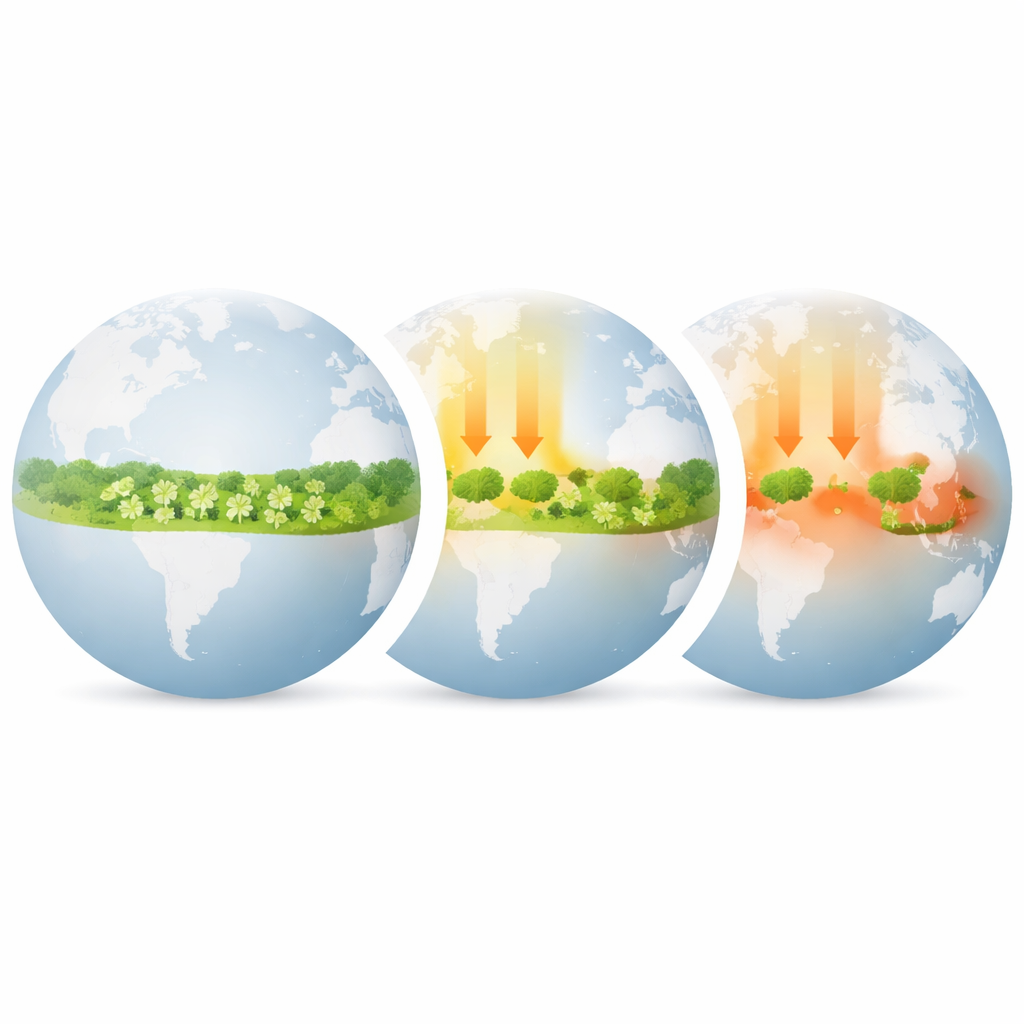
Next, the scientists asked how these suitable areas might change by mid‑century (2050) and later in the century (2070) under two contrasting greenhouse‑gas pathways: one where humanity rapidly cuts emissions, and one where emissions continue to rise. Across all futures, the picture was similar: the fern’s climatic “comfort zone” contracts overall. The best conditions remain centered in tropical Asia and central Africa, but the total area of suitable climate shrinks as edges of the range become too hot or too dry. Net losses in suitable habitat range from about 7% under the low‑emissions 2050 scenario to over 17% under the high‑emissions 2070 scenario. While a few new patches of suitable climate appear at slightly higher latitudes, these gains are scattered and small compared with the losses nearer the equator.
Where water and cold put up the biggest barriers
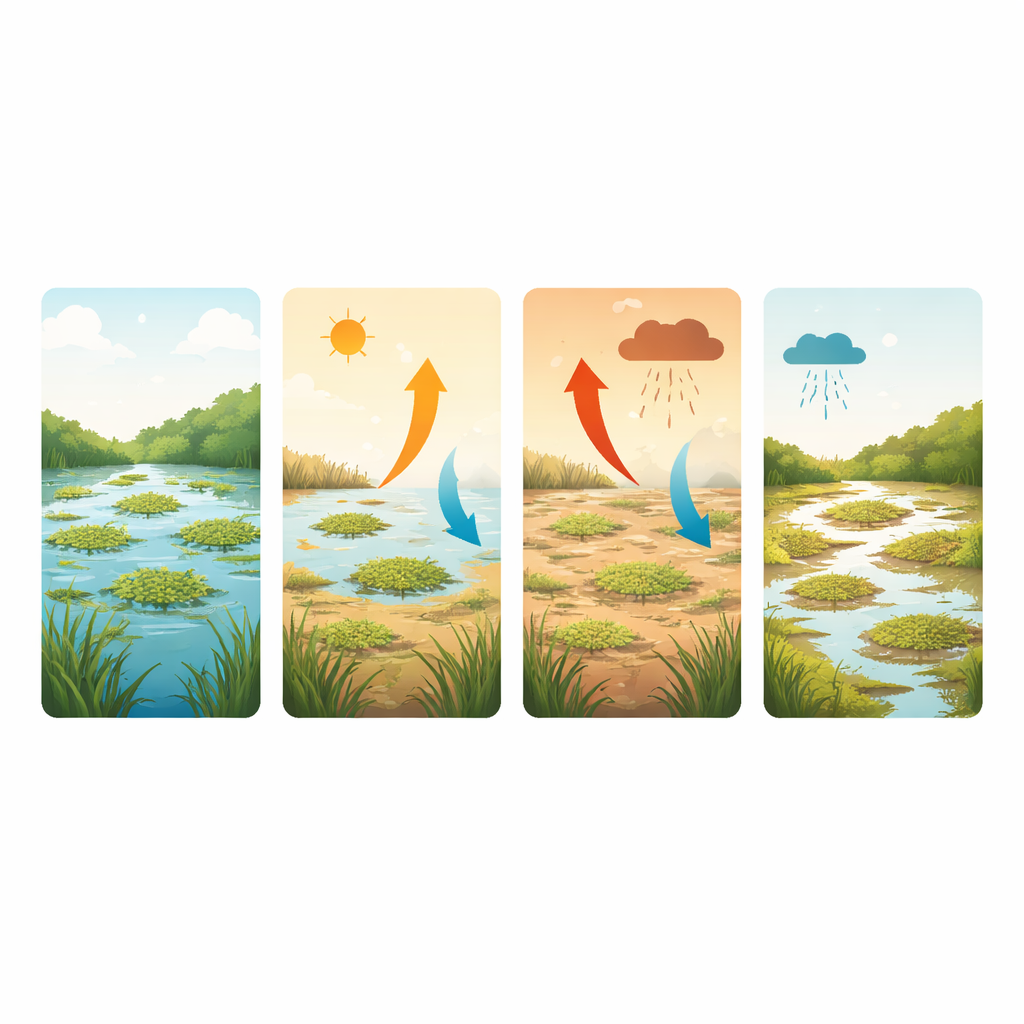
By teasing apart the role of each climate factor, the study shows that water supply and winter cold act as the main gatekeepers of the fern’s range. In dry regions of Africa, Asia, Australia, and the Americas, a lack of annual rainfall is the dominant limiting factor. In cooler temperate zones, it is the minimum temperature in the coldest month—essentially the risk of frost—that blocks the fern from spreading further poleward. Ideal conditions, the model suggests, are warm but not scorching (around 20–25 °C on average), with small swings between day and night temperatures, no hard freezes, and very wet rainy seasons delivering more than 1,200 mm of rain. Areas such as the Congo Basin and parts of South Asia emerge as climate refuges where these conditions are likely to persist even as the broader tropics change.
Protecting wetland life before it is too late
For a layperson, the key message is that climate change is quietly squeezing the living space of a humble yet important wetland fern, and similar pressures are likely affecting many other freshwater plants. The study shows that even under optimistic emissions cuts, the fern is projected to lose ground, and under a high‑emissions path the losses are far greater. Safeguarding the most stable regions, improving connections between wetlands so species can move, storing spores and seeds, and carefully planning restoration projects could help this and other wetland species persist. Ultimately, though, the work underlines that deep cuts in greenhouse‑gas emissions are essential if we are to prevent widespread loss of the hidden biodiversity that supports healthy freshwater ecosystems.
Citation: Khalaf, S., Gaafar, AR.Z., Wainwright, M. et al. Climate change–driven range contraction in the aquatic Fern Marsilea minuta L. (Marsileaceae): implications for wetland plant conservation. Sci Rep 16, 13398 (2026). https://doi.org/10.1038/s41598-026-48678-x
Keywords: climate change, wetland plants, species ranges, aquatic ferns, habitat loss