Clear Sky Science · en
METTL14 regulate LRIG1 expression via m6A to affect nucleus pulposus cell senescence in intervertebral disc degeneration
Why back pain starts in the spine’s soft center
Many people live with chronic low back pain, but the tiny events that slowly wear out the spine’s shock absorbers are hard to see. This study looks inside the soft core of the spinal disc to uncover how a chemical switch on RNA, the cell’s working copy of genes, helps control aging and breakdown of disc cells. By tracing this hidden switch in human tissues and in lab-grown cells, the researchers reveal a new pathway that may one day guide gentler treatments for disc-related back pain.
The spine’s cushions under stress
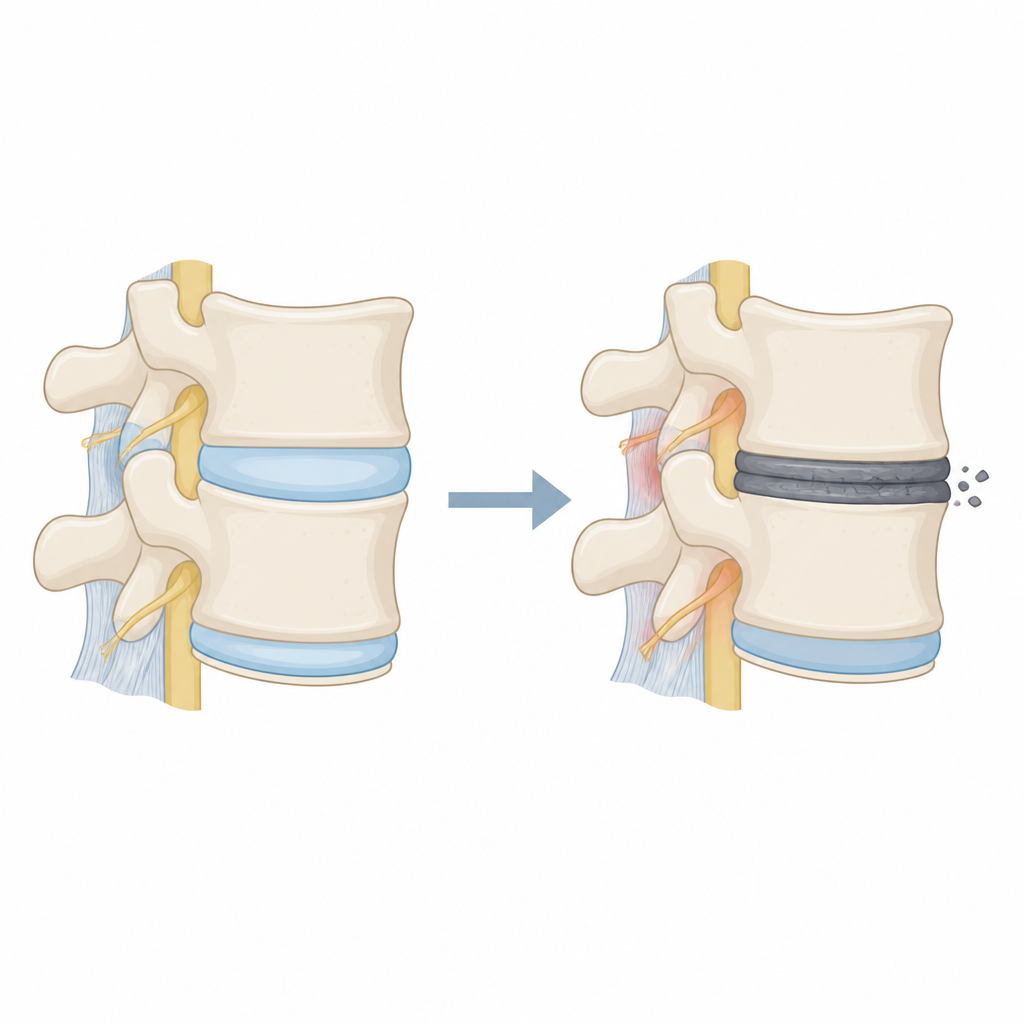
Each spinal disc contains a gel-like center called the nucleus pulposus that holds water and absorbs daily impacts. With age and strain, this core dries out, loses its rich matrix of proteins, and the disc flattens, which can trigger pain and stiffness. The team compared discs from patients with mild and severe degeneration and found clear structural damage in the more diseased samples: reduced disc height, disrupted tissue, and loss of water-holding molecules. These changes lined up with increased signs of cell aging, suggesting that how long disc cells stay youthful is key to how long the disc stays healthy.
A tiny RNA mark with big effects
The scientists focused on a small chemical tag called m6A that cells place on RNA to fine-tune which proteins are made and how long the messages last. One of the main enzymes that adds this tag is a protein called METTL14. In severely degenerated human discs, METTL14 levels were much higher than in healthier ones. In mouse disc cells grown in the lab, an inflammatory signal known as TNF-alpha drove METTL14 levels even higher, while at the same time the protective matrix proteins collagen II and aggrecan dropped and a classic aging marker, P21, rose. This showed that under inflammatory stress, METTL14 is closely tied to both tissue breakdown and cell aging.
A protective partner on the cell surface
To understand how METTL14 exerts these effects, the team used RNA sequencing after silencing METTL14 in disc cells. Among the genes that changed, a surface protein called LRIG1 stood out. When LRIG1 was reduced, more cells showed signs of aging; when it was restored, these aging signals eased and key matrix proteins rebounded. The researchers then showed that METTL14 adds m6A marks to LRIG1’s RNA, helping stabilize this message so more LRIG1 protein is produced. When METTL14 was knocked down, LRIG1’s RNA lost these marks, became less stable, and its levels fell, tipping cells toward a more aged and damaged state.
How inflammation and aging feed disc damage
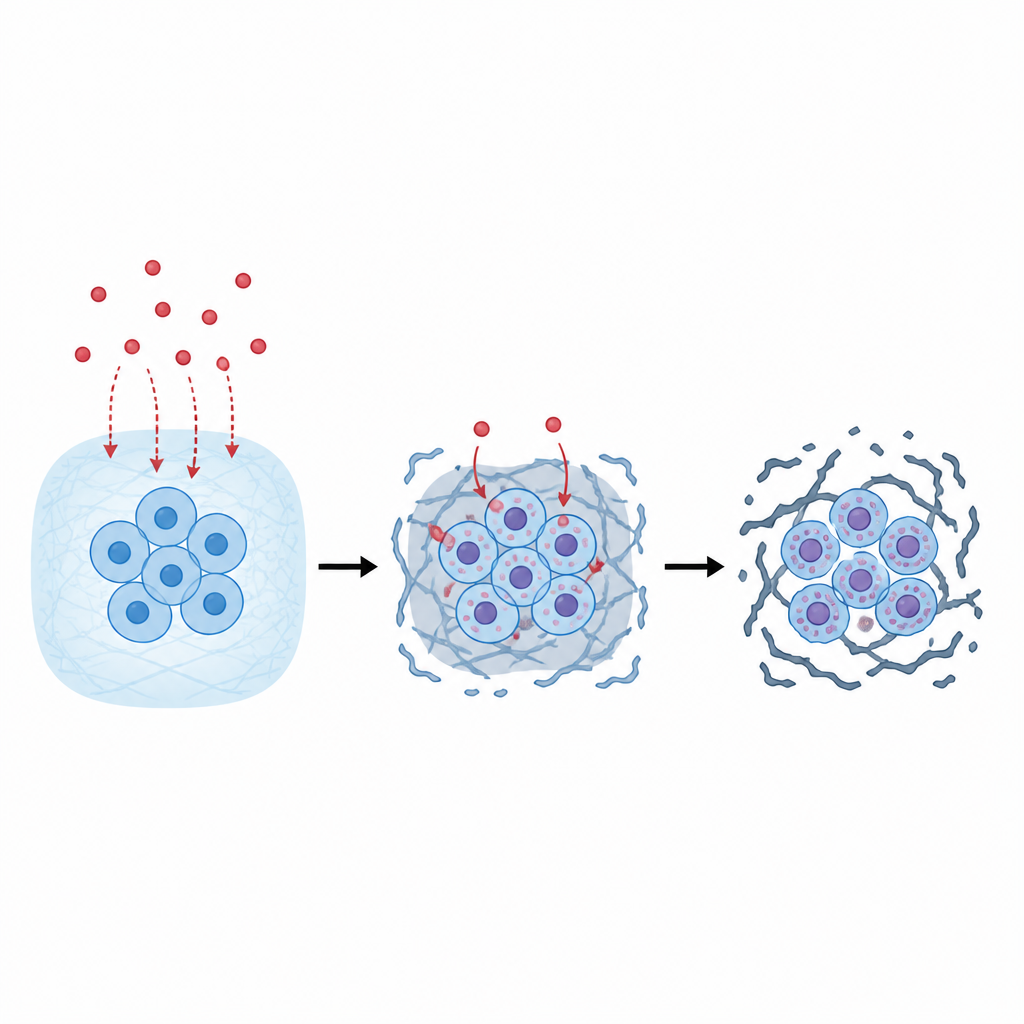
Under inflammatory conditions like those driven by TNF-alpha, METTL14 and LRIG1 form a control axis that shapes how disc cells respond. In this study, raising METTL14 under inflammation promoted cell aging and matrix loss, whereas boosting LRIG1 helped protect the matrix and reduced aging markers. Detailed tests confirmed that specific m6A sites on LRIG1 RNA are needed for this protection, and that METTL14 directly influences these sites. Together, these results connect inflammation, RNA marking, and cell aging into a single pathway that helps explain why discs slowly fail over time.
What this means for people with back pain
For a layperson, the message is that back pain linked to worn discs is not only about bones grinding together, but also about how disc cells manage stress at the molecular level. This work identifies METTL14 and LRIG1 as key players in keeping the disc’s soft core young and structurally sound when inflammation is present. While this research is still at the laboratory stage, it suggests that gently adjusting this RNA tagging system, or supporting LRIG1’s protective role, could become a future strategy to slow disc wear and help preserve spinal function.
Citation: Xiao, R., Yang, Q., Yin, Y. et al. METTL14 regulate LRIG1 expression via m6A to affect nucleus pulposus cell senescence in intervertebral disc degeneration. Sci Rep 16, 16000 (2026). https://doi.org/10.1038/s41598-026-48559-3
Keywords: intervertebral disc degeneration, back pain, cellular senescence, RNA methylation, nucleus pulposus cells