Clear Sky Science · en
Crosstalk of heat shock proteins and antioxidants with peroxisome biogenesis supports wheat thermotolerance
Why hotter days threaten a basic food
Wheat is a cornerstone of the human diet, but it is highly vulnerable to heat waves that are becoming more common with climate change. When temperatures spike during flowering and grain filling, wheat plants can lose a large share of their yield, threatening food security in regions already under pressure. This study asks a practical question with deep biological roots: why do some wheat varieties keep producing grain under heat stress, while others fail? By peering inside wheat leaves grown under realistic field conditions, the authors uncover how different protective systems in the cell work together—or fall apart—to determine whether a plant withstands heat.
Two wheat lines, one tough and one fragile
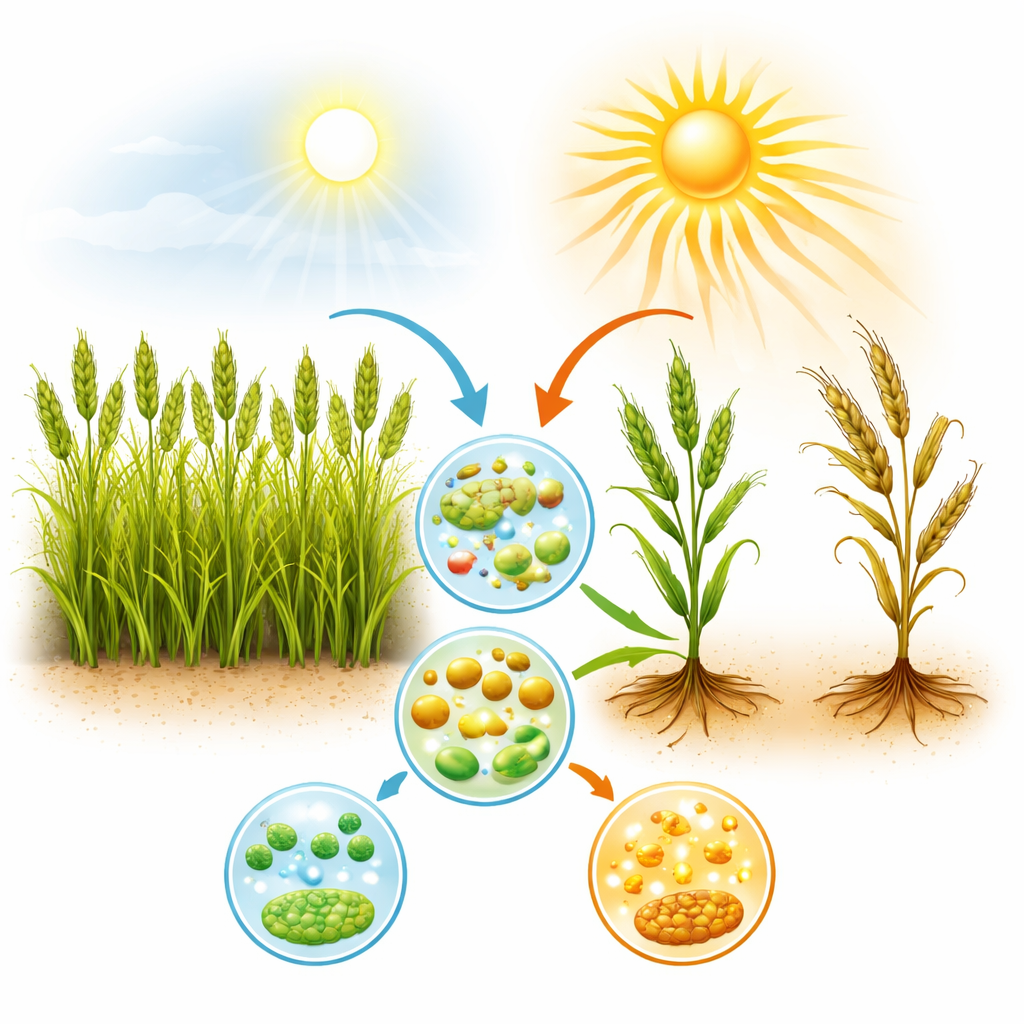
The researchers compared two spring wheat genotypes grown in Egypt: Misr2, which is relatively heat tolerant, and Line4, which is more heat sensitive. Instead of using artificial heat in a growth chamber, they delayed planting by nearly two months to expose plants to naturally hotter weather during flowering, a critical stage for yield. This simple shift raised daytime temperatures by several degrees and cut grain yield in both lines. Yet Misr2 still produced more grain than Line4 under stress, confirming that real-world differences in heat resilience exist even within the same crop species.
What happens inside a hot leaf
Inside the leaves, both genotypes showed clear signs of stress. Levels of reactive oxygen species such as hydrogen peroxide rose under heat, along with malondialdehyde, a marker of damage to cell membranes. At the same time, the plants activated several defense strategies. They accumulated osmoprotectants—small molecules like soluble sugars and proline that help stabilize proteins and membranes. They also boosted the activity of antioxidant enzymes that break down harmful oxygen byproducts. Misr2 consistently responded more strongly: it built up more sugars and proline, showed larger increases in key antioxidant activities, and maintained a higher baseline of tiny organelles called peroxisomes, which help both produce and detoxify reactive oxygen inside the cell.
Hidden teamwork among cellular guardians
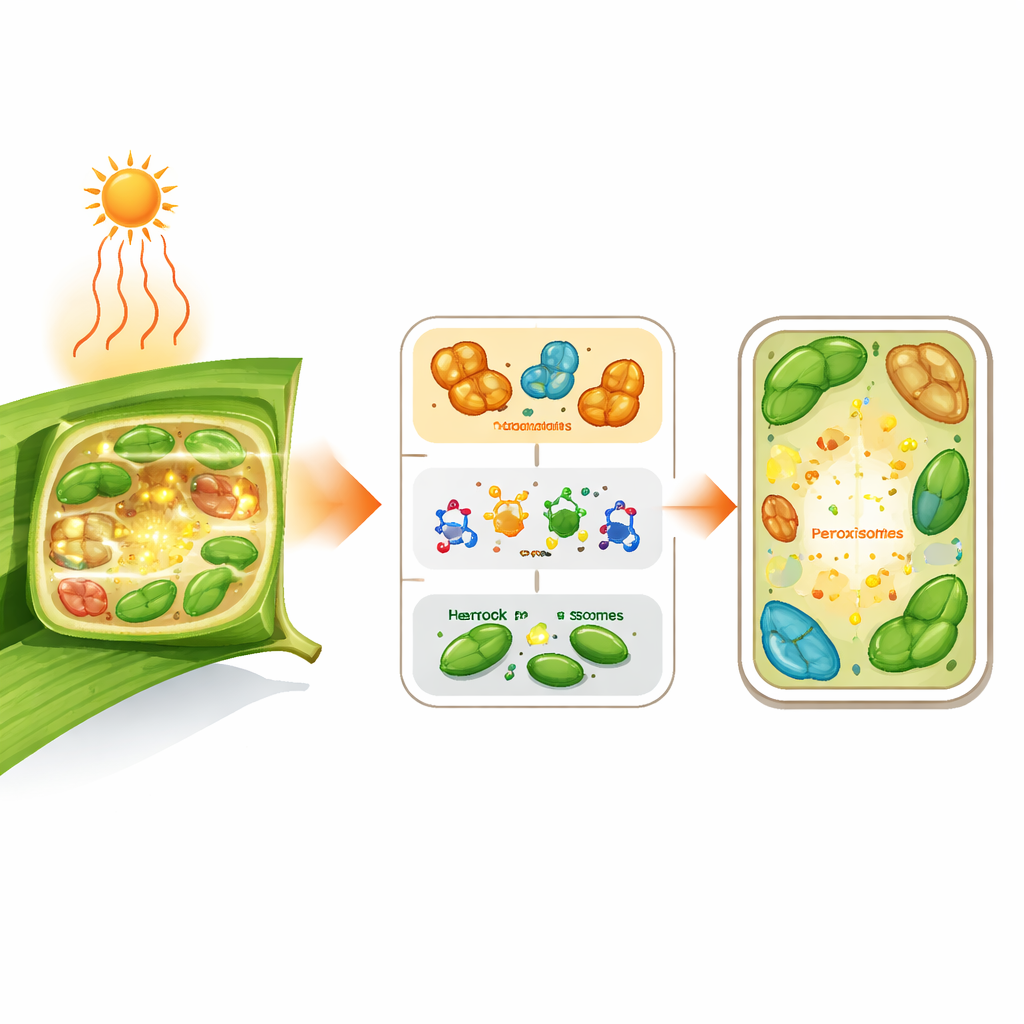
Beyond measuring these traits one by one, the team focused on eight genes representing three protective systems: heat shock proteins (molecular “chaperones” that keep other proteins in shape), antioxidant enzymes, and proteins that control peroxisome formation and division. They tracked how gene activity changed with heat and how it related to physiological traits and yield. In Misr2, a coherent network emerged: a heat shock gene (TaHSP70), a catalase gene (TaCAT1), and a peroxisome biogenesis gene (TaPEX11.4) formed central hubs that were tightly linked to each other, to peroxisome abundance, and to protective traits like soluble sugars and proline. In Line4, by contrast, many of these relationships weakened or flipped direction, indicating a fragmented and less coordinated response.
Networks that separate survivors from casualties
Statistical analyses showed that in the tolerant Misr2 plants, rising oxidative stress was matched by a well-orchestrated rise in peroxisomes, osmoprotectants, and specific gene activities, helping to contain damage while preserving grain yield. Some genes, such as TaSOD (for a key antioxidant enzyme) and TaDRP5B (involved in organelle division), behaved like “switches”: their associations with yield and stress markers were positive in one genotype and negative in the other. This suggests that the same gene can either support tolerance or accompany damage, depending on how it is wired into the broader network. Total soluble sugars and peroxisome abundance emerged as especially informative traits, closely tracking how effectively plants coped with heat.
What this means for future wheat
In plain terms, the study shows that heat-tolerant wheat is not protected by a single magic gene, but by a well-synchronized team of cellular guardians. In Misr2, heat shock proteins, antioxidant defenses, and peroxisome biogenesis act together to keep proteins functional, clear harmful oxygen byproducts, and limit cellular damage, allowing the plant to fill more grains even under hot conditions. In Line4, many of the same components are present, but they respond in a more disjointed way and fail to prevent larger yield losses. By pinpointing key hub genes and measurable traits—such as TaHSP70, TaPEX11.4, TaCAT1, soluble sugars, and peroxisome density—the work offers practical markers that breeders can use to select wheat varieties better able to withstand the hotter seasons that lie ahead.
Citation: Shenoda, J.E., Sanad, M.N.M.E., Rizkalla, A.A. et al. Crosstalk of heat shock proteins and antioxidants with peroxisome biogenesis supports wheat thermotolerance. Sci Rep 16, 14700 (2026). https://doi.org/10.1038/s41598-026-48451-0
Keywords: wheat heat tolerance, reactive oxygen stress, heat shock proteins, peroxisome biogenesis, crop climate resilience