Clear Sky Science · en
Combined elevation of pre-treatment γ-glutamyltransferase and lactate dehydrogenase as independent prognosticator for metastatic renal cell carcinoma undergoing immune-based therapy
Why simple blood tests could matter for kidney cancer
For people living with advanced kidney cancer, one of the biggest questions is how well a new treatment is likely to work. Today’s immune-based drug combinations can be very effective, but doctors still struggle to predict which patients will do well and who may need closer monitoring or earlier changes in therapy. This study looked at two routine blood tests, usually checked for liver and tissue health, to see whether their levels before treatment could offer an easy, low-cost window into a patient’s chances of staying well longer. 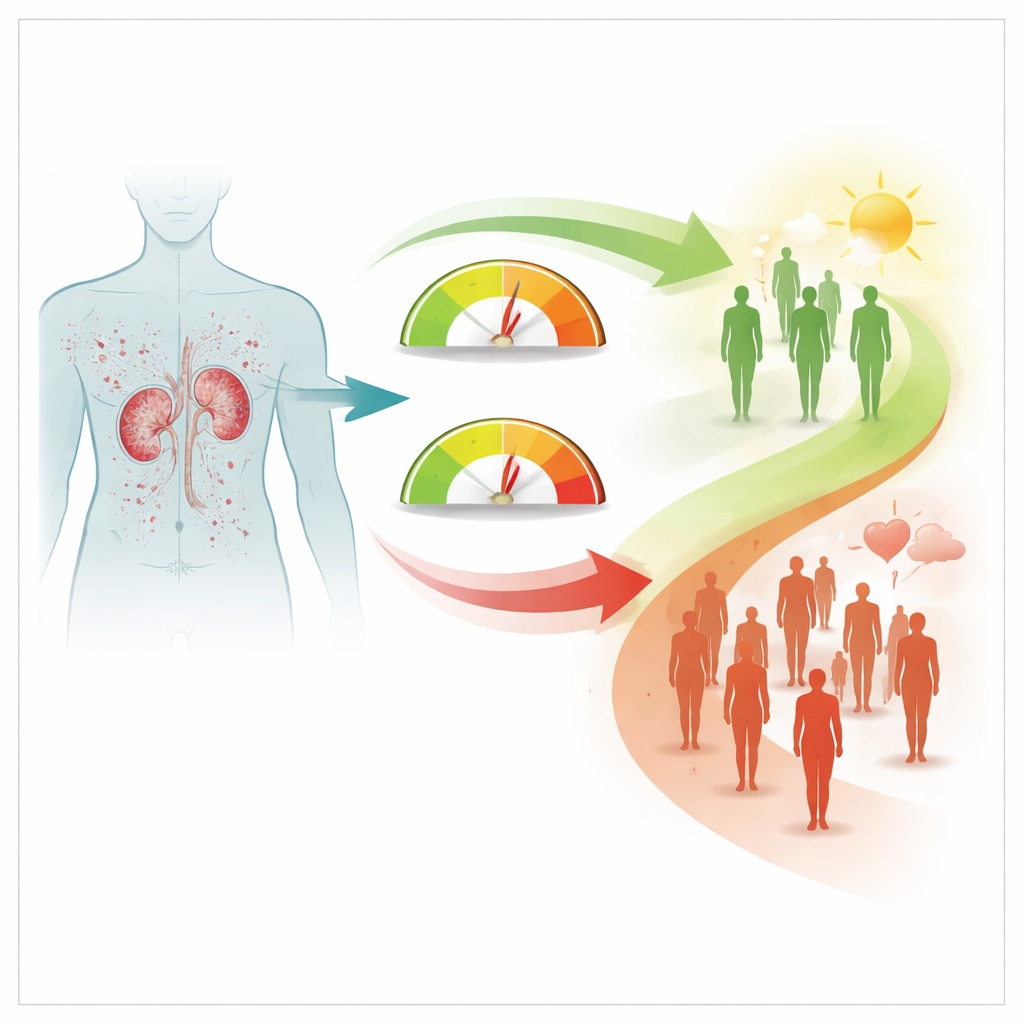
Everyday tests, bigger questions
The research focused on patients with metastatic renal cell carcinoma, a form of kidney cancer that has spread beyond the kidney. These patients received modern first-line immune-based therapies, often a mix of an immune checkpoint inhibitor with a targeted drug. The scientists asked whether the starting levels of two enzymes in the blood—gamma-glutamyltransferase (GGT) and lactate dehydrogenase (LDH)—could help forecast how long people would live and how long their disease would remain under control. Importantly, GGT and LDH are not exotic experimental markers; they are standard tests that most cancer patients already have drawn in routine care.
Who was studied and what was measured
The team gathered data from 240 patients treated at five university hospitals in Germany between 2017 and 2024. All had metastatic kidney cancer and were starting their first course of immune-based combination therapy. The researchers recorded details such as age, general health, tumor type, previous kidney surgery, and sites of metastases, and they tracked two key outcomes: progression-free survival (how long before the cancer clearly worsened) and overall survival (how long patients lived after starting treatment). Blood samples taken around the beginning of therapy were analyzed for several liver-related enzymes and LDH; each value was then classified as "high" or "low" based on how it compared with the group’s median level.
What the blood markers revealed
When the scientists compared outcomes, they found that patients with lower LDH levels at the start of treatment went significantly longer before their cancer progressed than patients with higher LDH. For overall survival, both low GGT and low LDH were linked to living substantially longer. In contrast, two other common liver enzymes did not reliably predict how patients would fare. These patterns held even after the researchers took into account other important clinical factors, such as the presence of liver metastases, the type of drug combination used, and established risk scores. In other words, GGT and LDH carried prognostic information above and beyond what doctors can already estimate from standard cancer staging. 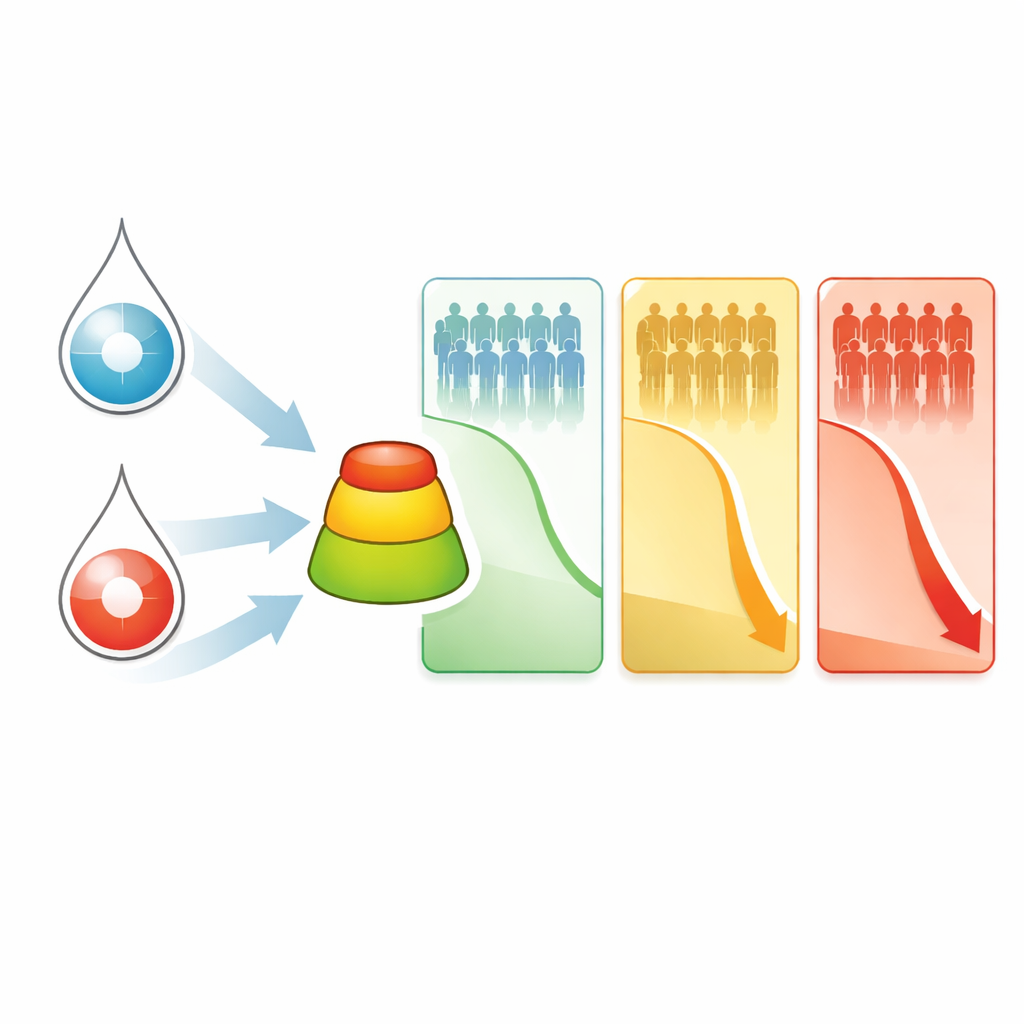
Stronger signals when tests are combined
The most striking insights came when GGT and LDH were considered together. Patients were divided into three groups: those with both markers low, those with only one marker high, and those with both high. People with two elevated markers had clearly worse outcomes. Their cancer tended to progress sooner, and their overall survival was much shorter than in the other two groups. This simple three-step score based on two routine blood values performed as well as, or better than, traditional clinical features for identifying high-risk patients. It was especially informative for those receiving a combination of immune therapy and a targeted drug, where tumor metabolism and inflammation may be particularly important.
What this means for patients and doctors
For someone facing metastatic kidney cancer, these findings do not change the treatments themselves, but they may change how closely a doctor watches the disease. High GGT and LDH levels at the start of immune-based therapy point to a group of patients who might need tighter imaging schedules, faster reactions to signs of progression, or consideration of clinical trials. Conversely, people with low levels of both markers may have a more favorable outlook and can often be monitored with standard follow-up. Because GGT and LDH are inexpensive, widely available tests, combining them into a simple risk score could help bring a more personalized, data-driven approach to immune therapy in everyday cancer care.
Citation: Uhlig, A., Mattigk, A., Sondermann, M. et al. Combined elevation of pre-treatment γ-glutamyltransferase and lactate dehydrogenase as independent prognosticator for metastatic renal cell carcinoma undergoing immune-based therapy. Sci Rep 16, 12742 (2026). https://doi.org/10.1038/s41598-026-48270-3
Keywords: metastatic renal cell carcinoma, immune checkpoint therapy, prognostic biomarkers, gamma-glutamyltransferase, lactate dehydrogenase