Clear Sky Science · en
Chitosan and its derivatives in Lady Rosetta potatoes:In vivo gene expression modulation driving growth, yield, quality, and antibacterial defense
Healthier fries start in the soil
For many people around the world, potatoes mean chips and fries, not green fields and lab benches. Yet what happens to a potato plant long before harvest can shape not only how many tubers it produces, but also how much oil the chips absorb, how brown they get, and how many unwanted compounds form during frying. This study explores whether a natural substance called chitosan and its modified forms can help farmers grow Lady Rosetta potatoes that yield more, resist disease, and make safer, higher quality snack products.
A natural helper for potato crops
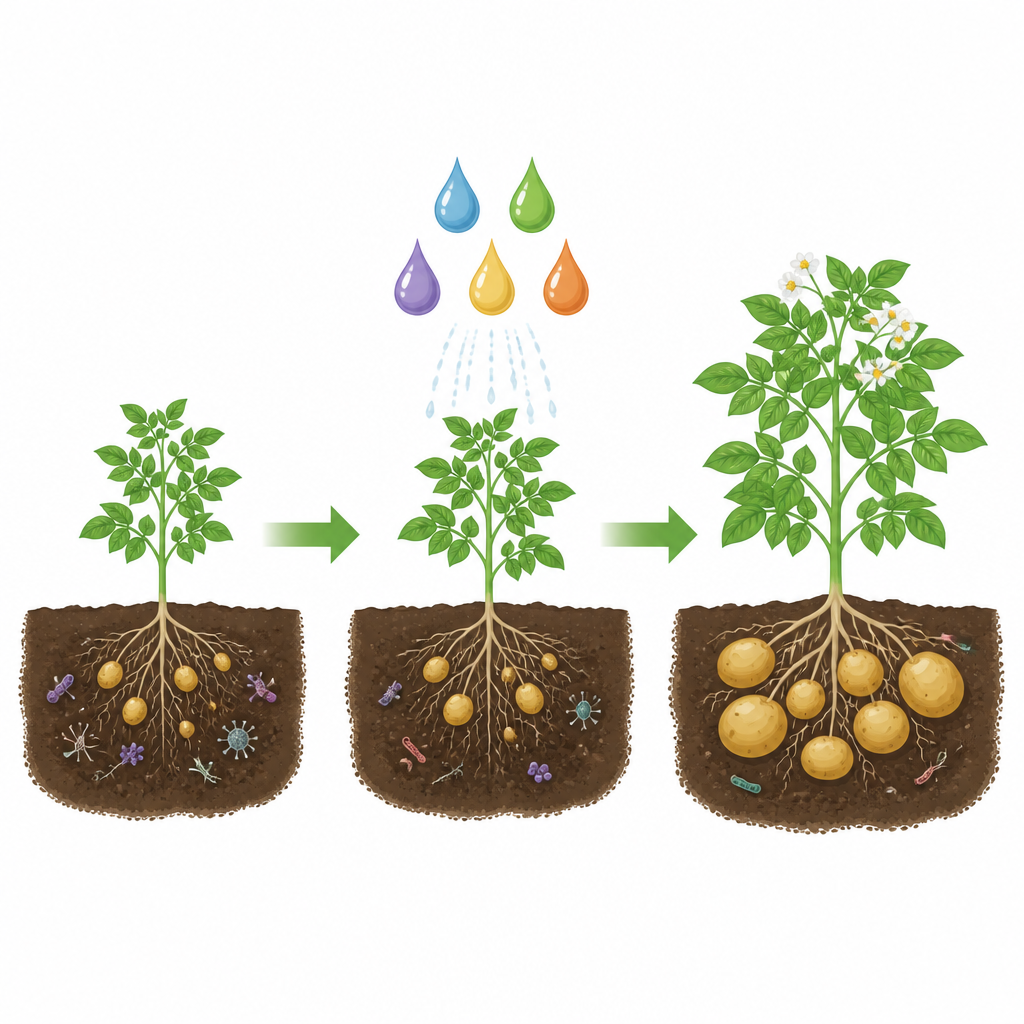
Chitosan comes from chitin, the tough material that makes up crab shells and some fungal cell walls. It has attracted attention as a more eco-friendly aid for crops, offering plant growth benefits and defense against microbes without leaving harmful residues. However, standard chitosan does not dissolve easily, which can limit its usefulness in the field. To address this, researchers tested three more soluble versions – chitosan acetate, chitosan lactate, and N,O-carboxymethyl chitosan – by soaking Lady Rosetta potato minitubers in different concentrations and then growing them in pots for two seasons under controlled outdoor conditions.
Stronger plants and bigger harvests
The team found that the exact chemical form of chitosan mattered more than the dose. Among all treatments, chitosan lactate clearly stood out. Plants from minitubers treated with this form sprouted several days earlier and grew nearly twice as tall as untreated controls. They produced more shoots, more leaves, and, most importantly for farmers, more and heavier minitubers. In the second season, chitosan lactate plants produced almost three times as many minitubers per plant as the control plants, and the tubers were heavier on average. Other forms, such as N,O-carboxymethyl chitosan, showed some benefits, but none matched the overall performance of the lactate version.
Greener leaves, better tubers, and safer chips
Leaf tests showed that chitosan treatments boosted the green pigments that drive photosynthesis, which helps plants turn sunlight into the sugars that feed growing tubers. Low doses of chitosan acetate and lactate increased chlorophyll, while a medium dose of N,O-carboxymethyl chitosan produced the most carotenoids, another group of helpful pigments. Inside the harvested minitubers, certain chitosan combinations raised dry matter – a key trait for crispy chips that absorb less oil – while others kept fat content lower. Notably, chitosan lactate at low and medium doses led to tubers with less reducing sugar and lower total sugar, which is important because these sugars fuel browning and the creation of acrylamide, a potentially harmful compound formed during high-heat cooking.
Rewriting the potato’s inner script
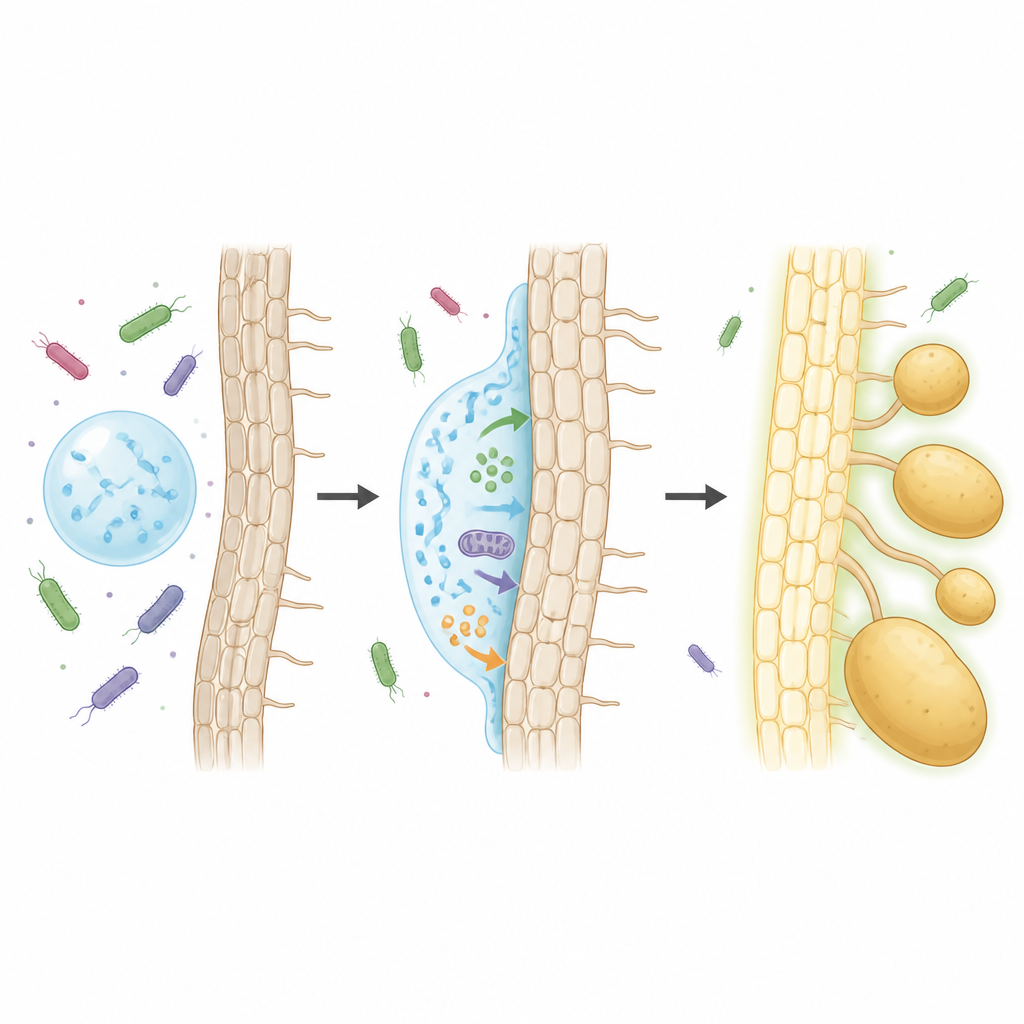
To understand how chitosan lactate reshaped tuber quality from the inside out, the researchers measured the activity of two potato genes. One, AS1, helps build asparagine, a key ingredient in acrylamide formation. The other, POT32, is tied to browning reactions in cut or fried potatoes. Plants treated with chitosan lactate, especially at 0.03 percent, showed dramatic drops in the activity of both genes, by roughly three-quarters compared with untreated plants. This gene-level shift helps explain the lower sugars, less browning, and reduced acrylamide potential seen in the tubers, linking a simple pre-planting soak to subtle changes in the plant’s biochemistry.
A natural shield against potato diseases
Beyond growth and quality, the study also tested how chitosan forms affected two dangerous potato bacteria that cause soft rot and brown rot, diseases that can devastate harvests and storage. In lab tests, the strongest protection came from chitosan lactate at the highest dose, which created the largest clear zones where bacteria could not grow. This effect was seen against both target pathogens and matched the vigorous growth and higher yields noted in the greenhouse. The findings suggest that chitosan lactate acts as both a growth booster and a protective barrier, reducing disease pressure so plants can invest more energy in healthy development.
What this means for farmers and consumers
Taken together, the results point to chitosan lactate as a promising tool for more sustainable potato production. When used at carefully chosen concentrations, it speeds up sprouting, strengthens plants, increases the number and weight of minitubers, and helps create tubers that are better suited for chip processing, with higher dry matter, lower sugars, less browning, and fewer ingredients for acrylamide formation. At the same time, it helps shield potatoes from key bacterial diseases without relying on conventional pesticides. For growers of Lady Rosetta and similar varieties, this approach could mean higher yields and more marketable crops, while consumers may eventually see snack products that are both tastier and safer, rooted in a natural treatment applied long before the potatoes reach the fryer.
Citation: Zakaria, T.Y., El-Soda, M., ElFoli, A.F. et al. Chitosan and its derivatives in Lady Rosetta potatoes:In vivo gene expression modulation driving growth, yield, quality, and antibacterial defense. Sci Rep 16, 16137 (2026). https://doi.org/10.1038/s41598-026-48263-2
Keywords: potato yield, chitosan lactate, acrylamide reduction, potato disease control, chip processing quality