Clear Sky Science · en
Autonomous dynamic economic dispatch with limited fuel and renewable energy sources using marine predators optimizer
Keeping the Lights On When Fuel Runs Short
Electricity systems around the world are under pressure: demand keeps climbing, fuel prices swing wildly, and societies are pushing hard to cut pollution. This paper explores a practical question at the heart of that challenge: when some power plants suddenly do not have enough fuel, can we still keep the grid secure, affordable, and cleaner by leaning on solar, wind, and smarter control software? The authors develop and test a new way to schedule power plants hour by hour so that homes and industries stay supplied even when fuel supplies are tight.

Why Fuel Shortages Threaten the Grid
Modern power grids rely heavily on fossil-fueled stations. When fuel is plentiful, grid operators can simply choose the mix of plants that meets demand at the lowest cost while respecting technical limits such as how fast a plant can ramp up or down. But in reality, fuel deliveries can be delayed or cut, and not all generators face shortages at the same time. Earlier research mostly assumed that fuel is always available, and used renewable energy mainly as a way to lower cost and emissions. This work tackles a neglected but very real problem: how to run a power system when some plants face fuel shortages, without sacrificing reliability.
Smart Scheduling with Flexible Plant Limits
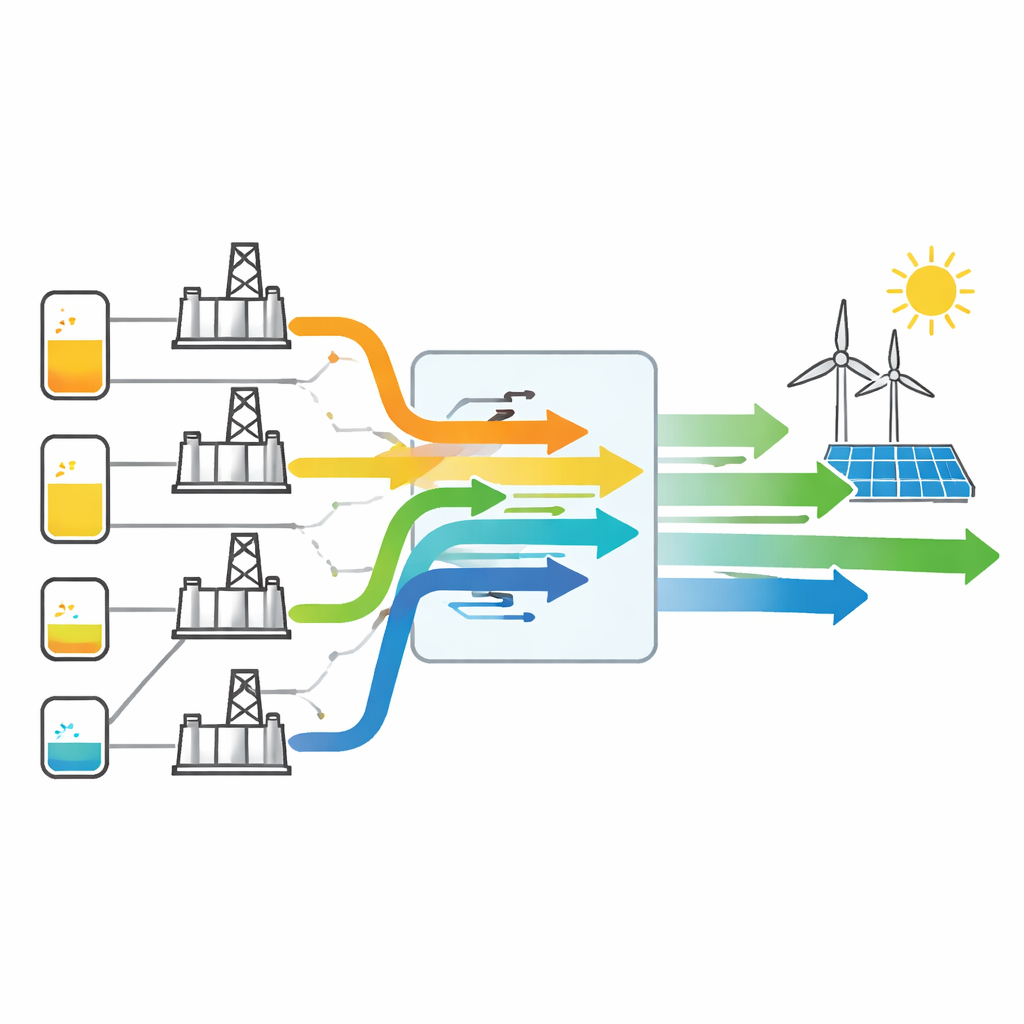
The authors build on a framework called Dynamic Economic Emission Dispatch, which decides how much power each plant should produce every hour over a full day, balancing fuel cost and pollution. Their key innovation is a technique they call Dynamic Generation Capacity. Instead of treating a plant’s minimum and maximum output as fixed, these limits change with the amount of fuel actually available. If fuel is scarce, the model automatically tightens that plant’s allowable range; if fuel is abundant, it keeps the original limits. This flexible treatment avoids unrealistic schedules that would demand more power from a unit than its fuel can support, and it helps the optimization search only within what is physically possible.
Nature-Inspired Software to Steer the System
To solve this complex scheduling puzzle, the study compares three nature-inspired algorithms that mimic group behavior found in animals: a Marine Predators Algorithm, a Walrus Optimization Algorithm, and the well-known Particle Swarm Optimization. All three search for the best combination of plant outputs over 24 hours, subject to technical and fuel constraints. Tested on a system of ten conventional units plus solar and wind farms, and evaluated over many repeated runs, the marine predators approach consistently found slightly cheaper operating plans with far less variation between runs. That consistency is crucial for grid operators who must trust that automatic scheduling tools will give reliable answers every day, not just occasionally.
What Happens When Renewables and Fuel Limits Meet
The authors then explore four realistic operating stories. First is a normal day with full fuel and no renewables, which serves as a benchmark. Second, they impose fuel shortages on two plants but allow dynamic generation capacity, showing that the system can still meet demand by reshuffling output to other units, though at higher cost and emissions. Third, they add solar and wind but keep rigid limits on the fuel-short plants; in this case, renewables lower costs and pollution, but total generation falls short of demand for parts of the day, undermining supply security. Finally, when both renewables and dynamic capacity are used together, the system manages to supply the full demand, preserve all technical limits, and reduce both fuel cost and emissions compared with the full-fuel case.
Implications for a Cleaner and Safer Grid
In plain terms, the study shows that simply adding more solar and wind is not enough to guarantee reliable power during fuel shortages. Renewable output can be too variable to fully cover sudden gaps on its own. The combination of flexible plant limits and a robust optimization algorithm, however, allows the system to squeeze the most useful work out of whatever fuel remains, while letting renewables take over as much of the load as possible. Over a typical day, this strategy cuts overall fuel spending and emissions and still keeps the lights on. For policymakers and grid planners, the message is that smart scheduling tools and realistic models of fuel availability are as important as building new clean generation when designing a resilient, low-carbon power grid.
Citation: Mohamed, M.I., Ali, A.F.M., Yousef, A.M. et al. Autonomous dynamic economic dispatch with limited fuel and renewable energy sources using marine predators optimizer. Sci Rep 16, 13518 (2026). https://doi.org/10.1038/s41598-026-48247-2
Keywords: power system optimization, renewable integration, fuel shortages, economic dispatch, grid reliability