Clear Sky Science · en
Emergence of virulent ESBL-producing Escherichia coli in meat with human health implications and control using liposomal cinnamon, oregano, and clove within a One Health framework
Why this matters for your dinner plate
When you buy chicken or a beef burger, you probably think about taste and price, not invisible bacteria that may no longer respond to antibiotics. This study tracks how drug‑resistant Escherichia coli (E. coli) move between animals, meat, and people, and tests whether naturally derived oils from cinnamon, oregano, and clove—packaged in tiny fat bubbles called liposomes—can help keep these dangerous germs in check without changing how the meat looks or tastes.
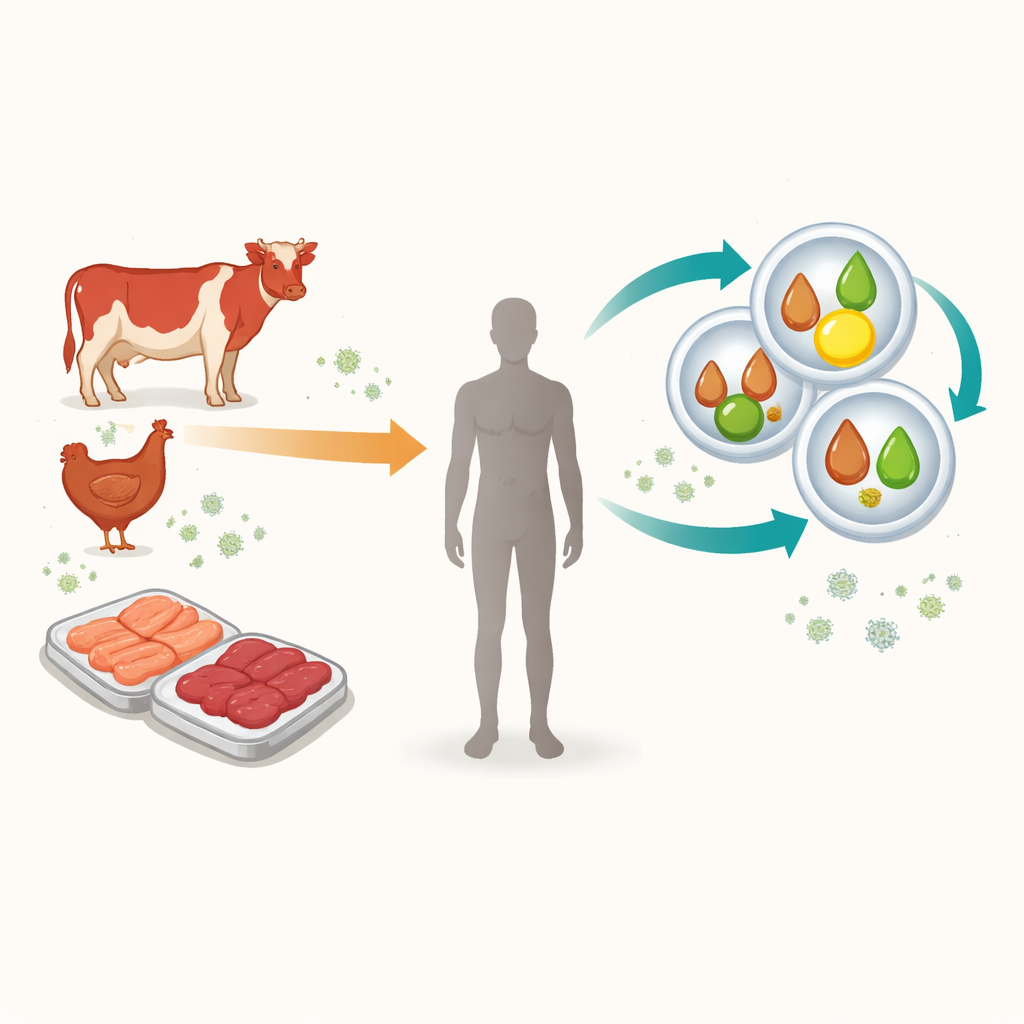
Germs that travel from farm to fork
The researchers collected 320 samples from Egyptian markets and hospitals: raw chicken, beef burgers, and stool from people with diarrhea. They found E. coli in more than a quarter of all samples, with the highest proportion in humans, followed by chicken and then beef burgers. Many of these bacteria belonged to lineages known to be good at surviving in the gut and causing disease. The clear overlap between strains in animals, meat, and people supports the “One Health” idea—that human, animal, and environmental health are tightly linked and must be studied together.
Superbugs hiding in everyday meat
Testing showed that almost all of the E. coli isolates were multidrug‑resistant, meaning they could withstand at least three different classes of antibiotics commonly used in people and animals. The bacteria were especially resistant to older, widely used drugs such as ampicillin and tetracycline, and many also resisted key third‑generation cephalosporins that doctors rely on for serious infections. Only one modern “last‑resort” drug, tigecycline, remained fully effective. Genetic analysis confirmed this worrying picture: every isolate carried multiple resistance genes, including those for extended‑spectrum β‑lactamases (ESBLs) that break down advanced penicillins and cephalosporins, and many also carried genes that help spread resistance between bacteria.
Built‑in tools for causing severe disease
Beyond surviving antibiotics, these E. coli were well‑equipped to make people sick. All isolates carried at least one virulence gene, and 70% carried three or more. These genes help the bacteria stick to the gut, steal iron from the host, damage cells, and produce Shiga toxins linked to bloody diarrhea and kidney failure. Some virulence profiles were more common in meat, others in human samples, but there were strong correlations between strains from the food and from patients. This pattern suggests that contaminated meat is not just carrying harmless gut bacteria—it can be a reservoir of highly aggressive strains that may reach people through undercooked food or poor hygiene.
Harnessing kitchen spices as quiet defenders
To explore a safer way of controlling these superbugs, the team tested a mixture of cinnamon, oregano, and clove essential oils encapsulated in liposomes (LCOC). Liposomes protect the fragile oils, improve their stability in food, and help them spread evenly. In lab tests, very low concentrations of LCOC stopped the growth of 13 particularly dangerous meat isolates that were multidrug‑resistant, ESBL‑producing, and rich in virulence genes. At doses that did not fully halt growth, the treatment still strongly reduced the activity of key virulence genes, meaning the bacteria became less able to attach, invade, or produce toxins while in real meat matrices, not just test tubes.
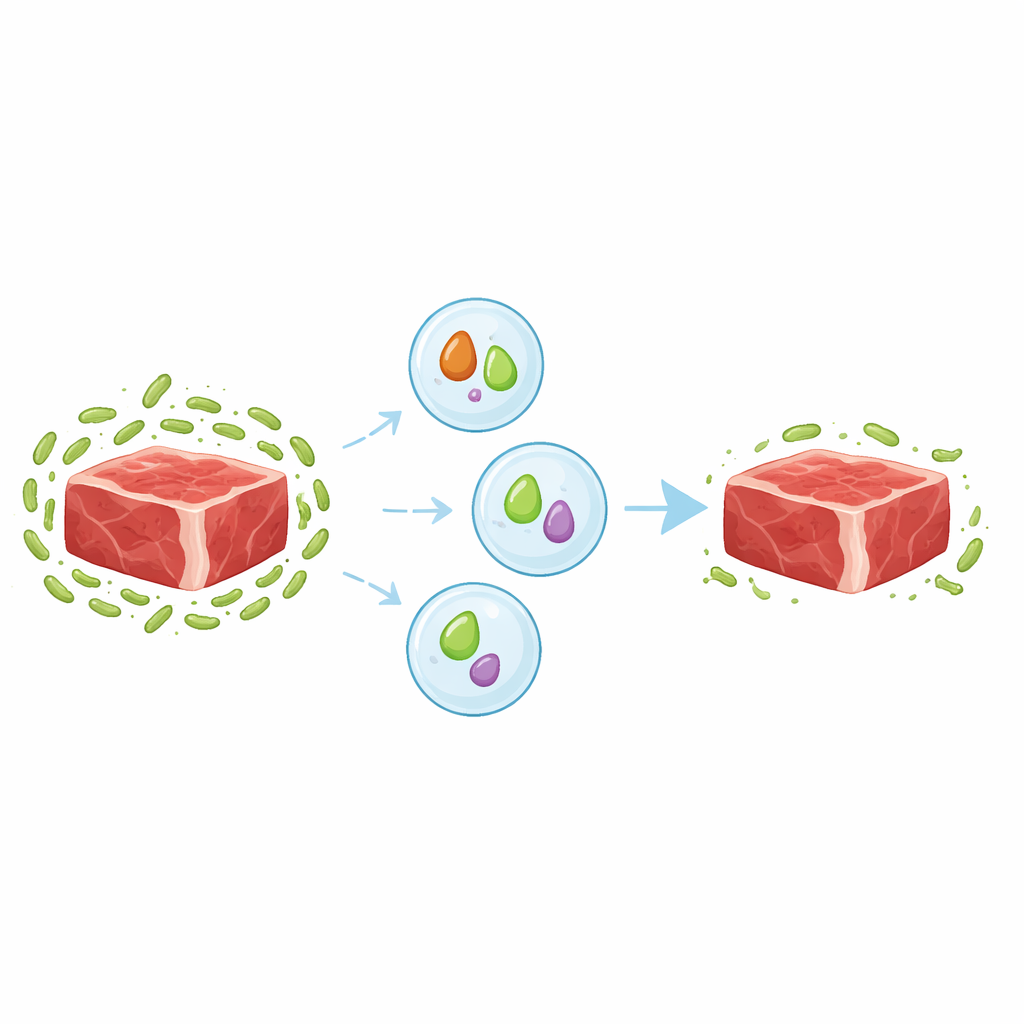
Keeping flavor while disarming the threat
Because flavor and texture matter to consumers, the researchers cooked chicken and beef burgers treated with sub‑inhibitory levels of LCOC and asked trained panelists to score appearance, smell, juiciness, tenderness, taste, and overall acceptability. The treated meat was rated essentially the same as untreated controls, suggesting that this natural mixture could make meat safer without turning buyers away. Overall, the study concludes that drug‑resistant, virulent E. coli are common in meat and in people in the same region, posing a clear public health risk, but that carefully formulated plant‑based oils may offer a promising tool to reduce both resistance and virulence while preserving meat quality. Further animal and large‑scale field studies are needed before such treatments can be widely adopted, but the work points toward using familiar spices in a new, high‑tech way to protect public health.
Citation: El-Hamid, M.I.A., ELTarabili, R.M., Ibrahim, G.A. et al. Emergence of virulent ESBL-producing Escherichia coli in meat with human health implications and control using liposomal cinnamon, oregano, and clove within a One Health framework. Sci Rep 16, 13381 (2026). https://doi.org/10.1038/s41598-026-48140-y
Keywords: antibiotic-resistant E. coli, meat safety, essential oils, One Health, foodborne infections