Clear Sky Science · en
Physiological, biochemical, and gene expression responses of vetiver grass (Chrysopogon zizanioides) to petroleum hydrocarbon contaminated soil
Why a tough grass matters for dirty soil
Spills and leaks from oil production leave long lasting scars on soil, harming crops, wildlife, and in some cases human health. Cleaning this mess up is often expensive and can create new problems when harsh chemicals or heavy machinery are involved. This study looks at an alternative that grows quietly in the ground: vetiver grass, a deep rooted species already known for holding soil in place. The researchers asked how well vetiver can cope with oil soaked earth in a controlled experiment, and what is happening inside the plant as it responds to this harsh environment.
Testing grass in oily ground
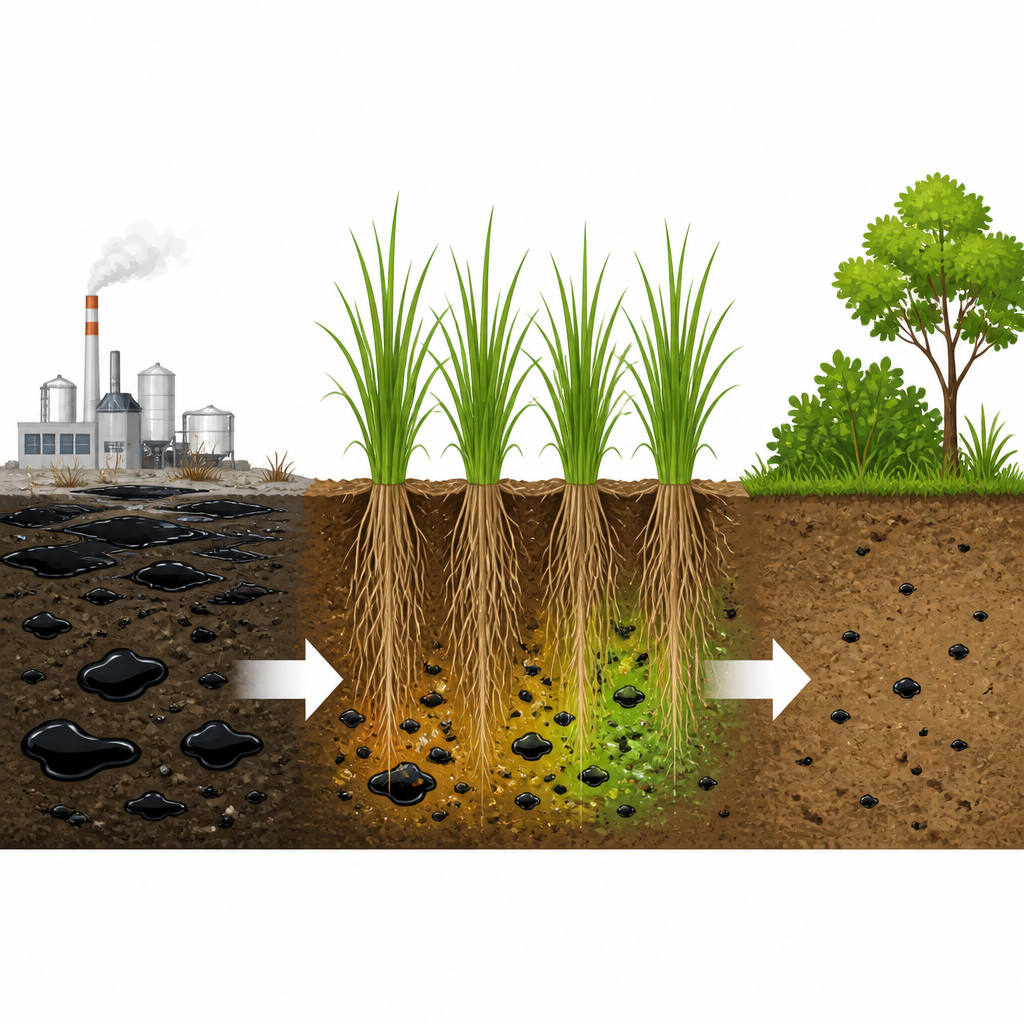
To explore this, the team grew vetiver plants in pots filled with soil mixed with different amounts of real drilling waste from an oil field in Iran. Some pots held only contaminated soil, while others had both soil and vetiver. Over six months in a greenhouse, the plants experienced a range of pollution levels, from clean soil to soil heavily loaded with petroleum hydrocarbons. At the end of the trial, the scientists measured how much oil remained in the soil, how much had moved into the roots and leaves, and how the plant’s own chemistry and activity had changed.
How much oil the grass helped remove
The presence of vetiver made a striking difference in how much pollution was left behind. In pots without plants, natural processes such as sunlight, air, and soil microbes removed roughly half of the petroleum compounds. In contrast, pots with vetiver showed removal levels between about 85 and 93 percent, depending on how polluted the soil started out. The lowest pollution treatment showed the highest percentage clean up, while the most polluted pots still lost the greatest total amount of oil. Most of the remaining petroleum compounds were found concentrated in the roots, with only small amounts reaching the leaves, suggesting the plant keeps the worst of the contamination away from its photosynthetic tissues.
How the plant’s defenses switch on
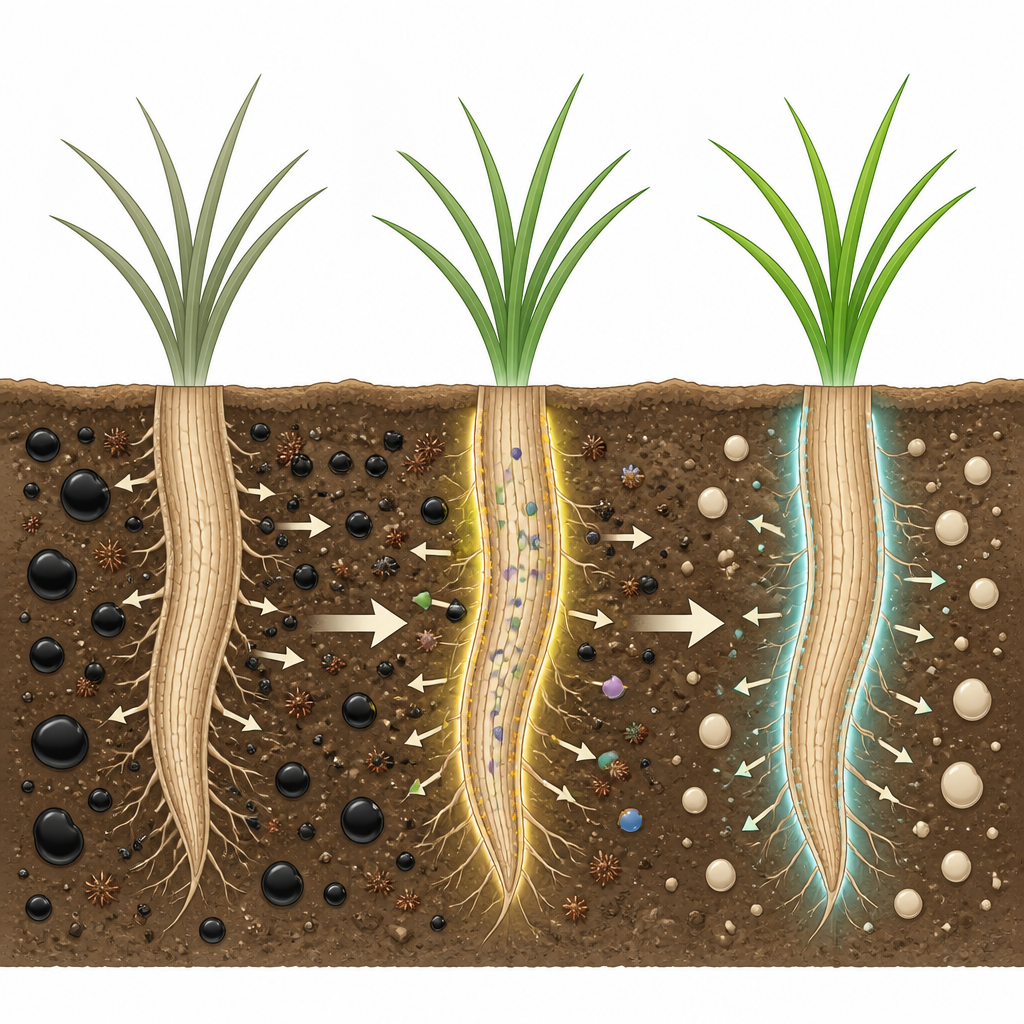
Living in oil soaked soil puts vetiver under stress, and the study found clear signs that its internal defense systems were working hard. Enzymes that help break down harmful reactive forms of oxygen inside cells became more active as pollution levels rose. At the same time, the balance of a key protective molecule called glutathione shifted toward its “used up” form, another hallmark of stress. The genes that guide the production of detoxifying proteins, especially one group that attaches glutathione to unwanted chemicals, were switched on more strongly in contaminated conditions, particularly in the roots where most of the oil accumulated.
Making protective plant chemicals
The researchers also saw that vetiver ramped up a major pathway that produces a wide variety of protective plant compounds. A key control gene in this pathway became much more active in oil exposed roots, and the plant built up large amounts of phenolic and flavonoid compounds. These substances can mop up damaging reactive molecules, strengthen cell walls, and may even leak into the surrounding soil where they can influence the mix of microbes. Such changes could help create root zone communities that are better at breaking down petroleum, adding another layer to the plant’s role in cleaning contaminated ground.
What this means for cleaner land
Taken together, the results show that vetiver grass not only survives in petroleum contaminated soil but also helps remove a large share of the pollution while reorganizing its own chemistry to cope with stress. The grass holds most of the oil in its roots, boosts its enzyme defenses, and produces extra protective compounds, all of which point to a flexible and resilient response. For people looking for greener ways to restore damaged land, vetiver appears to be a strong candidate for plant based clean up. However, these findings come from carefully controlled pots, so larger field studies are still needed to see how well this approach performs in the complex conditions of real oil impacted sites.
Citation: Nazari, M., Amiri, H., Mohsenzadeh, S. et al. Physiological, biochemical, and gene expression responses of vetiver grass (Chrysopogon zizanioides) to petroleum hydrocarbon contaminated soil. Sci Rep 16, 15876 (2026). https://doi.org/10.1038/s41598-026-48121-1
Keywords: vetiver grass, phytoremediation, petroleum hydrocarbons, soil pollution, plant stress responses