Clear Sky Science · en
Speech perception consistency facilitates initial lexical activation, but not speech perception flexibility
Why steady hearing matters
When you listen to someone speak, your brain has to turn a fuzzy stream of sounds into clear words almost instantly. This study asks a simple but important question: do people who hear speech in a more steady, consistent way get a head start in understanding words, and does that same steadiness also help them recover when they initially mishear something?
Hearing the same sound the same way
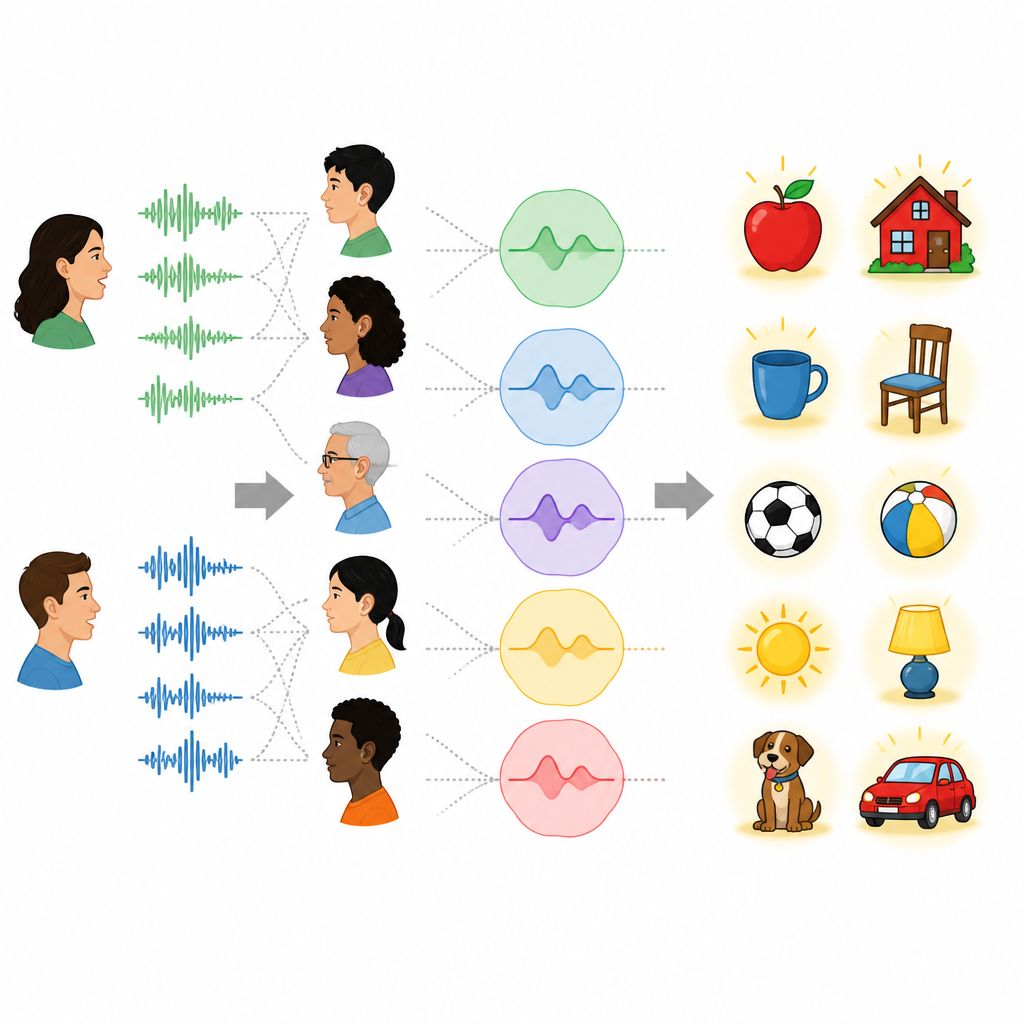
The researchers focused on “speech perception consistency,” which describes how similarly a person responds when they hear the very same sound over and over. Some listeners treat a sound in a stable way each time, while others give more scattered responses. To measure this, Spanish–English bilingual adults listened to many versions of sounds between “b” and “p” and used a line rating task to show what they heard. The team then calculated how tightly each person’s answers clustered around their own typical pattern, giving each listener a score for how consistent their hearing was in Spanish and in English.
Watching word choices unfold in real time
Next, the same listeners took part in an eye tracking experiment while they listened to spoken words and looked at pictures on a screen. Some words were designed to be tricky “garden path” items that start out sounding like one word but end up being another, such as a word that begins like “peach” but finishes like “beachball.” Before the word is fully spoken, both pictures are plausible choices, so where people look reveals which word their brain is considering at each moment. By analyzing eye movements before the word becomes uniquely clear, the researchers measured how strongly sound information at the beginning of a word activates possible word matches.
Consistency boosts early word activation
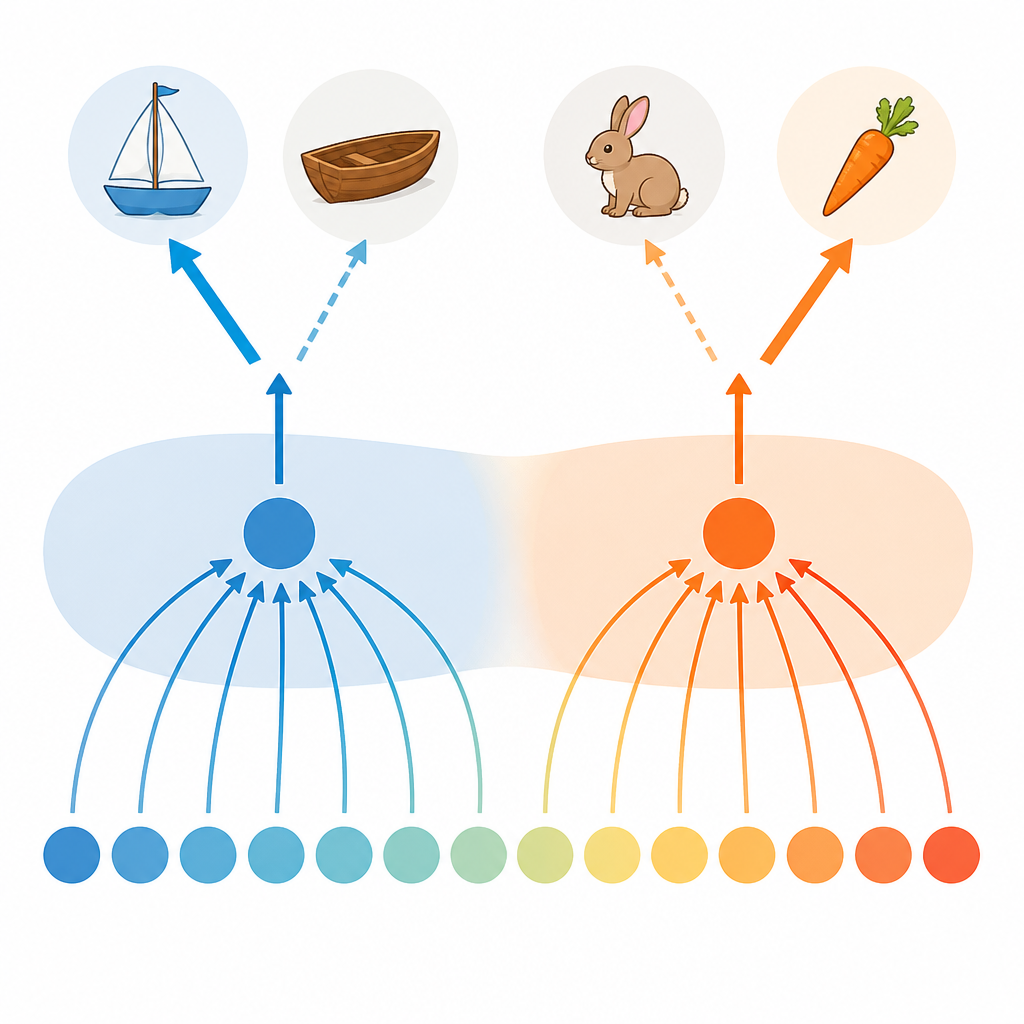
The main finding is that people with more consistent hearing made earlier and stronger use of the sound cues at the start of a word. When the first sound was more like “b,” they looked more often and more clearly toward pictures of “b” words; when it was more like “p,” they shifted toward “p” pictures. This pattern appeared for both “b” and “p” words in their native Spanish and for “p” words in English. The one weaker case, English “b,” is especially hard for Spanish speakers because it sounds very similar to Spanish “p,” so even steady listeners find it tricky.
Flexibility comes from something else
The study also tested “speech perception flexibility,” the ability to recover after being led down the wrong path by an initially misleading sound. Here, the key measures were how often people ended up choosing the correct picture and how quickly they shifted their eyes to it once the later part of the word made the intended meaning clear. Surprisingly, consistency did not help much on these measures in either language. What mattered more was how different the misleading beginning was from the true target sound: the more misleading the start, the harder and slower the recovery, no matter how consistent the listener was overall.
What this means for everyday listening
For everyday speech, these results suggest that having a steady way of mapping sounds onto speech categories mainly helps you get a quick and accurate first guess about what word is being said. It does not, however, make you notably better at fixing that guess once new information proves it wrong. In other words, consistency in hearing acts like a strong launchpad for early word recognition, while later mental “course corrections” seem to rely on different aspects of how we process fine details in speech.
Citation: Wong, B.W.L., Samuel, A.G. & Kapnoula, E.C. Speech perception consistency facilitates initial lexical activation, but not speech perception flexibility. Sci Rep 16, 16189 (2026). https://doi.org/10.1038/s41598-026-47943-3
Keywords: speech perception, word recognition, bilingual listening, lexical activation, hearing variability