Clear Sky Science · en
Nutrient metal interactions and adaptive responses of Dunaliella tertiolecta to zinc and copper toxicity under phosphorus limitation
Why tiny green cells matter for dirty water
Rivers, lakes, and coastal seas are increasingly laced with heavy metals from factories, farms, and cities. At the same time, these waters can run short of key nutrients that microscopic algae need to grow. This study explores how one such alga, Dunaliella tertiolecta, copes when two common metals—zinc and copper—build up in the water while an essential nutrient, phosphorus, runs low. Understanding this three‑way interaction helps explain when waterways tip from healthy to harmed and how algae might be used to help clean pollution.
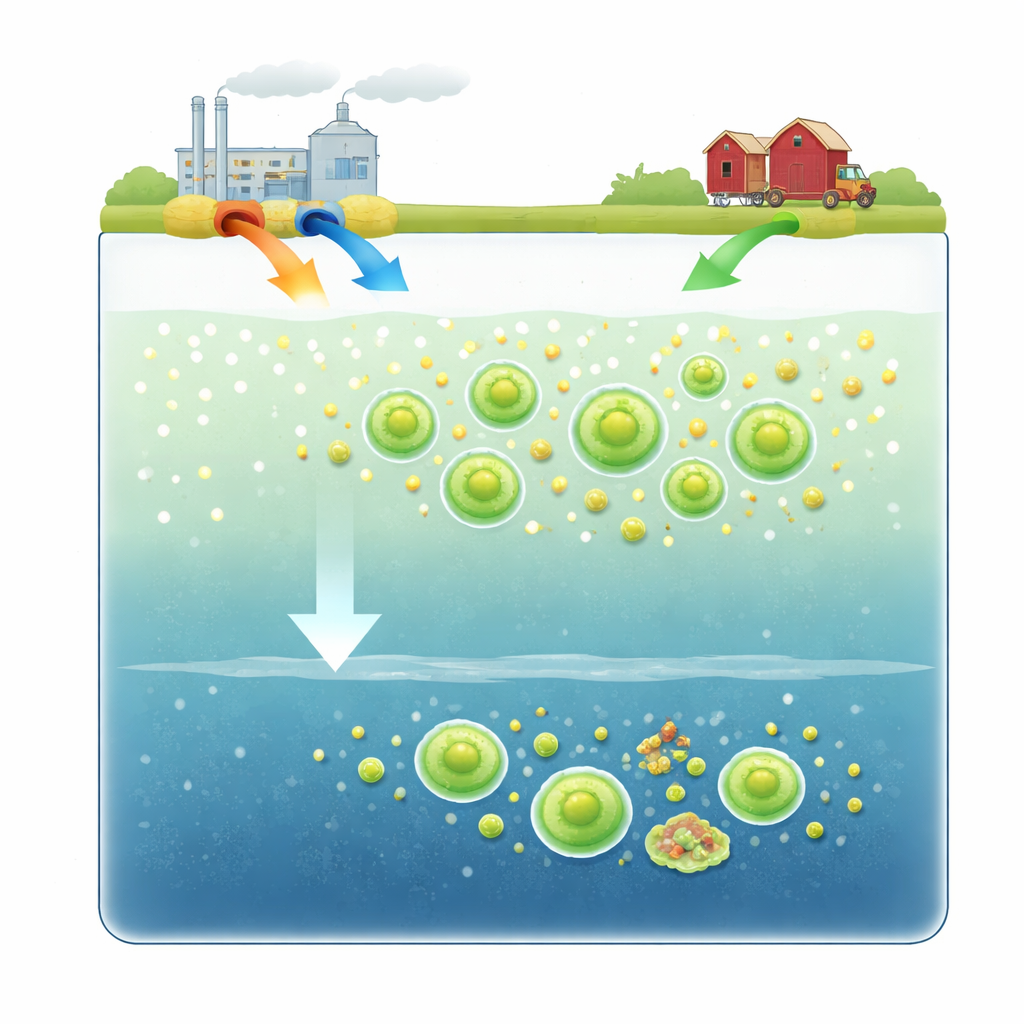
A simple lab test of a complex problem
The researchers grew cultures of Dunaliella in glass flasks under controlled light and temperature. They created two basic conditions: one with normal phosphorus levels and one with no added phosphorus, mimicking nutrient‑poor environments. To each, they added a range of zinc or copper concentrations from slightly polluted to strongly contaminated. Over 16 days they tracked how fast the algae grew, how much green pigment (chlorophyll) they contained, and how actively they carried out photosynthesis and respiration by measuring oxygen production and use.
When food is scarce, poison hits harder
In phosphorus‑rich cultures, the algae grew well and could tolerate modest doses of metals. But in phosphorus‑starved cultures, growth slowed even before metals were added, and any extra metal made things markedly worse. At the highest copper level tested, algal growth dropped by about 85 percent under phosphorus limitation, and zinc caused nearly 80 percent loss. Statistical tests confirmed that both metals became significantly more toxic when phosphorus was lacking, with copper consistently more harmful than zinc. This shows that the same metal load can be far more dangerous in waters where basic nutrients are out of balance.
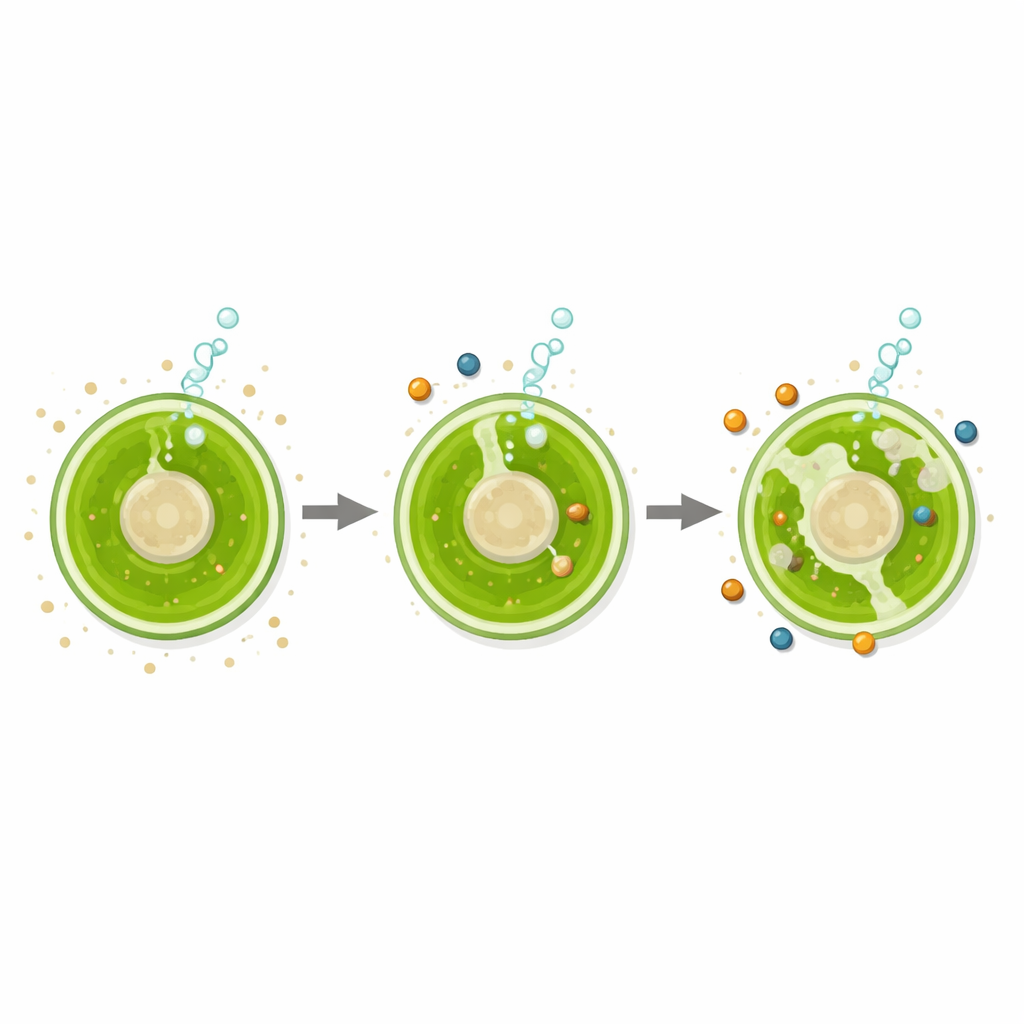
Fading green and weakening breath
Chlorophyll, the pigment that lets algae harvest light, closely tracked these stresses. In nutrient‑rich cultures, low metal levels left total chlorophyll almost unchanged. Under phosphorus limitation, however, increasing zinc or copper stripped chlorophyll from the cells, again with copper doing more damage. At the highest copper dose, total chlorophyll fell by over 90 percent, a sign that the photosynthetic machinery was being dismantled. Oxygen measurements told a similar story. Photosynthesis (oxygen release) dropped sharply as metal concentrations rose above about 10 milligrams per liter, especially when phosphorus was scarce, while respiration (oxygen uptake) also declined at high metal levels, signaling broad failure of cellular metabolism.
Clues for cleaning up and protecting waters
Beyond documenting harm, the work highlights Dunaliella’s resilience. At low metal levels and with enough phosphorus, the alga maintained growth and oxygen production, suggesting it can help lock up metals from the water without collapsing immediately. That makes it a promising candidate for bioremediation systems that use living algae to polish metal‑contaminated wastewater. But the results also warn that if phosphorus is stripped too far—for example, by over‑treating sewage or by complex changes linked to eutrophication—the same algae become far more vulnerable to metal stress and far less able to help.
What this means for real‑world water quality
For non‑specialists, the central message is straightforward: pollution problems do not act in isolation. Zinc and copper may be present at the same concentrations in two different lakes, yet be much more dangerous in one that is starved of phosphorus. This study shows that phosphorus availability strongly sets the "buffering capacity" of algae against metal toxicity. Keeping nutrient levels within a healthy range, rather than simply as low as possible, can make aquatic communities more robust in the face of metal contamination—and can improve the odds that helpful algae like Dunaliella can be harnessed to clean up our water instead of becoming casualties of pollution.
Citation: Kaamoush, M., El-Agawany, N. Nutrient metal interactions and adaptive responses of Dunaliella tertiolecta to zinc and copper toxicity under phosphorus limitation. Sci Rep 16, 13399 (2026). https://doi.org/10.1038/s41598-026-47929-1
Keywords: heavy metal pollution, microalgae, phosphorus limitation, aquatic ecosystems, bioremediation