Clear Sky Science · en
Roselle (Hibiscus sabdariffa) stem residues as a sustainable plant-based culture medium for isolation of endophytic bacteria
Turning Plant Waste into a Useful Tool
Every harvest leaves behind piles of stems, leaves, and other plant parts that are usually burned or thrown away. This study shows how the discarded stems of the roselle plant—a common medicinal herb used for herbal drinks—can be transformed into a low-cost, plant-based "broth" for growing helpful bacteria that live inside plant roots. This simple shift turns waste into a resource that could support greener farming and reduce dependence on expensive, animal-based laboratory materials. 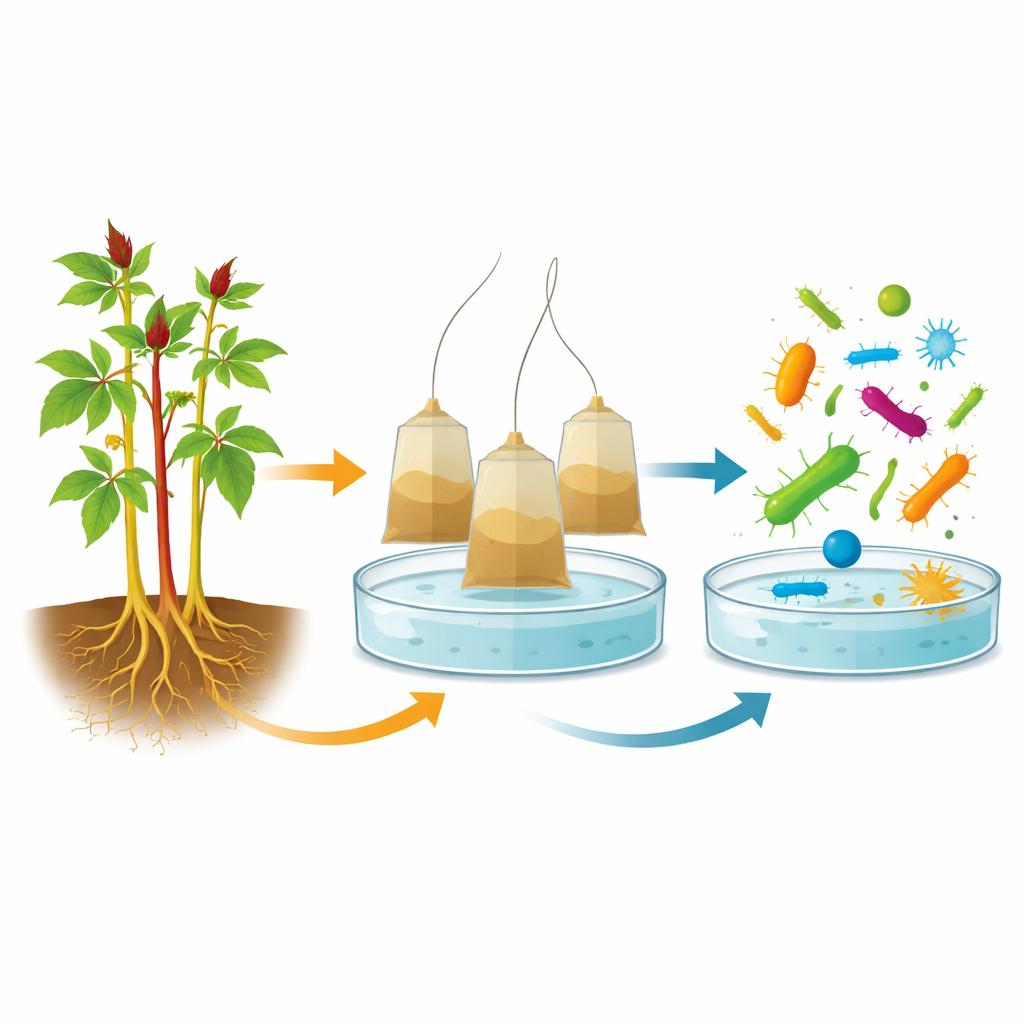
Why Bacteria Inside Roots Matter
Plants do not live alone. Their roots and inner tissues are home to communities of bacteria that can quietly boost growth, help them cope with heat and poor soils, and even influence the healing compounds that medicinal plants produce. Many of these so‑called endophytic bacteria are hard to grow outside the plant because standard lab media do not resemble their natural home. Scientists are increasingly exploring plant-based growth mixtures, made from real plant material, to mimic the conditions that these shy microbes prefer.
An Underused Stem with Hidden Value
Roselle (Hibiscus sabdariffa) is widely grown in Egypt and many other countries for its fleshy red calyces, which are used in teas and herbal remedies. After harvest, the stems are typically discarded despite being rich in structural sugars, proteins, and minerals. The researchers collected roselle stems from experimental fields in Aswan, dried and ground them into a fine powder, and mixed this powder with water at different strengths to create a simple, plant-only culture medium. Basic chemical tests confirmed that the stem powder contains enough key nutrients—such as nitrogen, phosphorus, potassium, and trace minerals—to support microbial life.
Testing Growth in Plant-Based Broth
To see whether the new medium really works, the team first grew a known beneficial root bacterium, Bacillus sonorensis, on roselle-based agar plates and in liquid cultures. They compared several stem concentrations with a standard laboratory nutrient agar. At a concentration of 1 gram of stem powder per liter, bacterial growth was strong and steady over several days, closely matching that seen on conventional media. Lower concentrations supported weaker growth, while higher levels took longer to reach full activity. This experiment showed that the roselle stem medium can reliably nourish at least one well-studied beneficial strain, and that its strength can be tuned for best performance.
Discovering Hidden Root Partners
The researchers then asked a deeper question: can this plant-based medium help recover the full range of bacteria actually living inside roselle roots? After carefully cleaning and processing root samples, they plated serial dilutions onto both roselle stem agar and standard nutrient agar. The plant-based medium captured about 43 percent of the total bacterial colonies, compared with 57 percent on the synthetic medium—a strong performance for a simple plant-only recipe. Over time, colonies on the roselle medium were distinct, easy to tell apart, and often showed different shapes and textures than those grown on standard agar, hinting at a somewhat different—and possibly more plant-adapted—community. 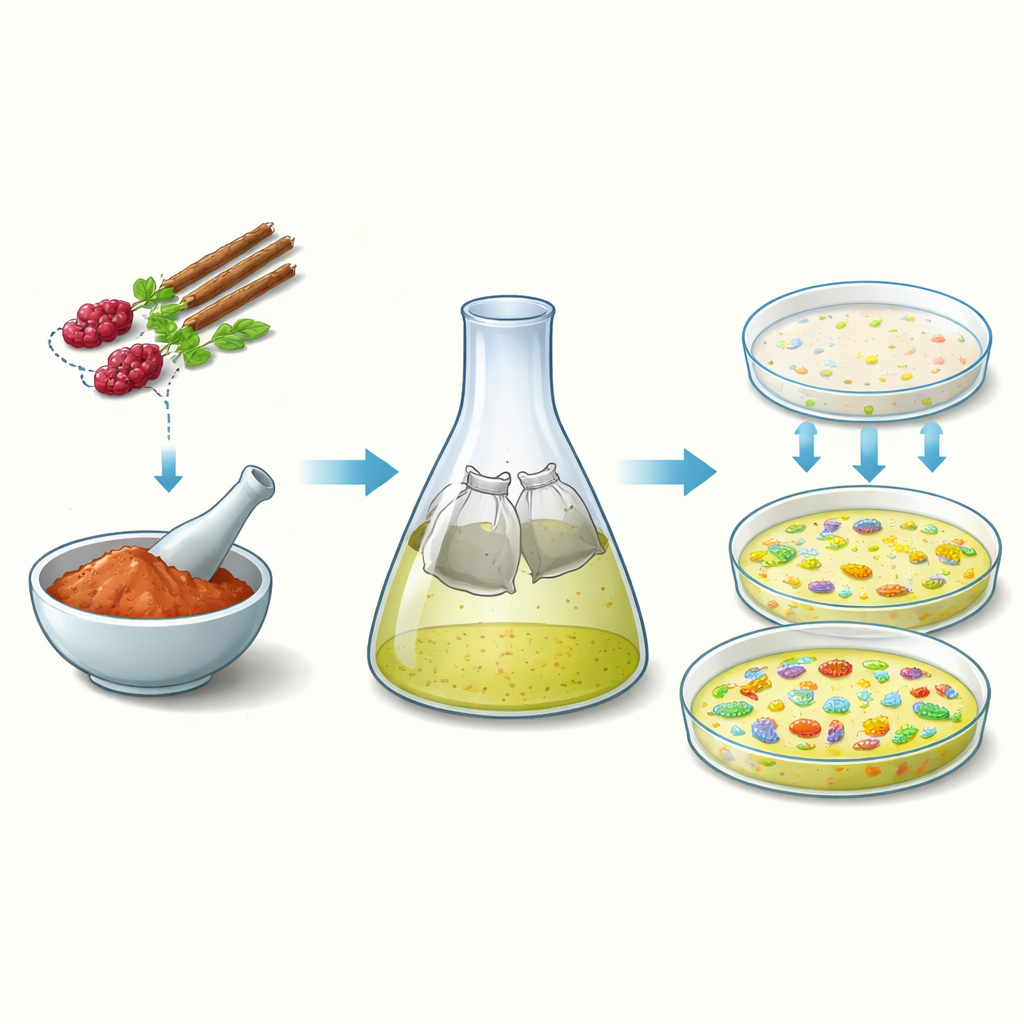
Finding Bacteria that Help Plants Thrive
From nearly 200 isolates, the team selected 20 for closer study. Using basic microscopy, staining, and simple tests, they mapped out differences in colony shape, color, and cell type. Many of these bacteria produced substances linked to plant growth, such as indole compounds that influence root development, or could free up locked phosphorus and potassium from their surroundings—important nutrients in poor soils. Some strains also fixed nitrogen, turning this gas from the air into forms that plants can use, and several tolerated higher temperatures, matching the hot, dry environment of Aswan. Genetic analysis of key isolates revealed that most belonged to the Bacillus group, along with a few related genera known from plant and soil habitats.
Big Savings and Greener Practices
Beyond biology, the roselle stem medium offers striking economic and environmental benefits. Standard nutrient agar relies on animal-derived ingredients like beef extract and peptone and costs about 13.35 Egyptian pounds per liter. In contrast, the roselle-based medium, made from an agricultural by-product, costs only about 0.14 pounds per liter—nearly a 99 percent reduction in cost. Using stems that would otherwise be burned or discarded cuts waste, lowers pollution, and supports a circular approach in which farm residues feed the next generation of helpful microbes.
What This Means for Farmers and Science
In simple terms, this work shows that roselle stems can be turned into an inexpensive, plant-only growth medium that successfully nurtures beneficial root bacteria and helps scientists capture a large share of the hidden microbes living inside roselle roots. The optimal recipe uses just 1 gram of dried stem powder per liter of water, yet still recovers a diverse set of bacterial partners with traits that can boost plant growth and resilience. For laboratories with limited resources and for efforts to develop eco-friendly biofertilizers, this plant-based approach offers a practical, sustainable alternative to conventional media and a promising path toward more resilient and environmentally friendly agriculture.
Citation: Ibrahim, Z.A., Soliman, W.S., Ahmed, O.K. et al. Roselle (Hibiscus sabdariffa) stem residues as a sustainable plant-based culture medium for isolation of endophytic bacteria. Sci Rep 16, 14394 (2026). https://doi.org/10.1038/s41598-026-47923-7
Keywords: plant-based culture media, endophytic bacteria, roselle stems, biofertilizer, sustainable agriculture