Clear Sky Science · en
Phytochemical-mediated green synthesis of selenium nanoparticles using Catharanthus roseus and their physicochemical characterization, biological evaluation, and molecular docking analysis
Medicine from a Common Garden Flower
Many of today’s powerful drugs began life in plants, and one unassuming garden favorite—the Madagascar periwinkle (Catharanthus roseus)—has already inspired major cancer medicines. This study explores a new twist on that story: using the plant’s own natural compounds to build tiny particles of the element selenium in water, without harsh chemicals. These plant-made “green” nanoparticles are tested as potential weapons against microbes, viruses, and liver cancer cells, and computer models are used to probe how they might work at the molecular level.
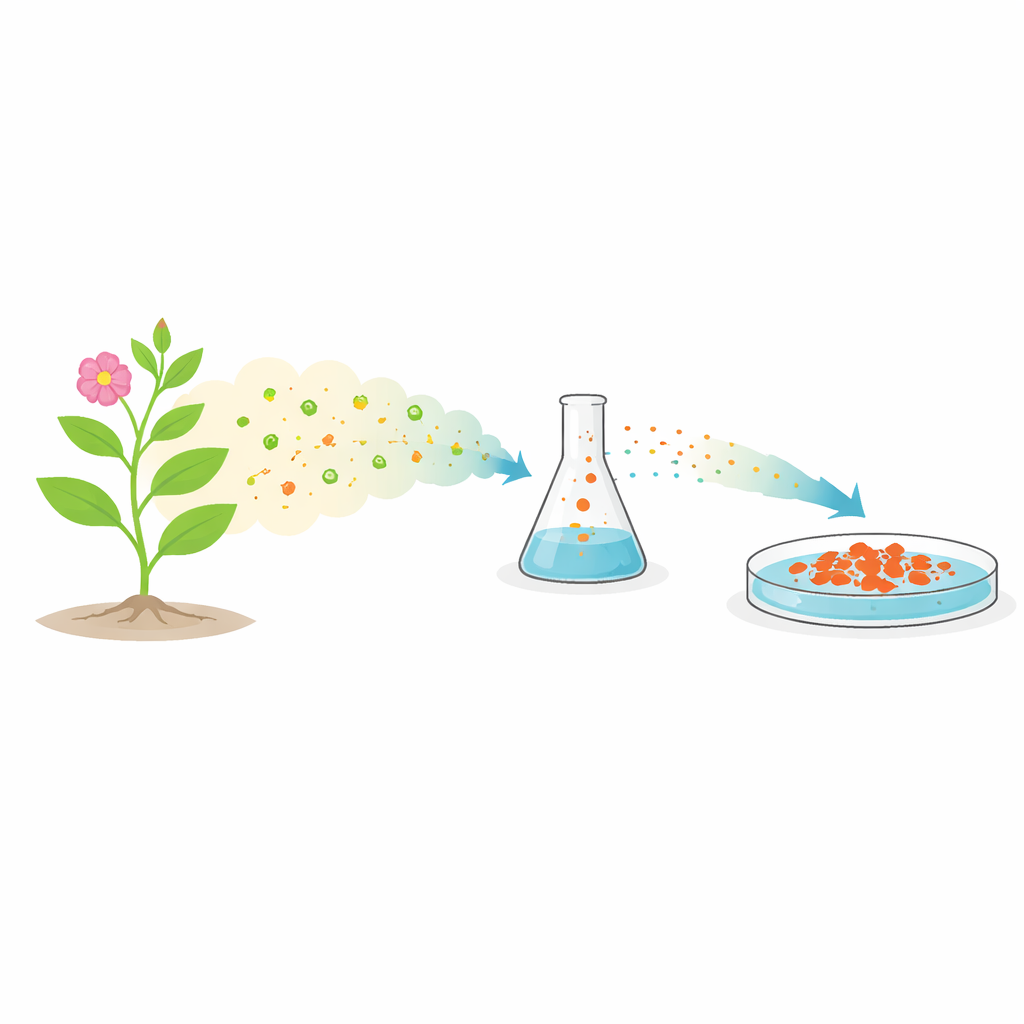
Turning Plant Chemistry into Tiny Particles
The researchers began by making a simple water extract from dried periwinkle leaves, much like brewing a strong herbal tea. Advanced chemical profiling showed this extract is rich in colorful, reactive molecules—such as flavins, phenolic acids, flavonoids, and alkaloids—that can donate electrons and grab onto metal surfaces. When this extract was mixed with a solution of a common selenium salt and kept warm under light, the liquid slowly changed from pale green to pinkish red, a visual sign that tiny particles of elemental selenium were forming. Multiple techniques confirmed what the eye suggested: ultraviolet–visible light measurements showed a distinct absorption band typical of selenium nanoparticles; electron microscopes revealed mostly spherical particles between about 9 and 66 billionths of a meter across; X-ray measurements showed they were crystalline; and surface analyses indicated that plant-derived chemical groups coated and stabilized the particle surfaces.
How Plant Molecules Shape and Steady the Particles
Using their chemical survey of the extract, the team pieced together a plausible “assembly line” for how the plant helps build the nanoparticles. First, certain molecules transfer electrons to selenium ions, turning them into neutral selenium atoms that begin to cluster. Next, other groups in those same molecules—such as hydroxyl, carboxyl, and phosphate groups—stick to the fresh particle surfaces, forming an organic shell that prevents the particles from clumping and helps control their size. The authors also used network models and computer simulations to suggest that these plant compounds could cooperate with natural cellular redox systems, together shuttling electrons to selenium and stabilizing the growing particles. While these mechanistic ideas are based on known chemistry and simulations rather than direct proof, they offer a framework for designing greener nanomaterials more rationally in the future.
Fighting Germs, Viruses, and Cancer Cells
With the particles in hand, the scientists tested how well they could hinder a range of harmful organisms. In petri-dish experiments, the selenium nanoparticles strongly suppressed the growth of disease-causing bacteria and the yeast Candida albicans, often outperforming the raw plant extract. They were particularly effective against certain Gram-positive bacteria, a difference likely linked to the way their cell walls let the particles and the reactive oxygen species they generate get closer to vital cell components. The nanoparticles also showed activity against a human adenovirus in cultured cells at relatively low doses, although they did not affect rotavirus under the conditions tested. Most strikingly, in tests on liver cancer cells (HepG2), the particles showed potent cell-killing activity at very low concentrations, while parallel measurements on normal liver cells suggested a degree of selectivity that will need closer study.
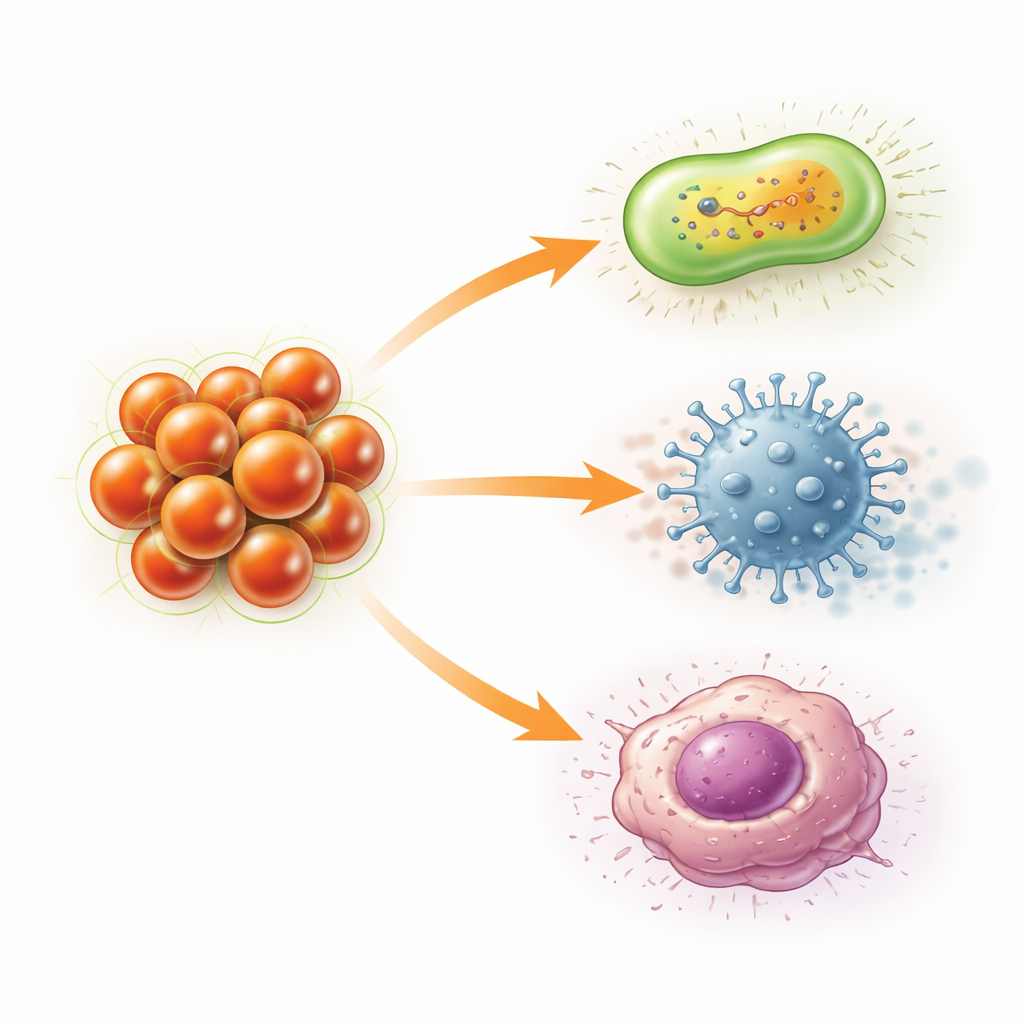
Peering into Molecular Lock-and-Key Fits
To better understand how these plant–selenium assemblies might interact with biological targets, the team turned to molecular docking and computer simulations. They modeled how key plant compounds, alone and bound to selenium, might fit into the three-dimensional structures of proteins from bacteria, viruses, and cancer-related pathways. In many cases, the simulations suggested that the combined plant–selenium complexes nestled snugly into protein pockets, forming dense networks of hydrogen bonds and stacking interactions with important amino acids. Adding selenium often tightened these fits and made the complexes more stable over time in simulated motion. These in silico results do not prove how the nanoparticles work in living systems, but they are consistent with the observed antimicrobial, antiviral, and anticancer effects and point to specific protein sites worth testing experimentally.
What This Could Mean for Future Treatments
Overall, the study shows that a readily available medicinal plant can drive the clean, water-based production of selenium nanoparticles that are structurally well defined and biologically active in early tests. By tying together detailed plant chemistry, physical measurements, biological assays, and computer modeling, the work moves beyond simple “green synthesis” recipes toward a more mechanistic understanding of how plant molecules build and tune such particles. For non-specialists, the takeaway is that everyday plants, combined with careful nanoscience, may help produce gentler, more sustainable tools to combat infections and cancer. However, the authors stress that these findings are preliminary: the nanoparticles have only been tested in cells and on computers, not in animals or humans, and important questions about safety, dosing, reproducibility, and large-scale production must be answered before any medical use can be considered.
Citation: Desouky, A.F., Fahim, A.M., Kelany, A.K. et al. Phytochemical-mediated green synthesis of selenium nanoparticles using Catharanthus roseus and their physicochemical characterization, biological evaluation, and molecular docking analysis. Sci Rep 16, 13642 (2026). https://doi.org/10.1038/s41598-026-47919-3
Keywords: green nanotechnology, selenium nanoparticles, medicinal plants, antimicrobial therapy, nanomedicine