Clear Sky Science · en
Deep sleep slow wave–spindle coupling is selectively linked to plasma amyloid-β levels in older adults in clinical trials
Why Deep Sleep Matters for Brain Health
As people live longer, many worry about losing their memory or developing dementia. Scientists now know that long before symptoms appear, sticky protein fragments called amyloid-beta begin to build up in the brain, setting the stage for Alzheimer’s disease. This study asks a simple but powerful question: can the quality of our deepest sleep—and a very precise rhythm inside it—signal how well the brain is handling these proteins, and might gentle sound stimulation during sleep help?
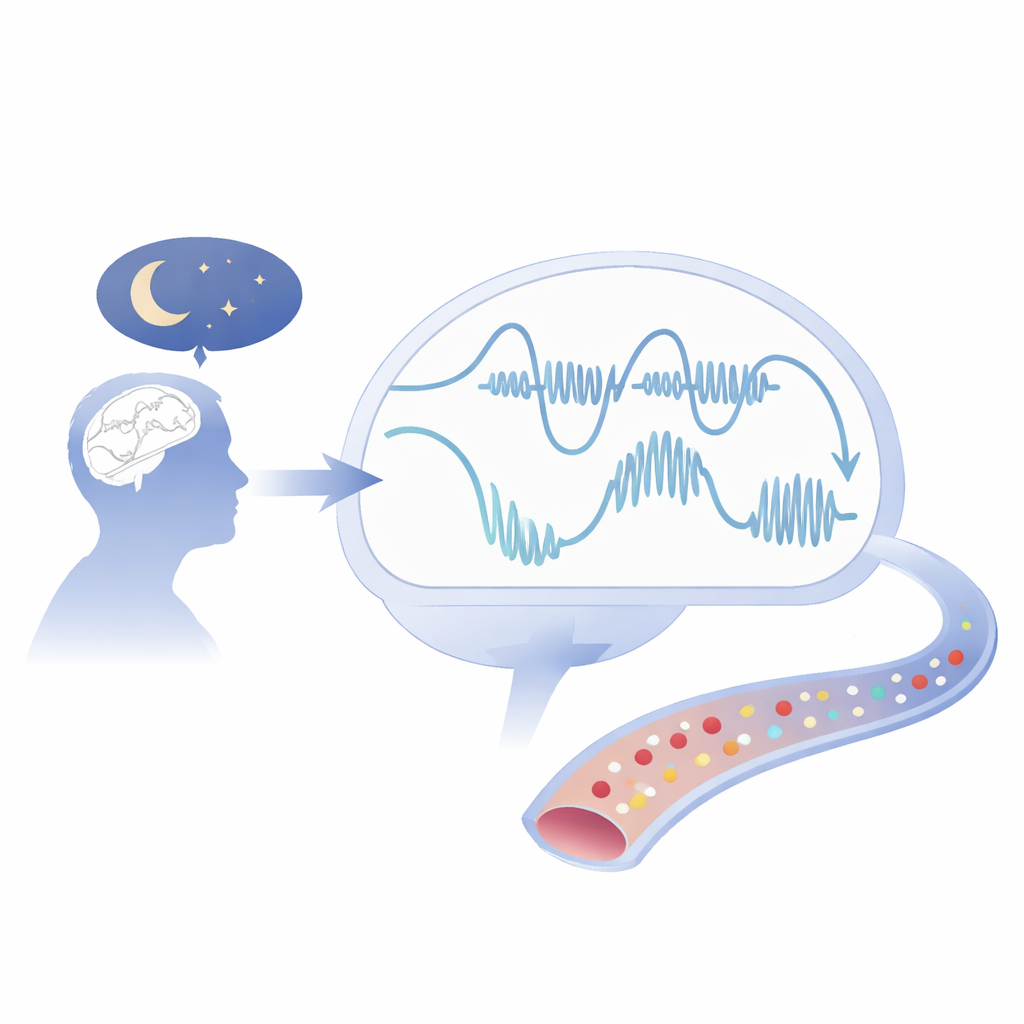
The Hidden Nighttime Chore of the Brain
During deep sleep, the brain enters a slow, rolling rhythm often described as slow waves. On top of these slow waves, quicker bursts of activity called spindles appear. Together, they help the brain file away memories and may also assist in washing out waste products such as amyloid-beta. Earlier research showed that when slow waves are weaker or disrupted, amyloid-beta levels tend to look worse. But slow waves are a broad measure. This team wanted to know whether the fine-tuned timing between slow waves and spindles—their precise coupling—might be an even more telling sign of brain health in older adults.
A Closer Look at Sleep in Older Volunteers
The researchers combined data from three clinical trials involving 47 older adults, with an average age of about 70 and a range from healthy thinking to mild cognitive problems. Everyone spent a baseline night in a sleep laboratory while their brain activity was recorded with a dense array of electrodes. In some participants, this was followed by three nights of an intervention where brief sound bursts were played exactly during the rising phase of slow waves, aiming to gently strengthen these deep sleep rhythms. Blood samples taken after the baseline and after the intervention were analyzed for the ratio of two forms of amyloid-beta in plasma, a measure that reflects risk for harmful deposits in the brain.
When Brain Rhythms Fall In and Out of Step
Rather than just counting how much deep sleep people got, the team examined how tightly spindles lined up with the slow waves, and whether the slow wave or the spindle tended to lead the dance. They found that two features of this coupling—how consistently spindles clustered at the same point of the slow wave, and whether the slow wave drove the spindle rather than the other way around—were the strongest predictors of healthier amyloid-beta ratios in the blood. These coupling measures were more informative than age, overall deep sleep power, time spent in different sleep stages, or standard cognitive test scores. Put simply, older adults whose sleep rhythms looked more "youthful" in their timing pattern also showed a more favorable amyloid-beta profile.
Boosting Sleep Rhythms with Gentle Sounds
Next, the researchers asked whether improving these rhythms could shift amyloid-beta levels in a positive direction. During three consecutive nights, a subset of 39 participants received precisely timed sound pulses during deep sleep. This phase-locked acoustic stimulation reliably increased the size of slow waves and strengthened slow wave–spindle coupling. Across all participants, nights with bigger slow waves were strongly linked to more favorable changes in amyloid-beta ratios after the intervention, suggesting better handling or clearance of these proteins. The story for coupling was more selective: stronger coupling improvements were tied to better amyloid-beta changes only in those who already showed signs of cognitive impairment, hinting that people at higher risk might benefit the most from tuning these delicate sleep rhythms.
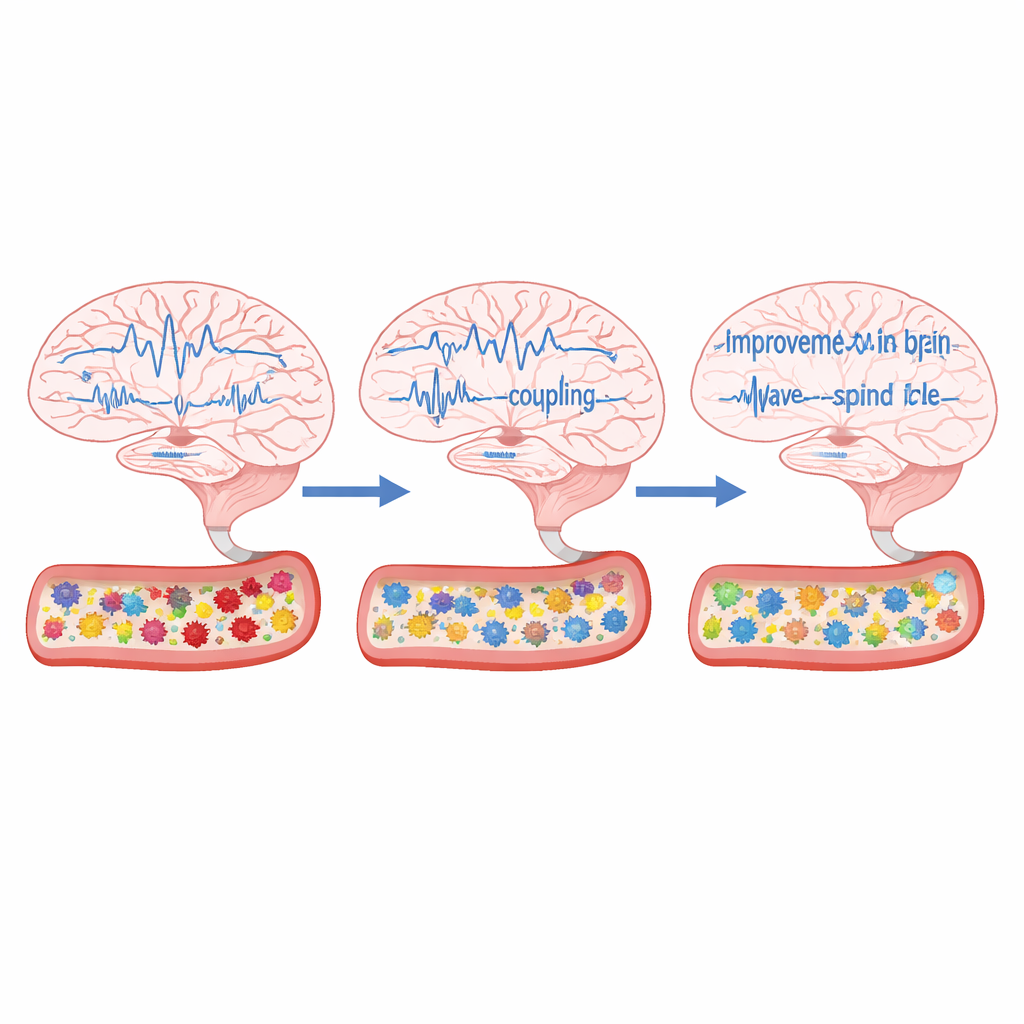
What This Could Mean for Preventing Memory Decline
For a layperson, the main message is that it is not just how long we sleep, but how precisely our brain rhythms are organized during deep sleep that may matter for long-term brain health. This study shows that the tight choreography between slow waves and spindles in older adults’ sleep is closely linked to blood markers of Alzheimer’s-related proteins, even before standard thinking tests show clear problems. Gentle, well-timed sound stimulation can enhance these sleep features and is associated with more favorable amyloid-beta responses, especially in those already showing cognitive difficulties. While more research is needed to prove cause and effect, the findings raise the hopeful possibility that noninvasive sleep-based interventions could one day help slow or prevent dementia by supporting the brain’s nightly "cleaning" job.
Citation: Wunderlin, M., Wicki, K., Teunissen, C.E. et al. Deep sleep slow wave–spindle coupling is selectively linked to plasma amyloid-β levels in older adults in clinical trials. Sci Rep 16, 11716 (2026). https://doi.org/10.1038/s41598-026-47886-9
Keywords: deep sleep, slow wave–spindle coupling, amyloid-beta, acoustic stimulation, Alzheimer’s disease