Clear Sky Science · en
Robust transcriptomic signatures of Alzheimer’s disease progression: validated explainable AI approach
Why this research matters to families and patients
Alzheimer’s disease slowly robs people of memory and independence, but doctors still lack simple tools to tell exactly how far the disease has progressed inside the brain. This study looks directly at brain tissue to see which genes switch on or off at different stages of Alzheimer’s, using transparent artificial intelligence to uncover patterns that might one day help doctors track the illness more precisely and tailor treatments to each stage.
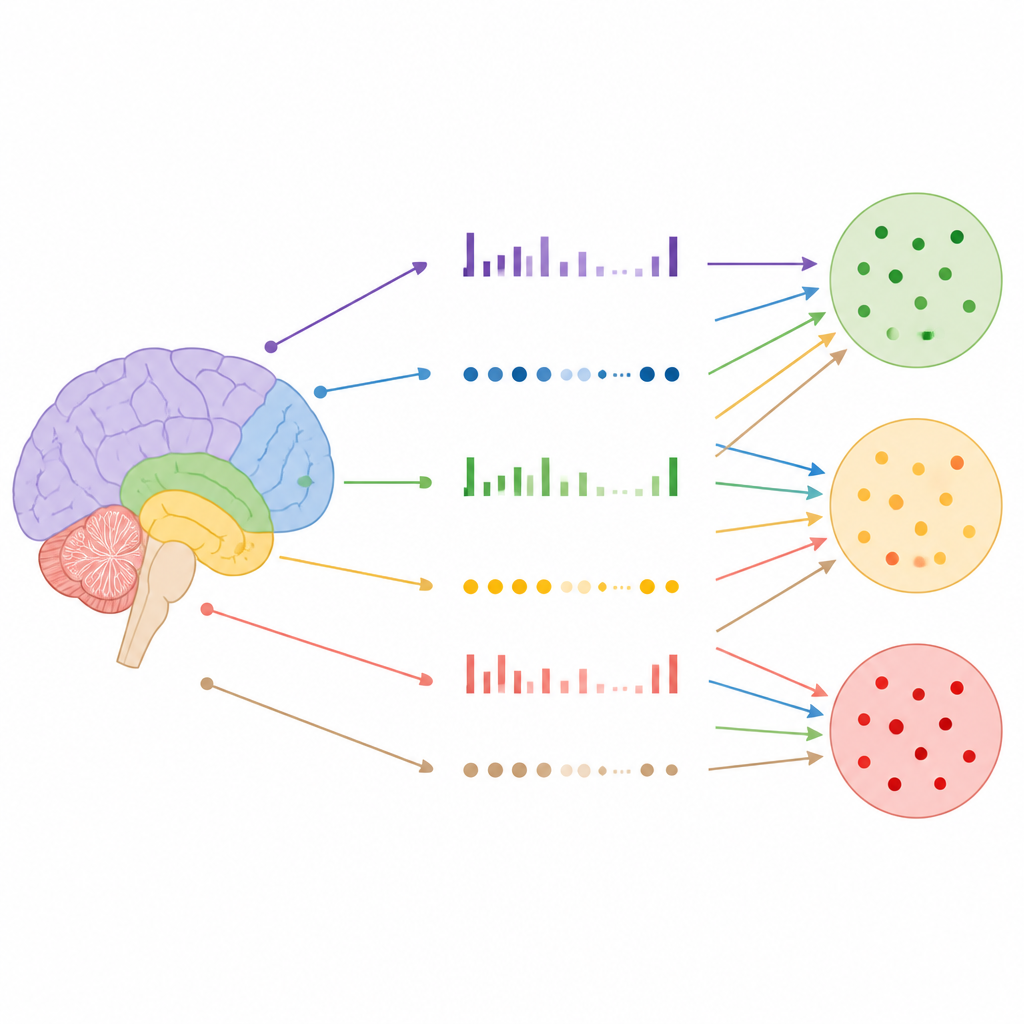
Looking inside the aging brain
The researchers analyzed brain samples from 125 people in a large post-mortem study. Each brain had already been scored using a standard scale called Braak staging, which tracks how Alzheimer’s tangles spread from deep memory centers to wider thinking areas. Instead of treating Alzheimer’s as simply present or absent, the team grouped samples into Early, Mid, and Late stages, then examined gene activity across eleven key brain areas involved in memory, emotion, and thinking, such as the hippocampus, temporal lobes, and frontal regions.
How smart algorithms read gene activity
The team worked with RNA sequencing data, which reflect how strongly thousands of genes are active in each brain region. They cleaned and standardized these data, then used a machine learning method called XGBoost to learn patterns that distinguish Early, Mid, and Late stages based on these gene activity profiles. To correct for uneven numbers of samples in each stage, they used a resampling technique so that the computer model saw a more balanced set of examples. Crucially, they combined this with an explainable AI method called SHAP, which assigns each gene a clear score showing how much it pushes a sample toward one stage or another.
Finding the brain’s stage specific fingerprints
Across brain regions, the model was able to tell stages apart better than random chance, with the posterior cingulate cortex and certain frontal and temporal areas carrying particularly strong signals. The researchers then asked a deeper question: which genes matter most, and do they stay the same across the disease course? They found that the top genes were strikingly stage specific, with only about 1.7 percent overlap between Early, Mid, and Late signatures. Early stages were linked to genes involved in energy use and basic cell machinery, Mid stages to immune and stress responses, and Late stages to mitochondrial function and synaptic connections, echoing how symptoms shift from subtle changes to widespread brain failure.
Zooming in on new candidate markers
From thousands of genes, the study highlighted a handful of promising candidates that consistently helped the model classify stages and also showed meaningful biological relationships to known pathways. One gene, ARX, emerged as a potential Early stage marker tied to inhibitory nerve cells that help balance brain activity. A Mid stage candidate, MKNK2, was associated with inflammation and cellular stress. In Late stages, genes such as SLC25A16 and NEURL1B pointed toward problems in energy-producing structures and in connections between nerve cells. The team confirmed these links by checking how strongly these genes tended to rise and fall together with established markers of metabolism, immunity, and synapses.
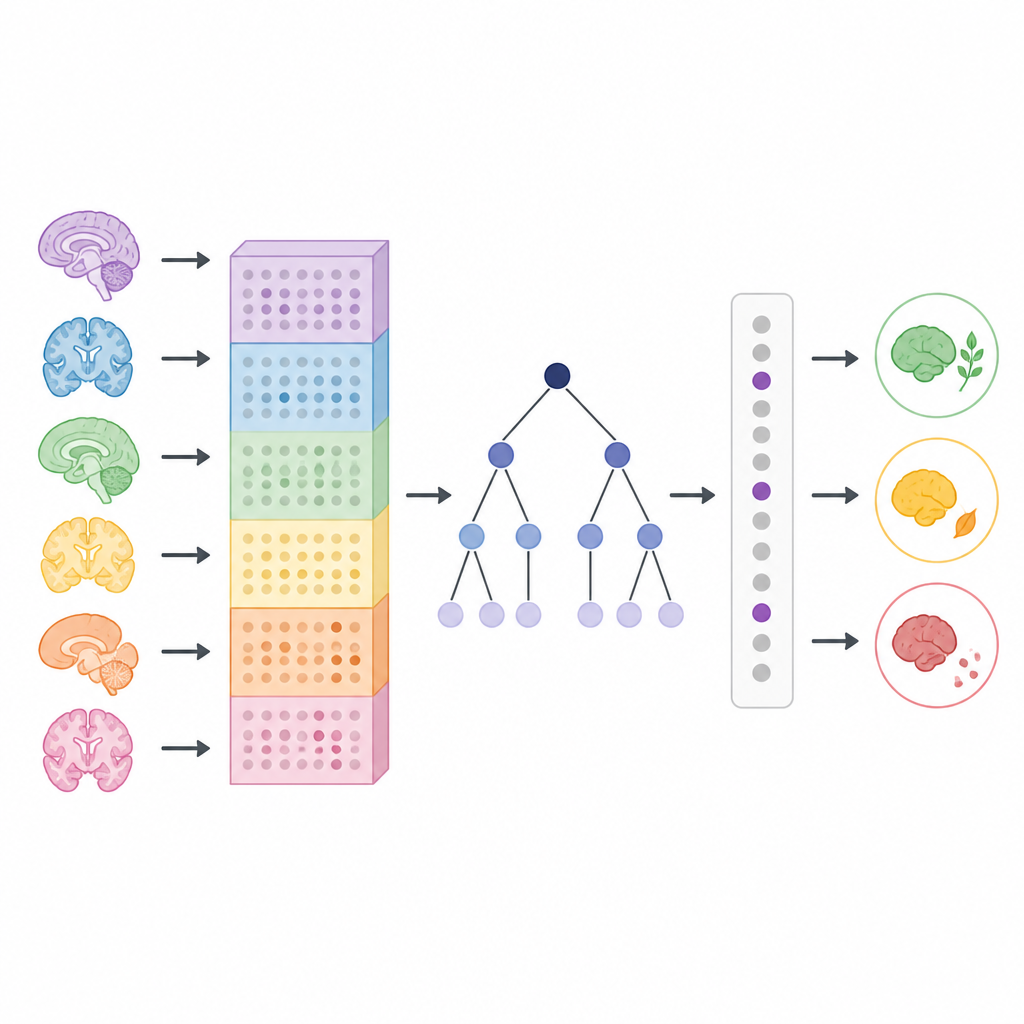
What this means for the future of care
In simple terms, this work shows that the brain’s genetic “voice” changes in distinct ways as Alzheimer’s advances, and that explainable AI can reliably tease out which genes are speaking loudest at each step. While the findings come from one research cohort and still need to be tested in other groups and in living patients, they provide a roadmap for developing stage aware blood or brain based tests and for designing treatments that better match the biology of Early, Mid, or Late disease rather than treating all stages the same.
Citation: Shafik, R.A., Afify, Y.M., Badr, N. et al. Robust transcriptomic signatures of Alzheimer’s disease progression: validated explainable AI approach. Sci Rep 16, 15478 (2026). https://doi.org/10.1038/s41598-026-47879-8
Keywords: Alzheimer’s disease, gene expression, biomarkers, explainable AI, Braak staging