Clear Sky Science · en
Optimizing the potential use of waste palm oil clinker powder in cementitious grouts for semiflexible pavements using response surface methodology
Turning Waste Into Stronger Roads
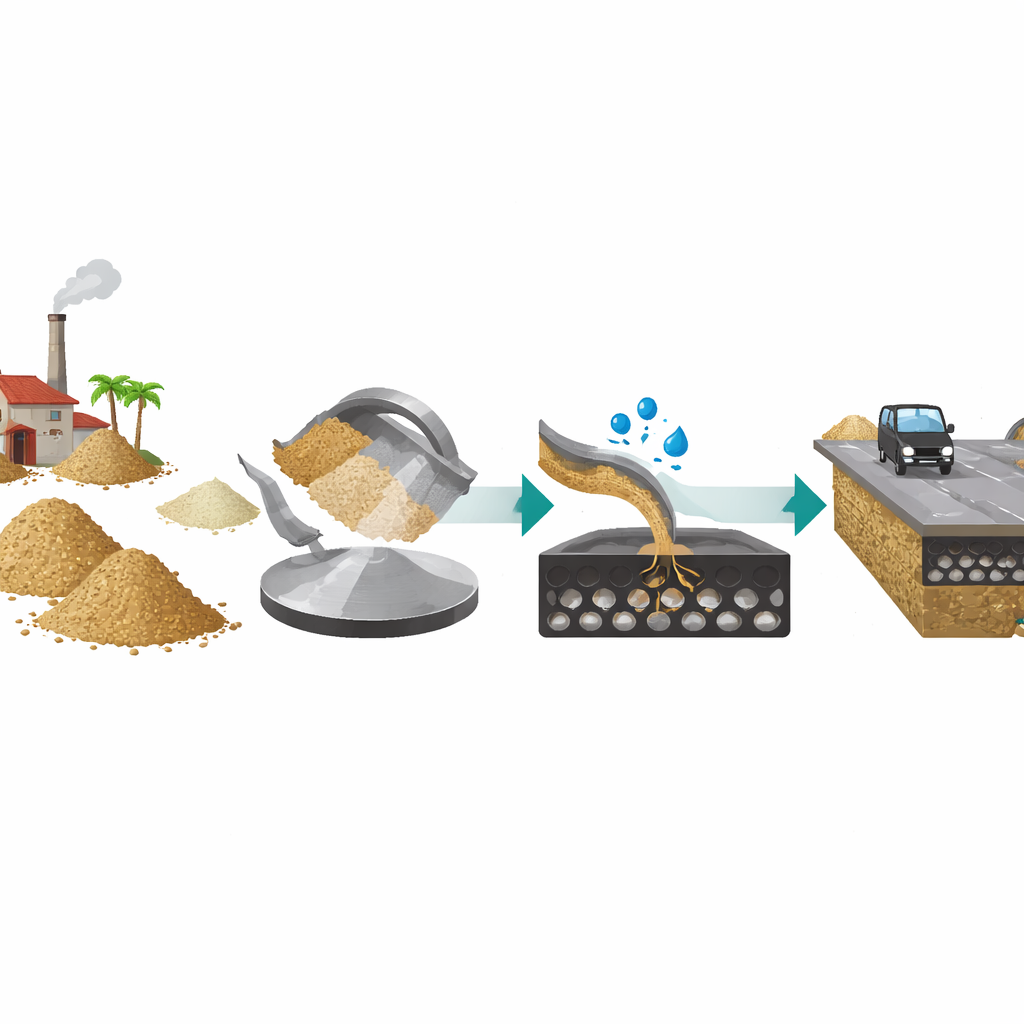
Cement production is a major source of climate‑warming carbon dioxide, yet we rely on it to build everything from buildings to highways. At the same time, the booming palm oil industry generates large amounts of clinker waste that usually ends up in landfills. This study asks a simple but powerful question: can we turn that unwanted waste into a useful ingredient for tougher, more sustainable road surfaces?
Why Road Builders Care About New Mixes
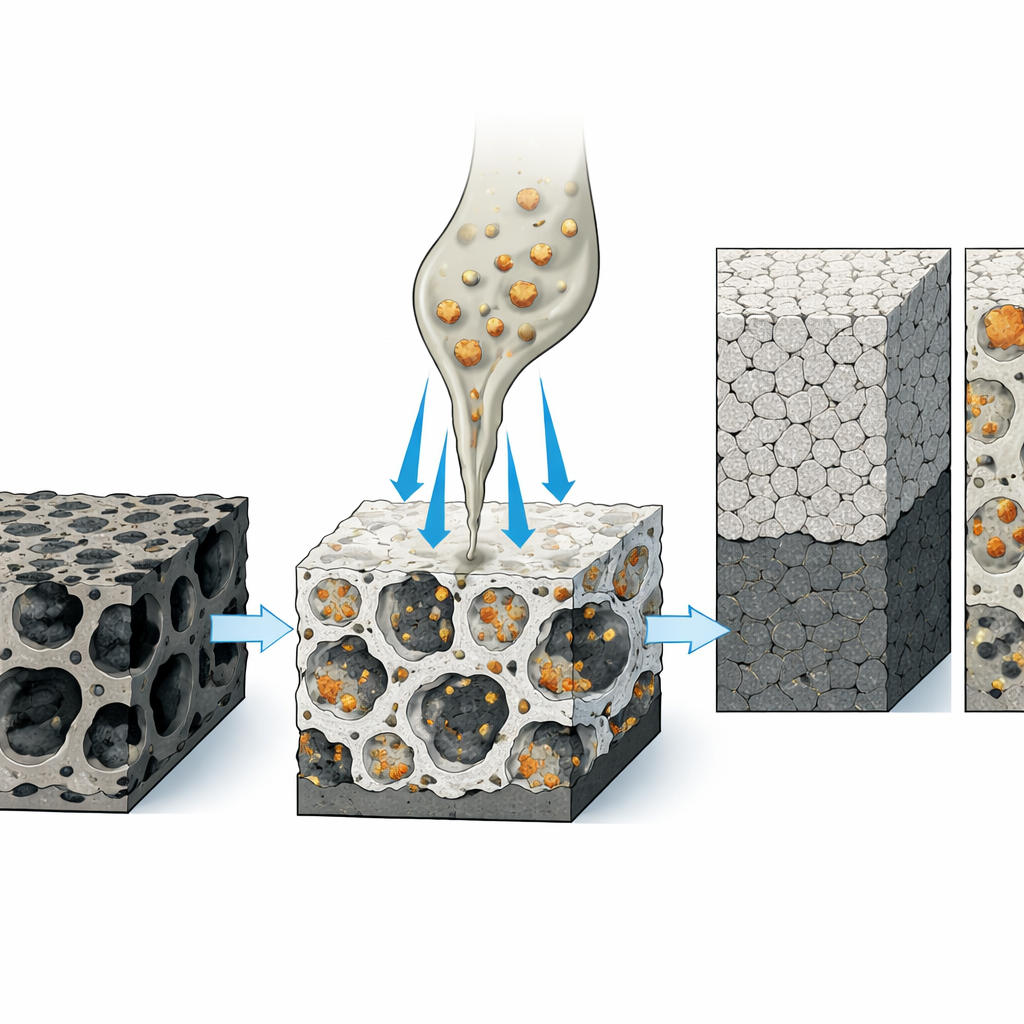
Modern roads must survive heavy traffic, fuel spills, heat, rain, and years of wear. A special type of surface called a semi‑flexible pavement combines a porous asphalt skeleton with a cement‑based grout that seeps into its voids and hardens. These surfaces can carry heavy loads and resist permanent ruts better than standard hot‑mix asphalt, but they rely on large amounts of cement. By swapping part of the cement for finely ground palm oil clinker powder (POCP), the researchers hoped to cut both emissions and waste while keeping – or even improving – performance.
Designing the Right Recipe
The team treated the grout like a kitchen recipe to be carefully tuned. They varied two key ingredients: the share of cement replaced by POCP (0–30%) and the water‑to‑cement ratio (how wet the mix is). Using a statistical approach called response surface methodology, they planned 80 test mixes and measured how easily each grout flowed into a cone and how strong it became after 1, 7, and 28 days. For semi‑flexible pavements, the grout must be fluid enough to fill the asphalt’s pores but strong enough to support traffic. The analysis showed that adding POCP generally improved flow because the powder absorbed less water than cement, leaving more free water to lubricate the mix.
Finding the Sweet Spot
Strength tests revealed a trade‑off. Pure cement mixes were strongest, and strength decreased as more POCP was added, especially at high water content, because the clinker particles are more porous and less reactive than cement. Even so, many POCP blends comfortably exceeded practical strength targets. The optimized recipe settled on a water‑to‑cement ratio of about 0.46 with 20% of the cement replaced by POCP. This mix flowed within the desired time window and achieved more than enough strength at all curing ages, making it a promising balance between performance and sustainability.
How the New Grout Behaves Inside the Road
To see what was happening inside, the researchers examined hardened grout samples under an electron microscope. The conventional grout formed a dense, continuous structure, while the POCP‑modified grout showed more pores and embedded clinker particles. This explained the slight drop in strength and the higher loss of material in impact‑type abrasion tests. When the optimized grout was used in actual semi‑flexible pavement slabs, the resulting road layers were compared with both a control semi‑flexible mix and ordinary hot‑mix asphalt. The semi‑flexible surfaces, with and without POCP, showed more than double the stability of conventional asphalt, better resistance to moisture damage, and far superior resistance to diesel fuel attack, thanks to their rigid cement‑based skeleton.
Strengths, Trade‑Offs, and Future Directions
The palm‑waste‑based pavements were not perfect. Their higher stiffness meant they were less able to absorb repeated impacts, leading to greater particle loss in the Cantabro abrasion test than flexible asphalt. The zone where hard grout meets the softer, bitumen‑coated stones also behaved as a weak link under impact. The authors suggest that future designs should aim for slightly fewer air voids in the asphalt skeleton to increase flexibility and that industry‑wide strength standards for such grouts are still needed.
What This Means for Everyday Roads
In plain terms, the study shows that grinding up a troublesome palm oil waste and using it to replace about one‑fifth of the cement in semi‑flexible road surfaces can still deliver strong, durable pavements. These POCP‑based layers stand up particularly well to heavy loads, moisture, and fuel spills – conditions common at truck stops, toll plazas, and industrial yards – while reducing reliance on fresh cement and keeping waste out of landfills. With further tuning to improve impact resistance, this approach could help make future roads both tougher and greener.
Citation: Khan, N., Sutanto, M.H., Khan, M.I. et al. Optimizing the potential use of waste palm oil clinker powder in cementitious grouts for semiflexible pavements using response surface methodology. Sci Rep 16, 14420 (2026). https://doi.org/10.1038/s41598-026-47875-y
Keywords: semi-flexible pavement, palm oil clinker, sustainable roads, cement replacement, waste valorization