Clear Sky Science · en
Short-chain fatty acids alleviate sarcopenia in rats via modulation of the NF-κB signaling pathway
Why muscle loss and gut health matter
As people age or face hormonal and metabolic problems, many slowly lose muscle strength and mass, a condition known as sarcopenia. This muscle loss raises the risk of falls, fractures, and loss of independence. At the same time, scientists are discovering that tiny molecules produced by gut bacteria can influence organs throughout the body. This study explores whether such gut derived molecules, called short chain fatty acids, can protect muscles from wasting in a rat model that mimics sarcopenia linked to inflammation and stress.
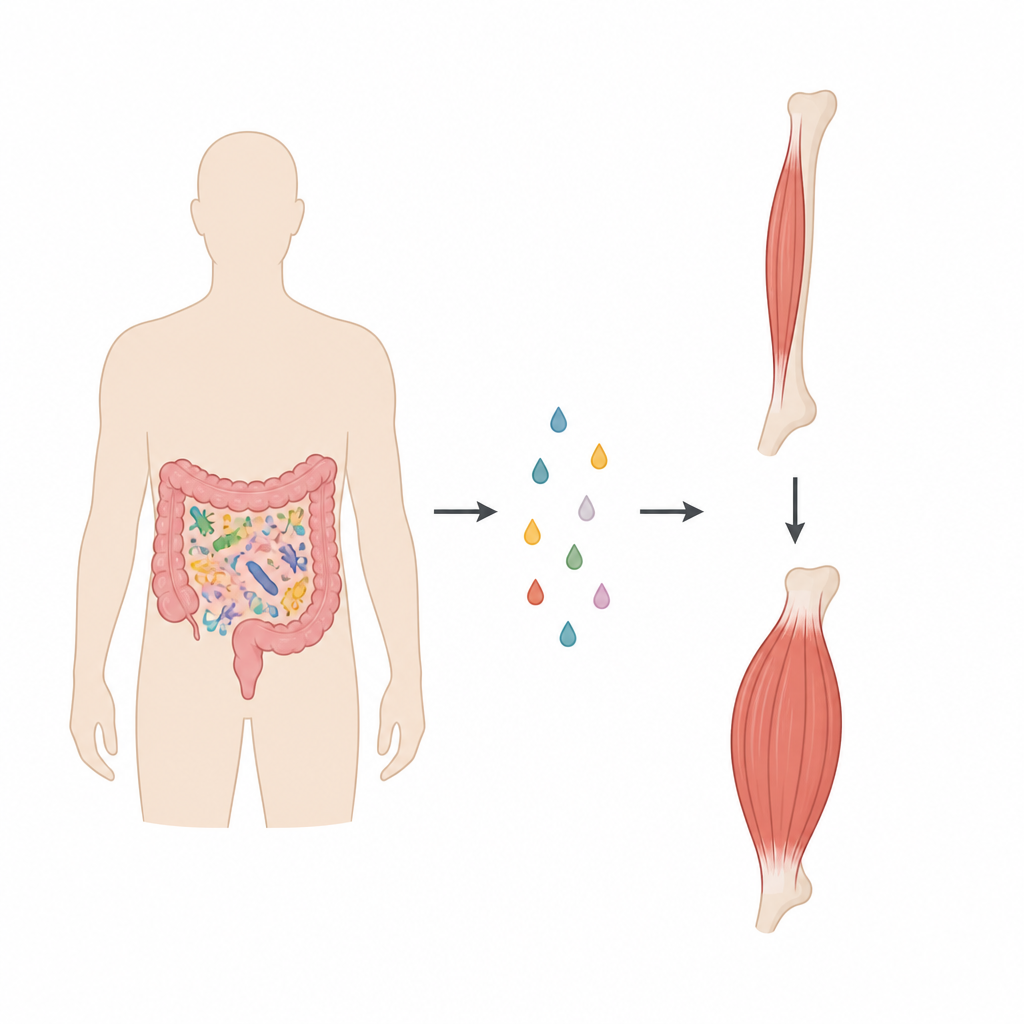
From gut made molecules to tired muscles
Short chain fatty acids are small molecules formed when friendly gut microbes digest dietary fiber. They are already known to help keep the gut lining intact and to calm the immune system. The authors reasoned that if these molecules can dampen inflammation and oxidative stress in the body, they might also shield skeletal muscle from the chronic, low level inflammation often seen in sarcopenia. To test this idea, they focused on a key inflammatory control switch inside cells, a signaling pathway called NF kappa B, and on a form of fiery cell death known as pyroptosis, both of which can damage muscle tissue.
A rat model of weakened muscle
The researchers created a controlled form of sarcopenia in adult female rats by removing the ovaries and then giving the steroid drug dexamethasone, a combination known to accelerate muscle wasting. Some rats received regular drinking water, while others received water containing a mix of three short chain fatty acids for four weeks. The team measured grip strength, weighed the main calf muscle, examined muscle slices under the microscope, and assessed markers of cell damage, oxidative stress, and inflammation in blood and tissue. They also used cultured rat muscle cells to confirm how these molecules act directly on muscle like cells.
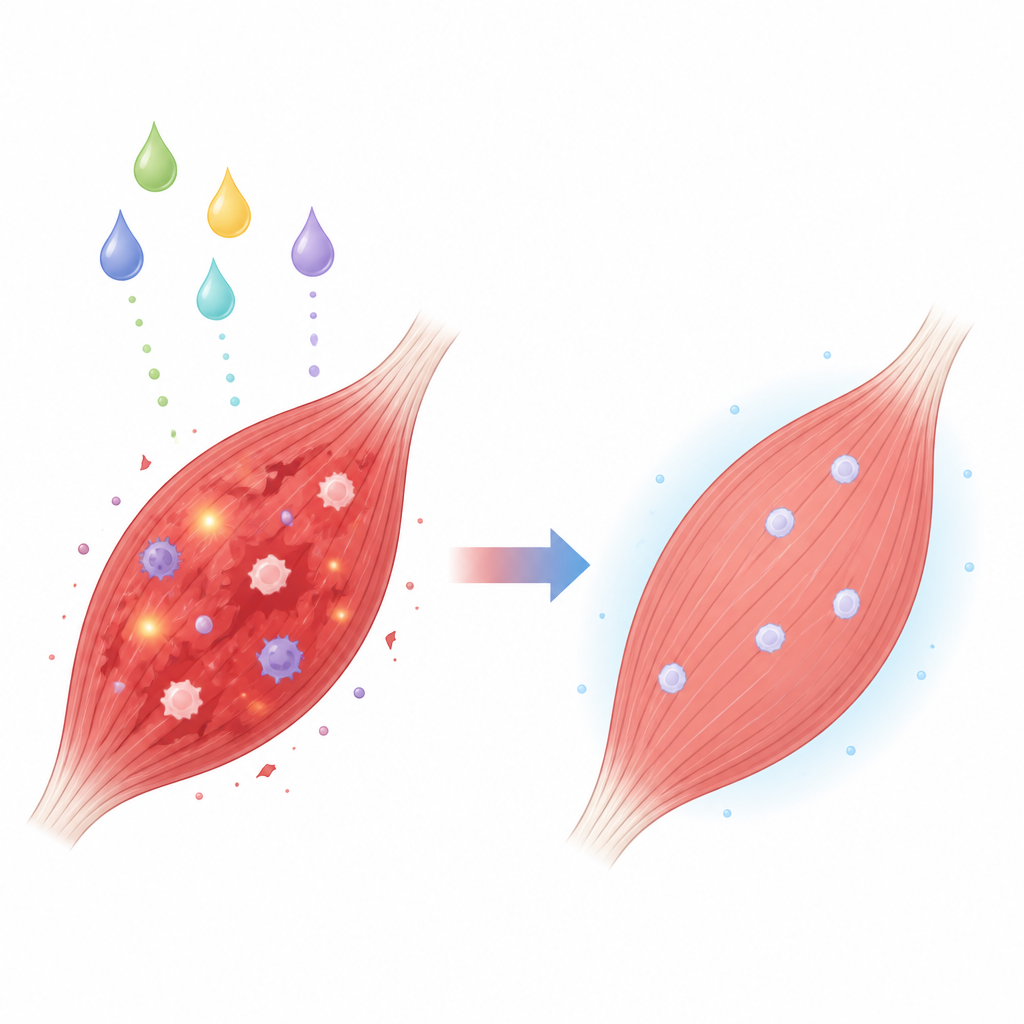
Muscles gain strength while inflammation cools
Rats with induced sarcopenia showed weaker grip, smaller calf muscles, and disorganized, shrunken muscle fibers packed with inflammatory cells. Their muscles contained more reactive oxygen species, more dying cells, and higher levels of inflammatory proteins linked to pyroptosis. In contrast, rats that drank short chain fatty acids had higher levels of these molecules in their blood, stronger grip, and a better muscle weight to body weight ratio. Their muscle fibers appeared more orderly and less atrophied, with fewer inflammatory cells and less cell death and oxidative stress. At the molecular level, short chain fatty acids lowered the activation of the NF kappa B pathway and reduced components of a protein complex that triggers pyroptosis, along with key inflammatory messengers released during this process.
Zooming in on the protective process
Experiments in cultured muscle cells helped clarify the chain of events. When cells were exposed to dexamethasone, they released more inflammatory proteins and turned on the machinery that drives pyroptosis. Adding short chain fatty acids before the drug exposure largely reversed these changes, curbing the activation of the same signaling proteins seen in the rat muscles. Drugs that specifically blocked NF kappa B or the pyroptosis machinery produced similar protection, while a compound that reactivates this machinery could partially undo the benefit of the short chain fatty acids. These patterns support the idea that the gut derived molecules act by dialing down inflammatory signaling and the downstream cell death program.
What this could mean for healthy aging
In plain terms, this work suggests that small molecules made by gut bacteria can help keep muscles stronger under stressful conditions, at least in rats, by calming harmful inflammation and reducing a particularly damaging form of cell death. The study does not show that any specific supplement or diet will prevent sarcopenia in people, and the doses and delivery used in animals may not translate directly to humans. Still, it adds weight to the view that nurturing the gut muscle connection through short chain fatty acids could become part of future strategies to slow muscle loss linked to aging, hormonal changes, or metabolic stress.
Citation: Yu, Z., Chen, N. & Xu, H. Short-chain fatty acids alleviate sarcopenia in rats via modulation of the NF-κB signaling pathway. Sci Rep 16, 16167 (2026). https://doi.org/10.1038/s41598-026-47873-0
Keywords: sarcopenia, short chain fatty acids, gut muscle axis, muscle inflammation, pyroptosis