Clear Sky Science · en
Identification of key performance parameters and development of a youth badminton performance index in male youth players
Why this matters for young badminton players
Parents, coaches, and young athletes often look to tournament results or a few fitness tests to judge progress in sport. This study argues that such a narrow view can miss the bigger picture—especially in a complex, fast-paced game like badminton. The researchers set out to build a clearer, more rounded way to understand how well boys aged 9 to 16 are really doing, not just on the scoreboard, but across the many physical and practical demands of the sport.
Looking beyond wins and losses
Badminton asks a lot of the body and mind: lightning-fast sprints, abrupt changes of direction, jumps, lunges, and precise overhead shots, all while making quick tactical choices. For children and teenagers, these demands sit on top of rapid growth and uneven physical development. Until now, youth players were typically judged through scattered pieces of information—an isolated jump test here, a competition result there. The authors argue that this fragmented approach overlooks how different aspects of development fit together and can confuse natural growth spurts with genuine sport-specific improvement.
Measuring the many sides of performance
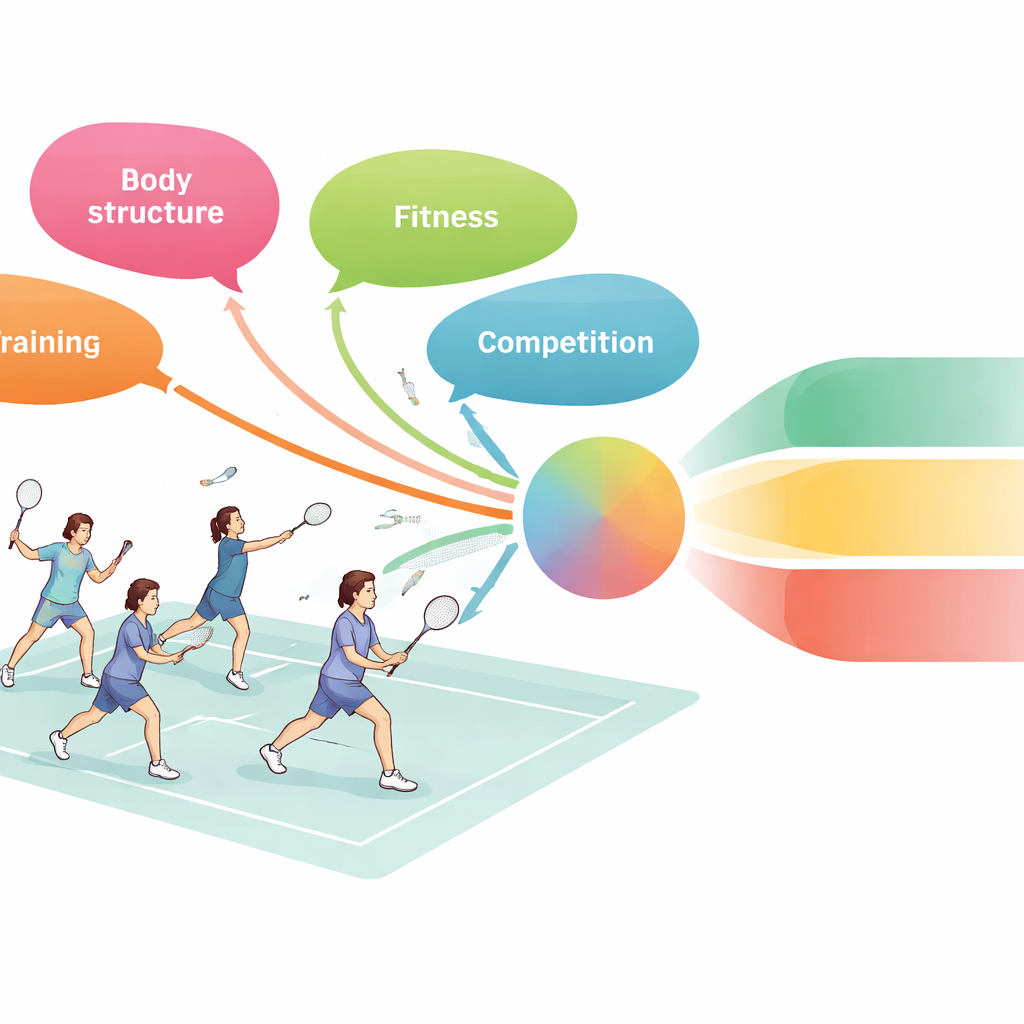
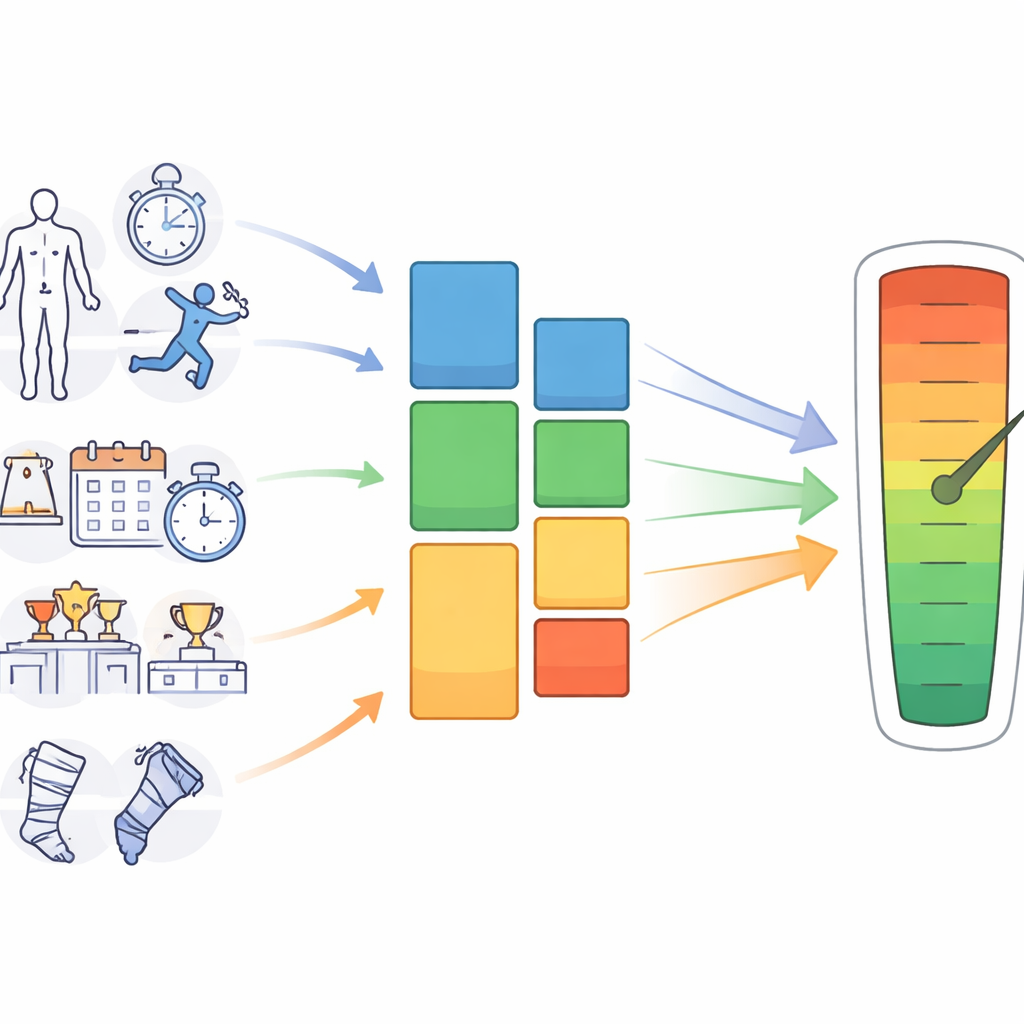
To build a more complete picture, the team studied 170 male youth badminton players from state squads and national development programs, all aged between 9 and 16. They collected detailed measurements that fell into several broad areas: body build (such as height, limb length, and limb girth), physical fitness (strength, endurance, jumping power, agility, balance, flexibility, and hand–eye coordination), training exposure (hours spent in technical practice, conditioning, and match play), competition history (number and level of tournaments, medals, and multi-sport involvement), and injury-related factors (how often players were hurt, how well they recovered, and how injuries affected training). These data were gathered using standard field tests, simple equipment, and a structured questionnaire, reflecting the kind of monitoring that can realistically be done in everyday training environments.
Finding hidden patterns in complex data
Because there were so many measurements, the researchers used a statistical technique that groups related variables together into a smaller set of core patterns. This analysis revealed ten underlying dimensions that together captured over three quarters of the overall variation in the players. The most influential dimensions were linked to body structure, competition exposure, a combination of aerobic capacity and agility, and weekly training volume. Other dimensions highlighted aspects such as injury recurrence and recovery status, body composition and muscularity, muscular endurance, balance, and whether players also took part in other sports. Importantly, each dimension bundled together variables that tended to rise and fall in tandem, revealing how different traits commonly co-exist within young badminton players.
Building a practical index for coaches
From these ten dimensions, the researchers created the Youth Badminton Performance Index (YBPI). For each athlete, scores on the ten dimensions were standardized and then added up to produce a single composite value. All dimensions were given equal weight, not because they are equally important in a biological sense, but to avoid introducing subjective opinions about which qualities matter most. The resulting index allowed the players in the study to be sorted into three broad groups—Novice, Amateur, and Elite—based on how their overall profile compared with their peers. This grouping is relative to the sample; it is not meant to be a universal standard, nor a forecast of who will become a top adult player.
What this means for real-world training
The authors stress that the YBPI is a descriptive tool, not a crystal ball. It captures where a player stands at a particular moment across multiple areas, rather than predicting long-term success or serving as a talent filter. Body size and limb length, for example, may help a teenager cover the court more easily, but these features mostly reflect natural growth and should be seen as context, not training targets. In contrast, aerobic fitness, strength, agility, competition experience, and injury recovery can be shaped by smart training and careful load management. By viewing all these aspects together, coaches can better detect strengths and weaknesses, track changes over time, and plan individualized support—without overreacting to a bad tournament or a single test result.
A clearer, fairer way to view young athletes
In simple terms, this study shows that youth badminton performance is more like a tapestry than a single thread. The Youth Badminton Performance Index offers a structured way to look at that tapestry, weaving together body build, fitness, training, competition, and injury into one understandable picture. For those guiding young athletes, it encourages a shift away from early talent labeling and toward ongoing, holistic monitoring that respects the ups and downs of growth, experience, and health during the crucial adolescent years.
Citation: Israj, M.F.M., Ibrahim, N.S., Madarsa, N.I. et al. Identification of key performance parameters and development of a youth badminton performance index in male youth players. Sci Rep 16, 11652 (2026). https://doi.org/10.1038/s41598-026-47868-x
Keywords: youth badminton, sport performance index, multidimensional profiling, training and competition, injury and recovery