Clear Sky Science · en
Remote regulation of hepatic lipid secretion in the intestine by metabolic interaction of dietary arginine with ornithine
How a Gut Signal Can Fatten the Liver
Many people think fatty liver comes only from eating too much sugar or fat. This study shows that even when calories stay the same, tiny building blocks of protein in our food can quietly shift fat from the bloodstream into the liver, helping to explain why some people develop fatty liver disease without obvious overeating.
A Hidden Role for Protein Building Blocks
The researchers focused on arginine, one of the twenty common amino acids that make up dietary protein. Earlier work in rats showed that when diets lacked enough arginine, fat built up in the liver. Here, the team asked how this happens and whether another molecule called ornithine, which is made from arginine in the body, might be involved. They were especially interested in the crosstalk between the intestine and the liver, a connection known as the gut liver axis.
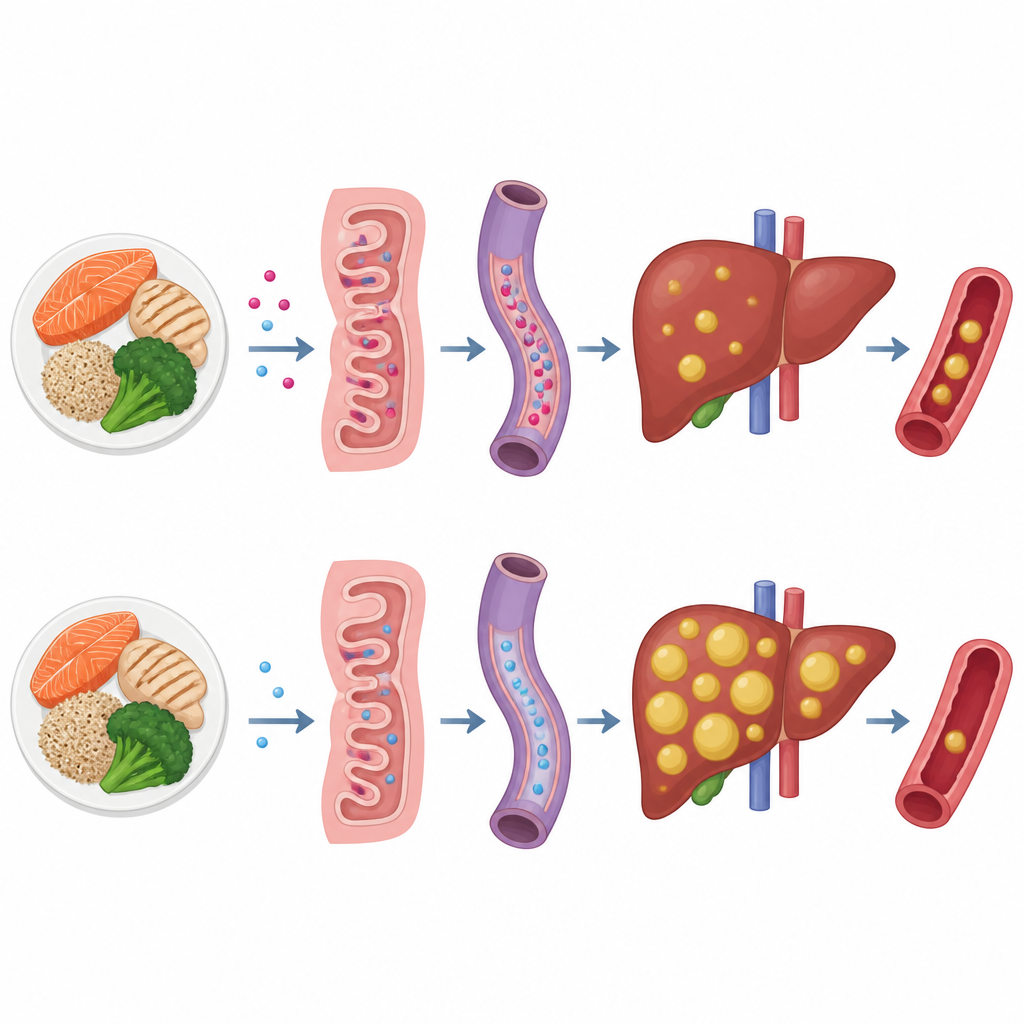
When Arginine Is Low, Liver Fat Rises
Male rats were fed diets that were identical in calories but differed in arginine content. Animals on the low arginine diet quickly developed fatty livers, with liver fat stores rising to nearly eight times those of control rats, even though their body weight and food intake were similar. At the same time, the amount of fat circulating in the blood fell, especially in the form the liver normally exports inside very low density lipoprotein particles. Tests that blocked fat breakdown in the blood confirmed that the low arginine diet slowed the rate at which the liver released fat, causing it to accumulate inside the organ.
Ornithine in the Gut Restores Fat Flow
To probe the mechanism, the team added ornithine to the low arginine diet. This single change reversed the fatty liver, restored normal fat secretion from the liver, and brought blood fat levels back up to those seen in control animals. Inside the liver, proteins that help package fat into export particles showed a clear pattern: low arginine raised the machinery for building these particles yet reduced the proteins needed to ship them out, trapping fat in the liver. Ornithine reversed these shifts. Curiously, ornithine worked only when swallowed, not when injected into the body cavity, and imaging with a radioactive form of ornithine showed that it lingered mainly in the intestine rather than the liver itself. This pointed to the intestinal tissue as the sensor that detects dietary arginine and ornithine and sends a signal onward to the liver.
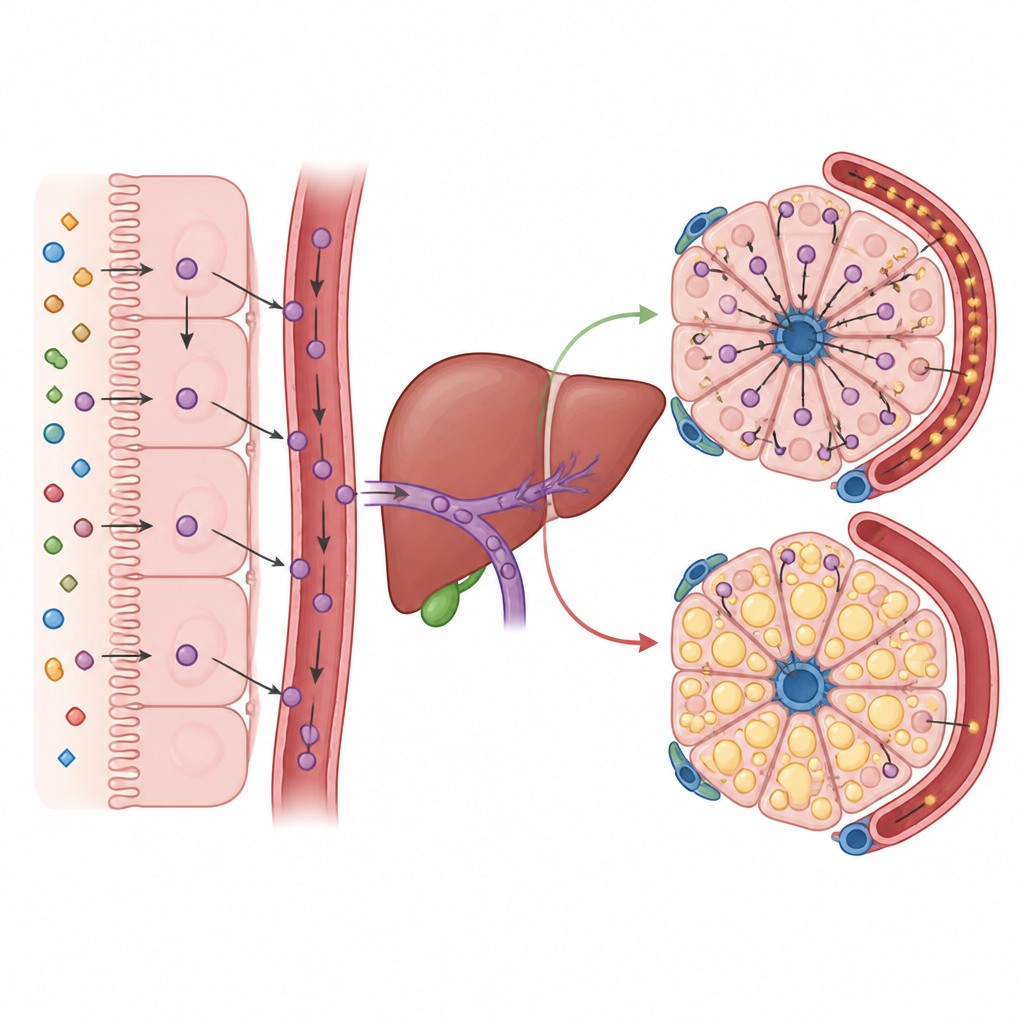
A Gut Signal Pathway and Clues in Humans
The researchers tested whether a well known nutrient sensing pathway called mTORC1 might carry that signal. Blocking mTORC1 activity with the drug rapamycin prevented the low arginine diet from causing fatty liver and restored normal fat export, suggesting that some cells respond to arginine shortage by turning on this pathway and slowing lipid release from the liver. The role of gut microbes and bile acids was also examined, but changes in these did not explain the effect, again pointing to the intestinal tissue itself. Finally, the team analyzed health check data from 678 adults. Most people with fatty liver also had high blood fats, but a small group showed the unusual mix of fatty liver with low blood fat levels and an amino acid pattern resembling the low arginine rats, hinting that a similar gut driven mechanism may exist in humans.
What This Means for Everyday Diets
In simple terms, this study suggests that the balance of certain amino acids, not just total protein, can change how the gut talks to the liver about handling fat. When arginine in food is too low, less of it is turned into ornithine in the intestine, a local signal that seems to keep liver fat export machinery running smoothly. Without that signal, the liver holds on to fat instead of sending it into the circulation, increasing the risk of fatty liver even without excess calories. While many questions remain, such as exactly which intestinal cells sense these molecules, the work highlights how subtle shifts in protein quality could nudge the body toward or away from metabolic disease.
Citation: Nishi, H., Nakanishi, S., Xie, L. et al. Remote regulation of hepatic lipid secretion in the intestine by metabolic interaction of dietary arginine with ornithine. Sci Rep 16, 16174 (2026). https://doi.org/10.1038/s41598-026-47841-8
Keywords: fatty liver, dietary amino acids, arginine, gut liver axis, lipid metabolism