Clear Sky Science · en
Experimental comparative analysis of solar thermal and photovoltaic integrated vapor absorption refrigeration systems for low-GWP sustainable cooling under tropical conditions
Why cleaner cooling matters
Keeping food fresh and medicines safe increasingly depends on refrigerators and cold rooms, especially in hot, fast-growing countries like India. Yet most of today’s cooling systems run on electricity-hungry compressors and use gases that trap heat in the atmosphere. This study explores a different approach: refrigerators powered by the sun that rely mostly on heat rather than electricity and use low–global-warming fluids, offering a way to expand cooling without worsening climate change.
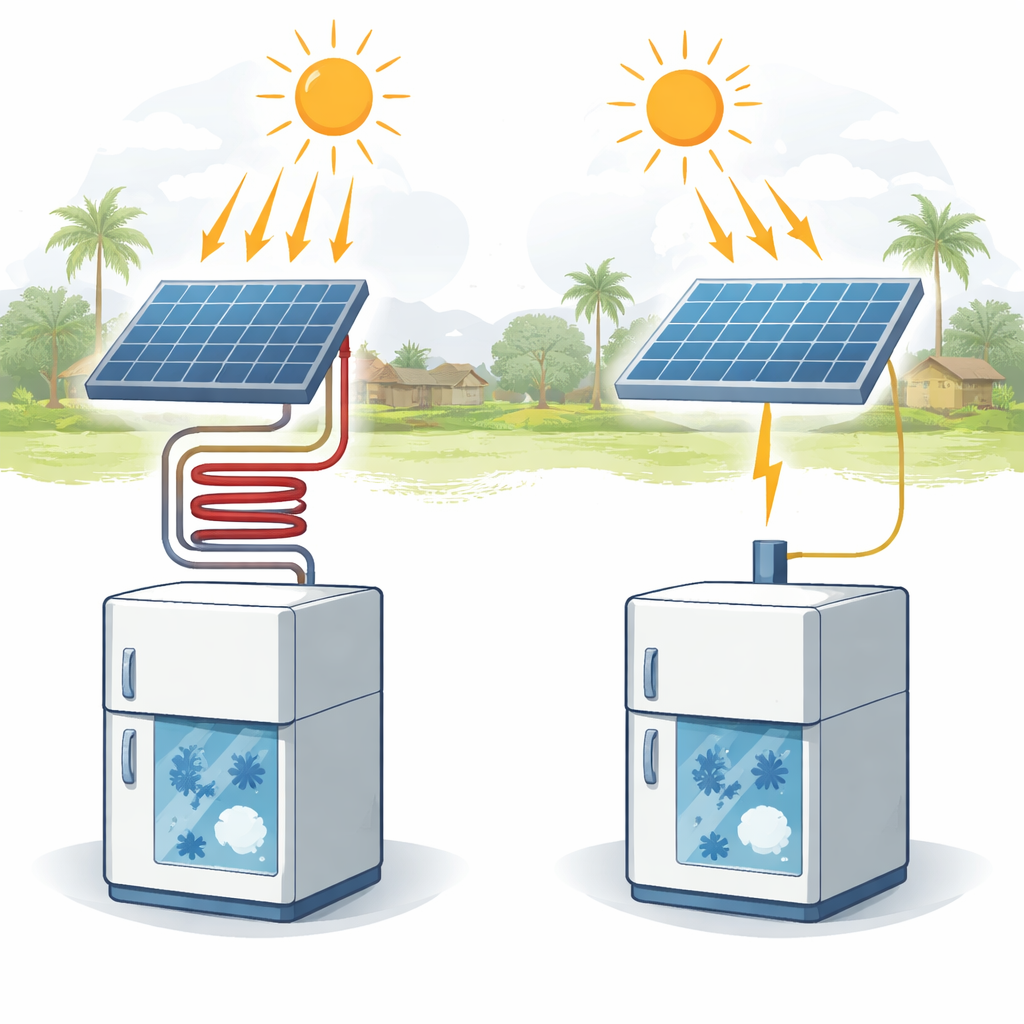
Two solar paths to the same cool box
The researchers focused on a technology called vapor absorption refrigeration, which replaces the usual electric compressor with a heat-driven chemical loop. Instead of a powerful motor squeezing a refrigerant, heat from an external source drives a liquid–vapor pair through a cycle of evaporation and absorption to produce cold. Because the main input is low-temperature heat, these systems can be powered by renewable sources such as solar energy or waste heat from engines, and can work with environmentally friendlier fluids than many conventional fridges.
Building solar-powered test systems
To see how best to run such a system in real tropical conditions, the team built two versions around the same small absorption refrigerator using an ammonia–water mixture. In the first version, a flat plate solar thermal collector heated water, which then passed through a copper heat exchanger wrapped around the refrigerator’s generator, providing the heat needed to drive the cooling cycle. In the second version, a modest 100-watt solar panel fed electricity through a charge controller into a battery, which powered a simple electric heater inside the same generator. By keeping the refrigeration unit itself identical, the experiment isolated the question: is it better to harvest the sun as heat or as electricity for this type of cooling?
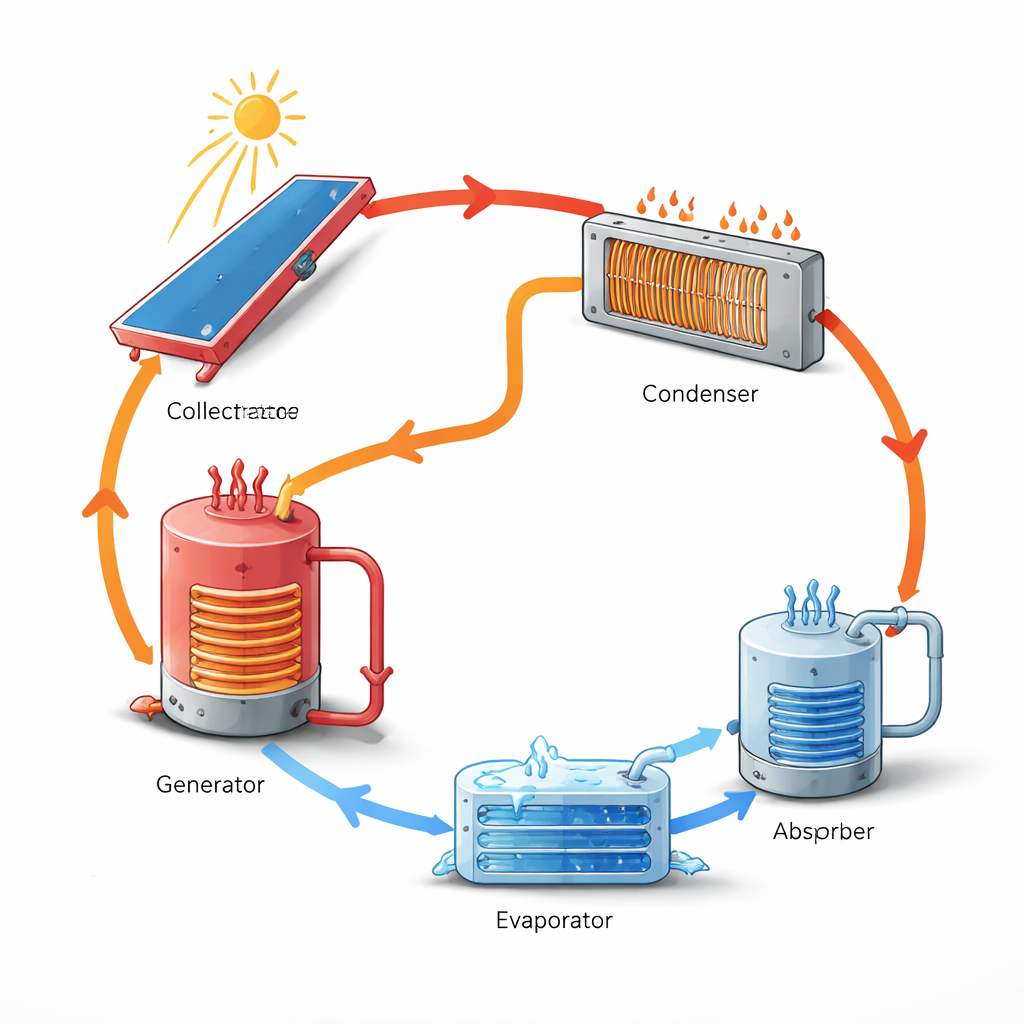
How the systems performed in tropical sun
Under clear-sky conditions in southern India, the solar thermal collector heated water to nearly 90 °C, enough to start and sustain the absorption cycle. This flat plate collector achieved an average thermal efficiency of about 35 percent over the day. Coupled to the refrigerator, it cooled the storage chamber down to about 12 °C after roughly four and a half hours—suitable for many fruits, vegetables, and other perishables in rural cold rooms. The combined solar-thermal-and-fridge setup reached a coefficient of performance (a measure of cooling output divided by energy input) of 0.14, modest by conventional standards but achieved largely from freely available sunlight.
Comparing heat and electricity from the sun
The photovoltaic-driven version used the same sunlight to create electricity instead. Because solar panels are more sensitive to passing clouds and small shadows than thermal collectors, their output fluctuated more over the afternoon. Even so, the oversized 100-watt panel and battery kept the generator temperature mostly between 80 and 89 °C during peak sun hours. This system cooled the chamber slightly further, down to about 9 °C in just over three hours, and delivered a similar performance rating, with a coefficient of performance of 0.12 and an overall electrical conversion efficiency around 9 percent during its most stable period.
Cost, practicality, and rural impact
When the team factored in equipment cost, reliability, and ease of maintenance, the simple solar thermal option came out ahead. The flat plate–driven unit was cheaper to build, mechanically simpler, and less vulnerable to brief shading. However, it needs a well-insulated hot-water storage tank to keep cooling going after sunset. The photovoltaic version, by contrast, can smooth out cloudy periods and nighttime operation with battery storage, but requires more electronics, higher upfront cost, and more specialized maintenance. Both approaches, though, proved technically capable of maintaining the 9–12 °C range important for protecting harvests in off-grid villages.
What this means for future cooling
For a layperson, the takeaway is that refrigerators do not have to depend on fossil-fueled power plants or climate-damaging gases. This study shows that small, solar-powered absorption systems can provide useful cold storage in hot, rural regions using modest hardware and low-impact working fluids. Solar thermal collectors offer a cost-effective, robust choice where budgets are tight and the sun is strong, while solar panels provide flexibility when reliable electricity or battery backup is more important. With further improvements in system design and alternative refrigerant mixtures, such solar-driven absorption coolers could become a cornerstone of climate-friendly cold chains, helping farmers, clinics, and households stay cool without heating up the planet.
Citation: Selvaraj, D.A., Nadimuthu, L.P.R., Victor, K. et al. Experimental comparative analysis of solar thermal and photovoltaic integrated vapor absorption refrigeration systems for low-GWP sustainable cooling under tropical conditions. Sci Rep 16, 11709 (2026). https://doi.org/10.1038/s41598-026-47817-8
Keywords: solar cooling, absorption refrigeration, rural cold storage, low GWP refrigerants, renewable energy