Clear Sky Science · en
Development and validation of a prediction model for the risk of relapse in psoriasis
Why this skin study matters to everyday life
Psoriasis is more than just dry, itchy skin; it is a long‑lasting condition that often flares up again after treatment, wearing down both body and mind. This study set out to help doctors and patients see those flares coming earlier by building a simple risk calculator. Using real‑world hospital data, the researchers tried to pinpoint which common health and lifestyle features most strongly predict whether a person’s psoriasis will return within a year, in hopes of guiding everyday choices and follow‑up care.
Who was studied and what the team looked for
The research team examined records from 504 adults with psoriasis who were treated at a large hospital in China between 2022 and 2024. All had their skin under control when they left the hospital, and nurses checked in with them every month for a year to see whether their patches had come back or spread again. The scientists gathered routine details that any clinic could collect, such as age, body weight, smoking habits, infections, other illnesses like diabetes, and how regularly people took their medicines. They then used standard statistical methods to compare those who relapsed with those who stayed clear, searching for patterns that might be turned into a practical prediction tool. 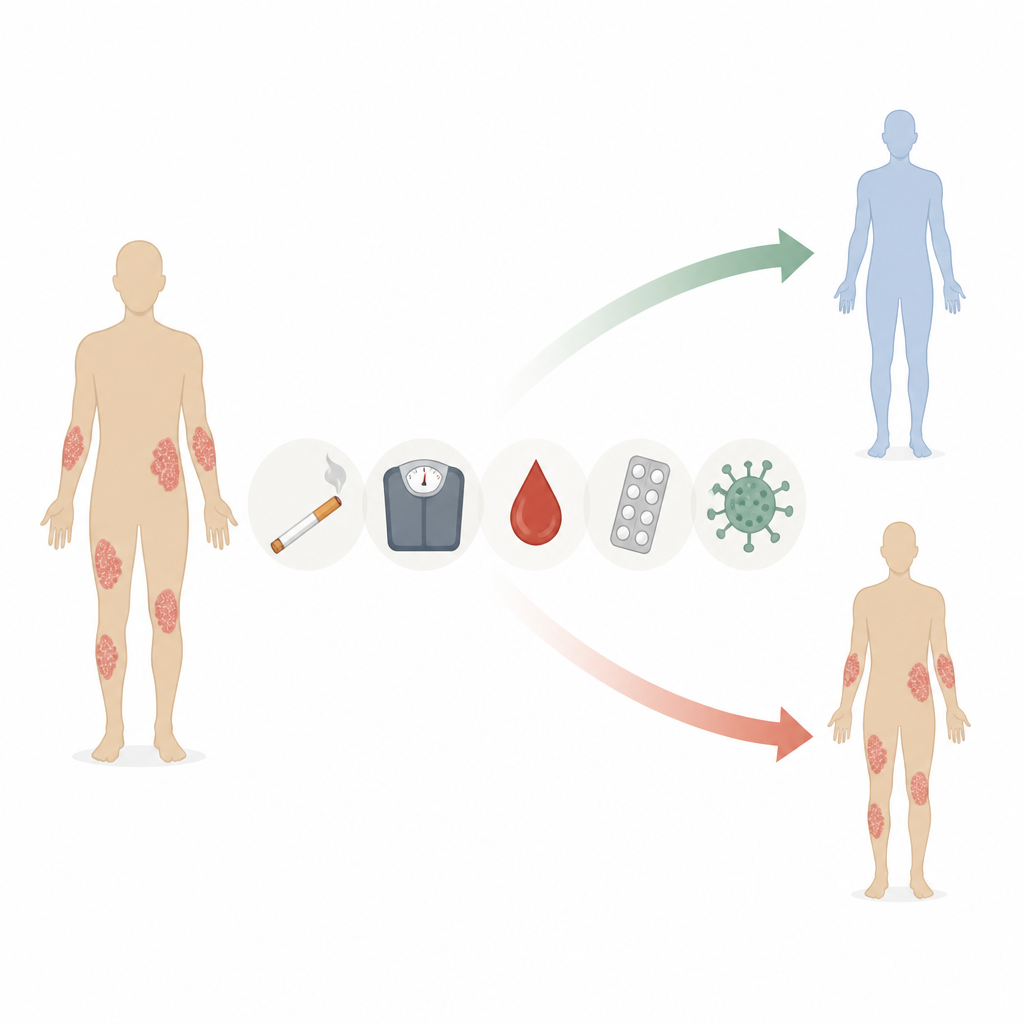
The key everyday risks behind a flare
The analysis showed that relapse was common: about two out of every three patients had psoriasis return within a year. Among many possible influences, six stood out as independent risk factors. People with higher body mass index, meaning more excess weight, were more likely to flare. Those with diabetes were also at greater risk, suggesting that blood sugar and skin inflammation are closely linked. Patients who smoked, those who had an upper respiratory tract infection such as a bad sore throat or cold, and those who did not follow their medication plan consistently were all more prone to see their psoriasis come back. Finally, people who had been treated with modern biologic drugs at some point also showed higher relapse risk, which may reflect the fact that these patients usually have more severe, difficult‑to‑control disease.
Turning risk factors into a practical score
To make these findings useful in the clinic, the team combined the six factors into a single prediction model, expressed as a nomogram: a kind of scoring chart where each risk factor contributes a number of points. By adding up points for a patient’s weight, diabetes status, smoking, recent infections, medication habits, and past biologic use, a doctor can estimate the chance that psoriasis will relapse within a year. Tests of the model showed moderate performance. It distinguished higher‑risk from lower‑risk patients better than chance, and its predicted relapse rates matched the rates actually observed in both the main group and a separate test group. Decision curve analysis suggested that using the model to guide decisions would offer more benefit than either treating everyone as high risk or treating no one. 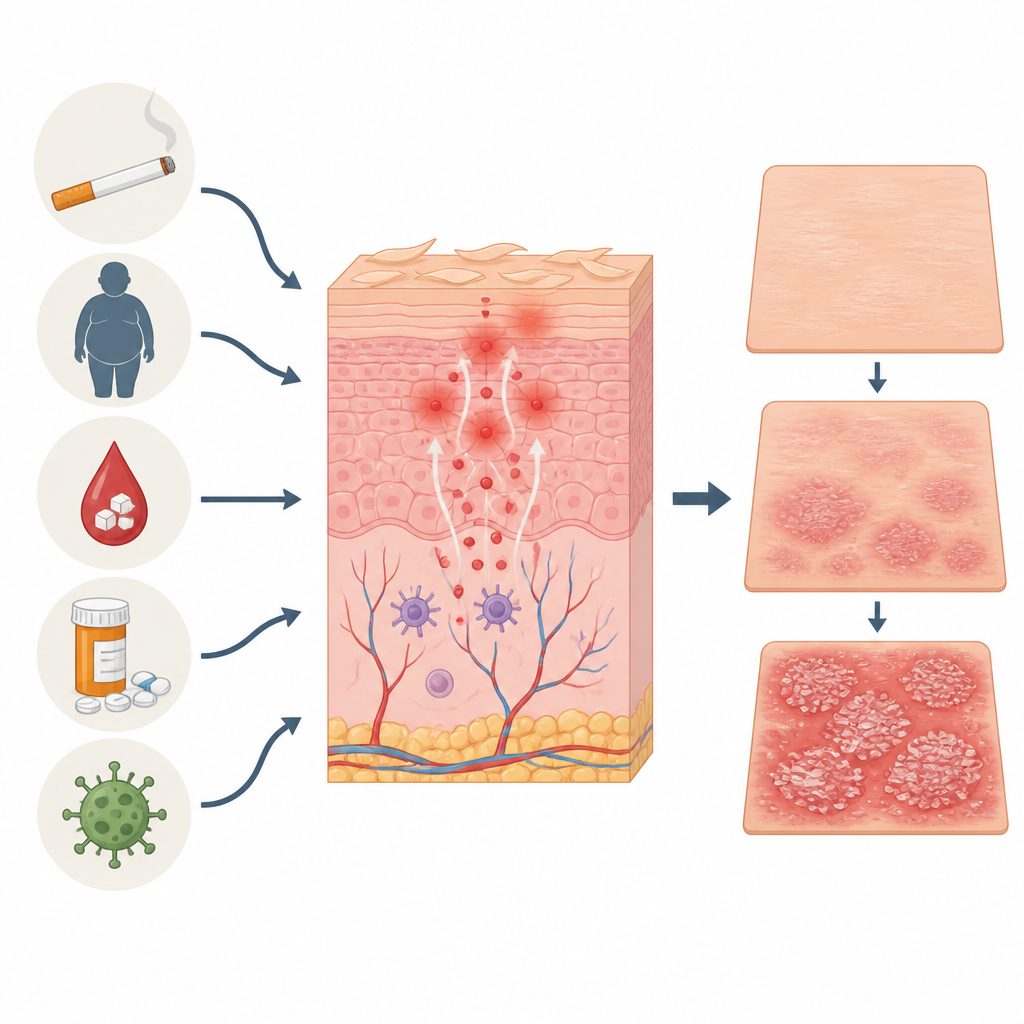
What this means for patients and care teams
Although the model is not accurate enough to stand alone, it highlights several risk factors that patients and care teams can act on now. Avoiding respiratory infections through hygiene and timely treatment, getting help to quit smoking, taking psoriasis medicines as prescribed, controlling blood sugar in those with diabetes, and improving diet and activity levels to reduce excess weight may all help lower the chance of relapse. For patients who have needed biologic drugs, closer follow‑up and careful planning of treatment changes may be warranted.
How the study fits into the bigger picture
The authors stress that their prediction tool is an early step rather than a finished product. It was built from data at a single hospital, mainly among people sick enough to need admission, so it may not apply to everyone living with milder psoriasis. Before doctors can rely on it widely, the model needs to be tested and refined in larger and more diverse groups, and it may be improved by adding newer biological markers. Still, the study reinforces a clear message for patients: everyday factors such as weight, blood sugar, smoking, infections, and treatment habits can tip the balance between calm skin and another difficult flare.
Citation: Zhang, X., Zhao, C., Luo, Y. et al. Development and validation of a prediction model for the risk of relapse in psoriasis. Sci Rep 16, 15999 (2026). https://doi.org/10.1038/s41598-026-47802-1
Keywords: psoriasis, disease relapse, risk prediction, smoking and weight, diabetes and infection