Clear Sky Science · en
Integrative taxonomy of cryptic Pachypus chafers using museomics, morphometrics, barcoding, and genomic DNA analysis (Coleoptera: Scarabaeidae: Pachypodinae)
Hidden beetles beneath Mediterranean sands
Along the sunny coasts of the Mediterranean lives a group of beetles that almost no one sees. The females stay underground, the males fly only for a short time each year, and most species look so alike that even experts long treated them as one. This study shows how modern DNA tools, careful measurements, and museum specimens can reveal a surprisingly rich cast of hidden beetle species and why that matters for protecting fragile coastal habitats.
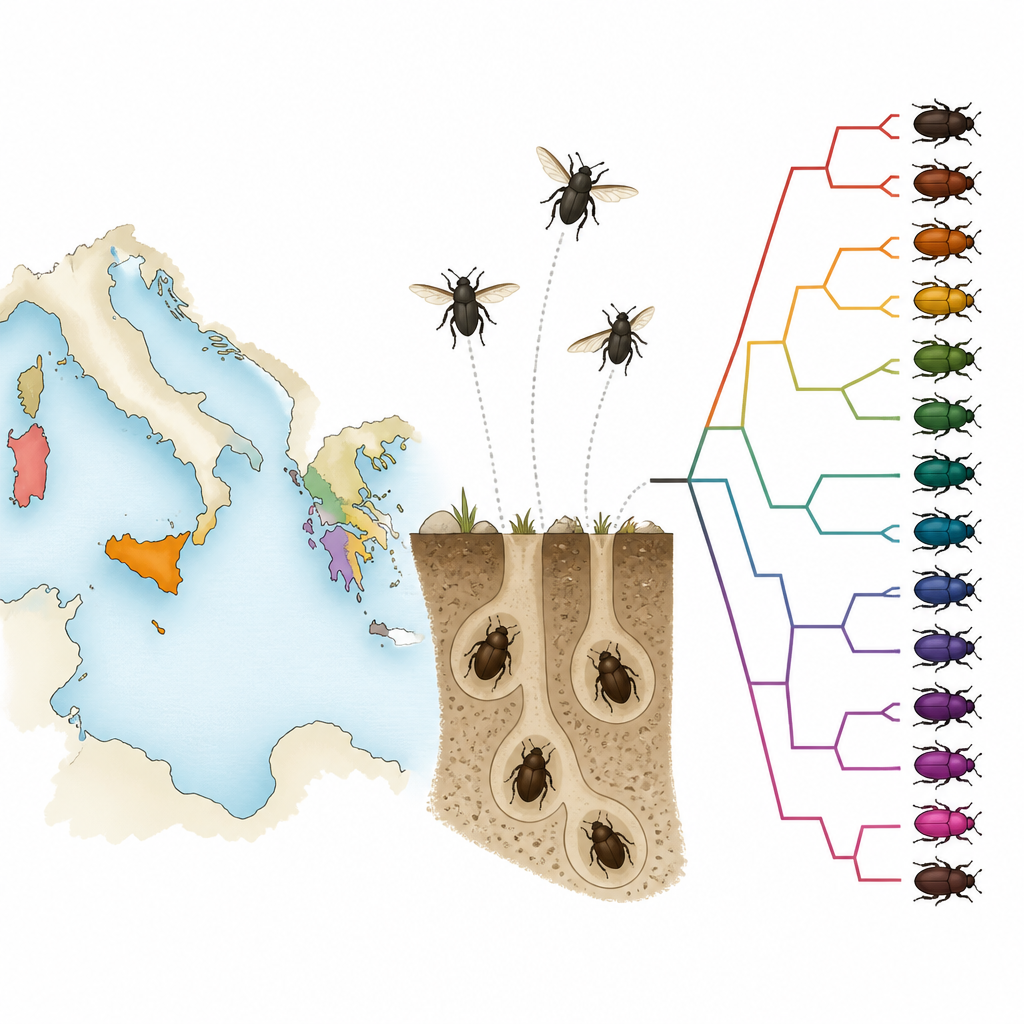
Beetles that live half in the dark
The beetles in question belong to the genus Pachypus, found around the Tyrrhenian Sea in places such as Sardinia, Corsica, Sicily, mainland Italy and North Africa. Their lifestyle is unusual. The larvae feed underground, while adults do not feed at all. Males have full wings and fly well, but females have lost their wings and live almost entirely in burrows. Because females barely move between sites, nearby patches of habitat can hold genetically distinct beetle populations even when males appear similar everywhere.
When bodies mislead but DNA speaks up
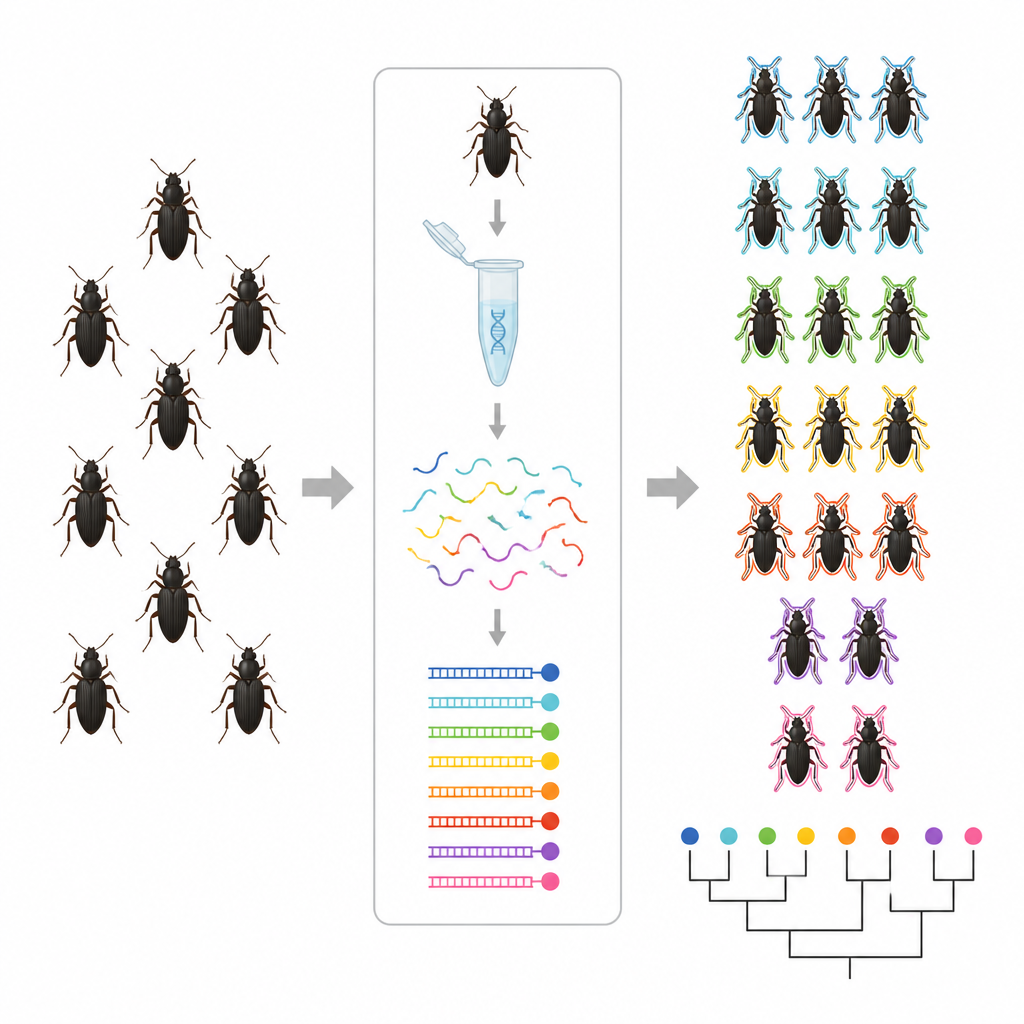
For more than a century, taxonomists argued over how many Pachypus species exist. Older work swung between naming many color forms and then lumping them back into a single widespread species. Earlier genetic studies hinted at at least a dozen species, but different methods disagreed, and traditional body measurements often overlapped. In this study, the authors re-examined nearly 1,900 beetles and combined detailed shape measurements with large DNA datasets, including almost one thousand standard genes that occur once in most animal genomes. They also extracted short mitochondrial DNA barcodes used in many biodiversity surveys.
Reading genomes from centuries-old specimens
A key puzzle involved a species named Pachypus impressus, described in the 1800s but later merged into a more common form because no one could match the name to modern populations. The team applied “museomics” by sequencing low-coverage genomes from the almost 200-year-old type specimen preserved in a museum. Despite damaged DNA and missing data, they recovered hundreds of target genes and complete barcode sequences. Comparing these to modern samples showed that P. impressus is the same as a recently named Sardinian species, so the older name takes priority and the newer one becomes a synonym.
Many species hiding in plain sight
Across the region, the genomic data confirmed 14 distinct Pachypus species. Three long-misunderstood names were clarified: P. excavatus is confirmed as a valid species, and two names once treated as minor forms, P. cornutus and P. impressus, are restored as full species. The authors also formally describe seven species that had been detected genetically in earlier work. Strikingly, detailed shape and size measurements alone could rarely separate these species because their “morphospace” overlapped. Color patterns of the hardened forewings and the shape of male genitalia sometimes helped, but only within limited areas. This means DNA evidence is essential for trustworthy identification.
Life at the edge of land and sea
The study also refines what is known about the ecology of these beetles. Most records come from coastal dunes and river plains with deep, sandy or loamy soils laid down during the Quaternary period. Many species tolerate moderate human disturbance and can be abundant in campsites and near villages as long as soils are intact and pesticides are not used. Others appear more restricted, sometimes known only from short stretches of coast or high mountain sites on Corsica. Because females disperse poorly, populations can evolve in isolation, creating genetic lineages that may deserve attention as separate conservation units even within one named species.
Why these hidden species matter
By tying names to both bodies and DNA, especially through sequencing of historical type specimens, the authors provide a stable framework for future studies of Mediterranean soil and dune ecosystems. Their results show that cryptic beetles can be evolutionarily old and that relying on a single kind of DNA marker can inflate species counts. Integrating museum genomics, nuclear markers, barcodes, and careful morphology not only reveals the true diversity of Pachypus chafers but also helps conservationists recognize which stretches of coast and countryside host unique lineages worth safeguarding.
Citation: Ahrens, D., Bazzato, E., Lopez, A.C.C. et al. Integrative taxonomy of cryptic Pachypus chafers using museomics, morphometrics, barcoding, and genomic DNA analysis (Coleoptera: Scarabaeidae: Pachypodinae). Sci Rep 16, 15710 (2026). https://doi.org/10.1038/s41598-026-47761-7
Keywords: cryptic species, integrative taxonomy, Pachypus beetles, museomics, DNA barcoding