Clear Sky Science · en
4-Phenylbutyrate mitigates renal pathology linked to ER stress related pathways in C57BL/6J mice with hindlimb unloading
Why Space and Bed Rest Matter to Your Kidneys
Humans evolved under Earth’s gravity, yet today we routinely push our bodies into very different conditions, from long space missions to weeks of strict bed rest after illness or injury. These situations can shift body fluids toward the head and unload the legs, subtly reshaping how organs work. This study asks a simple but important question: what happens to the kidneys under such conditions, and could a safe, food‑derived compound help protect them?
A Model of Weightlessness on Earth
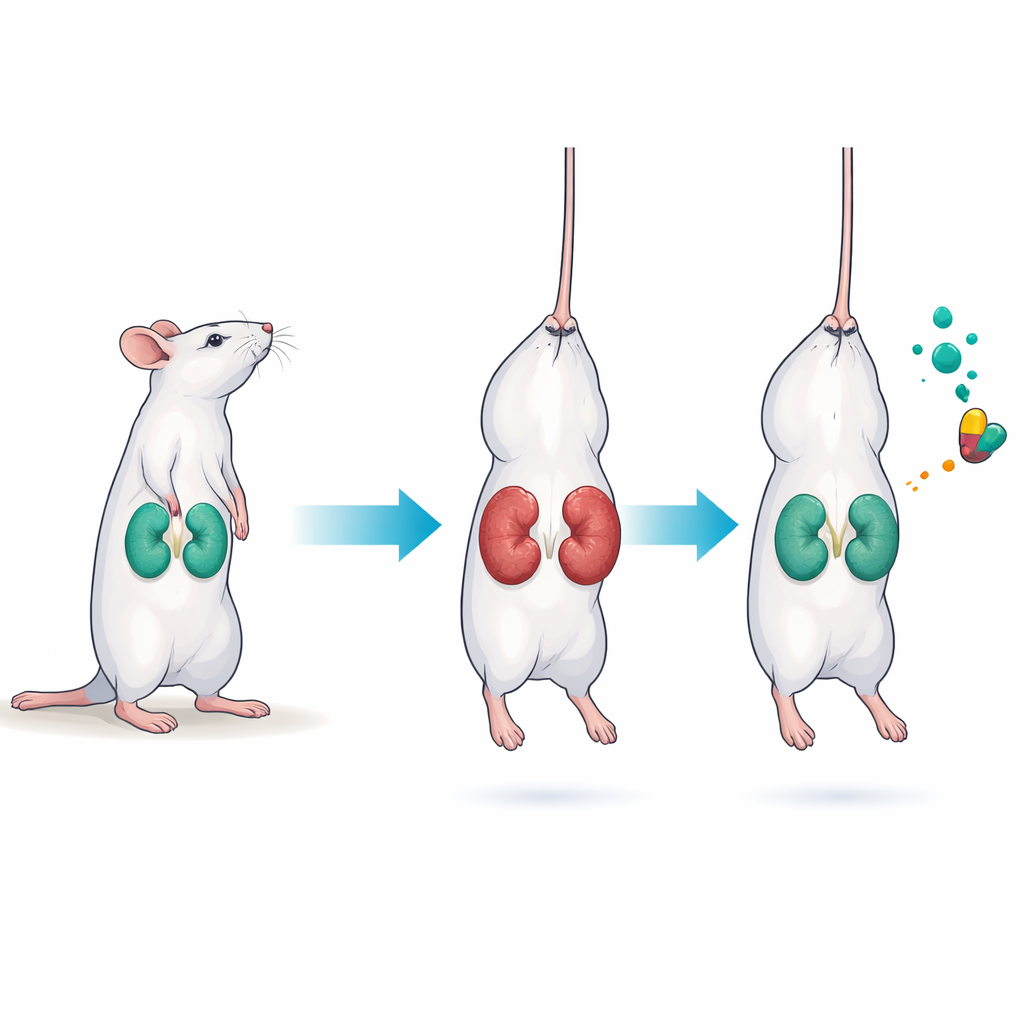
Because sending large numbers of people into orbit is impractical, scientists use “hindlimb unloading” in mice to mimic the fluid shifts and loss of weight‑bearing that occur in space. In this model, the animals are gently suspended by the tail so that their rear legs do not bear weight, while they can still move and reach food and water. The researchers compared three groups of mice: normal ground‑living animals, suspended animals given a harmless salt solution, and suspended animals treated with 4‑phenylbutyrate, or 4‑PBA. 4‑PBA is a short‑chain fatty acid derivative that already exists in the body and can be obtained from diet; in cells, it acts as a “chemical chaperone,” helping newly made proteins fold properly and easing stress on an internal compartment called the endoplasmic reticulum.
Kidney Structure Under Microgravity-Like Stress
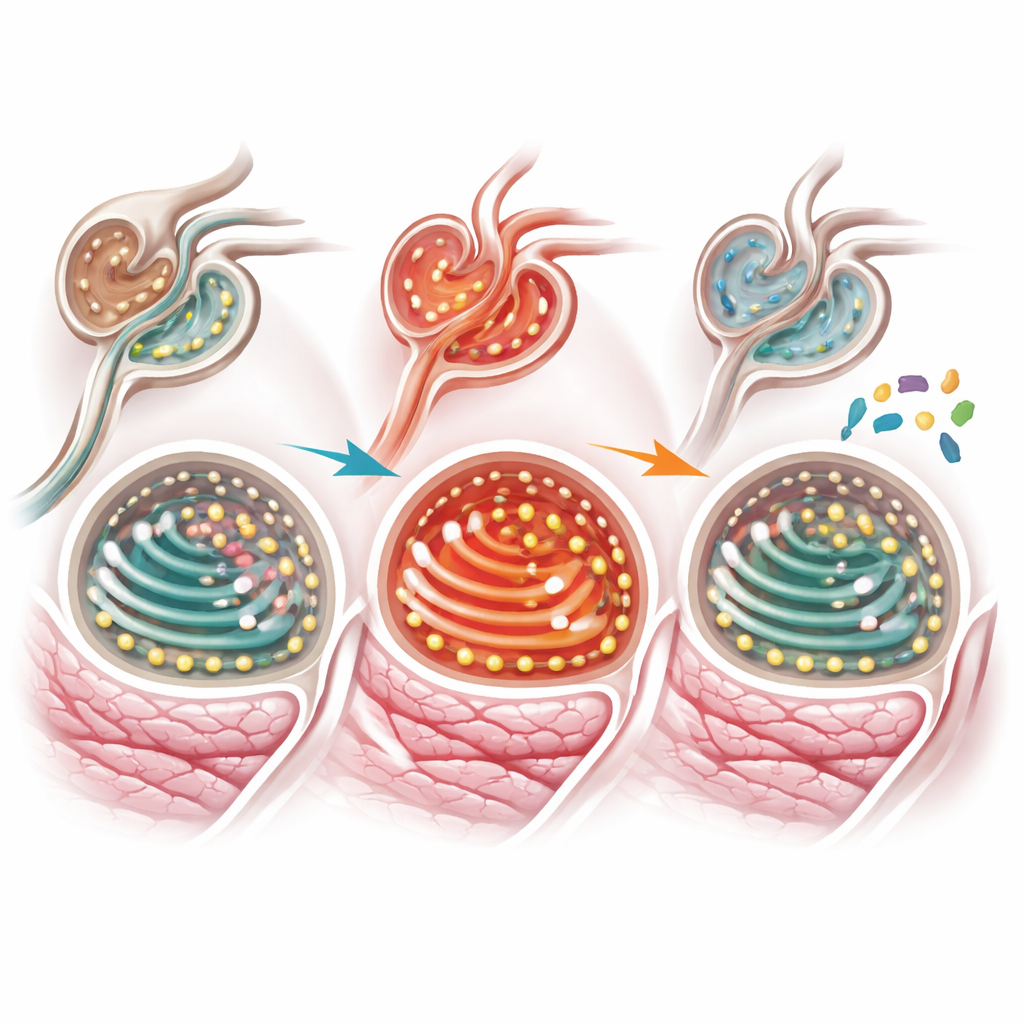
Microscope images revealed that three weeks of hindlimb unloading noticeably distorted the fine structure of the kidneys. The tiny filtering units, called glomeruli, became enlarged and crowded with cells, while the surrounding Bowman’s space, which normally provides room for filtered fluid to collect, narrowed. Such changes resemble early features seen in chronic kidney disease in people. When the suspended mice received 4‑PBA, both glomerular enlargement and narrowing of Bowman’s space were partly reversed, suggesting that easing internal cellular stress can translate into healthier organ architecture.
Peering Into Kidney Cells’ Molecular Conversations
To move beyond appearance and understand what was happening inside the kidney cells, the team performed RNA sequencing, a technique that reads out which genes are turned up or down across the entire genome. Hindlimb unloading triggered large shifts in gene activity, especially in pathways linked to endoplasmic reticulum stress, protein handling, and structural “scaffolding” around cells known as the extracellular matrix. Genes involved in energy production in mitochondria and in the careful editing of RNA messages were dialed down, hinting at flagging cellular power supplies and impaired quality control. When 4‑PBA was given, the overall pattern of gene activity in the stressed mice moved back toward that of normal controls, with far fewer genes showing strong disruption.
From Harmful Stress to Protective Responses
Computational analyses that group genes into biological themes confirmed and extended these findings. In unloaded mice, pathways controlling synthesis and remodeling of the extracellular matrix were strongly activated, consistent with a drift toward fibrosis, the scarring that underlies many chronic kidney diseases. At the same time, protective transport systems in cell membranes and key mitochondrial pathways were suppressed. Treatment with 4‑PBA dampened the overactive matrix‑building programs and boosted pathways linked to fat burning, antioxidant defenses, and cellular energy balance. Together, these shifts paint a picture in which unloading pushes kidney cells toward a stressed, fibrotic, energy‑poor state, while 4‑PBA nudges them back toward normal function.
What This Could Mean for Everyday Health
Although this work was done in mice and relied mainly on gene activity and tissue snapshots rather than direct tests of kidney performance, the message is clear: simulated microgravity can disturb kidney structure and ignite stress pathways deep inside cells. A naturally occurring compound, 4‑PBA, softened both the visible damage and the underlying molecular turmoil. For astronauts on long missions, people confined to bed for weeks, or even those leading very sedentary lives, such insights highlight the kidney as a vulnerable organ and point toward new strategies to shield it. Future studies will need to confirm exactly how 4‑PBA works, how much it truly improves kidney function, and whether similar benefits can be achieved safely in humans. Still, this study offers an early roadmap for protecting our body’s filters when gravity is no longer doing its usual job.
Citation: Ranade, A.V., Bernhardt, G.V., Jose, J. et al. 4-Phenylbutyrate mitigates renal pathology linked to ER stress related pathways in C57BL/6J mice with hindlimb unloading. Sci Rep 16, 11724 (2026). https://doi.org/10.1038/s41598-026-47754-6
Keywords: microgravity, kidney injury, endoplasmic reticulum stress, hindlimb unloading, 4-phenylbutyrate