Clear Sky Science · en
Association between upper limb motor function and balance in patients after stroke: a multicenter cross-sectional study
Why arm control matters after a stroke
Many people know that stroke can weaken a leg and make walking difficult, but fewer realize how much the arms help us stay upright. This study looks at a simple question with big consequences for daily life: when people are recovering from a stroke, does better control of the affected arm go hand in hand with better balance and safer standing and walking?
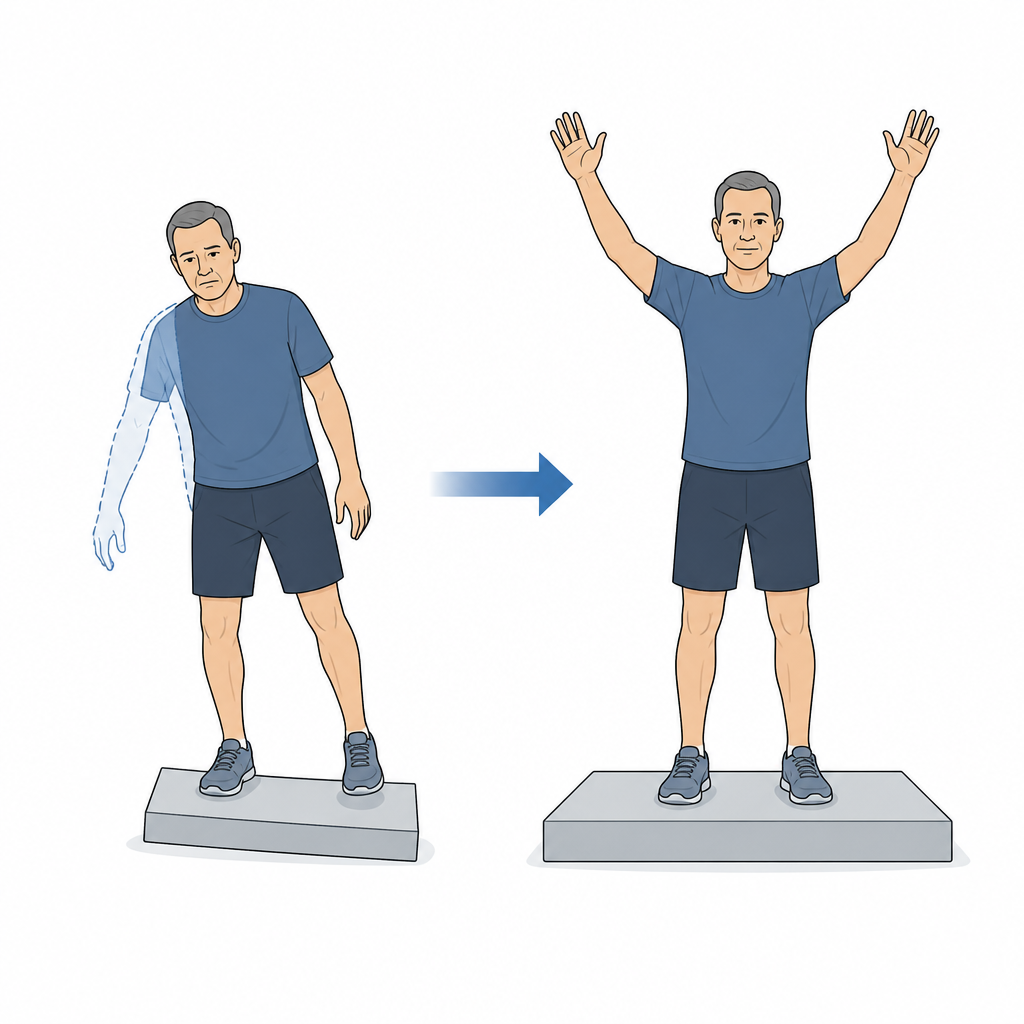
Who was studied and what was measured
The research team analyzed information from 1573 adults recovering from their first stroke, treated in the rehabilitation departments of 26 hospitals across China. All participants were within one year of their stroke, a period when the nervous system is still changing and relearning. To keep things consistent, therapists used two standard tests. One measured how well the affected arm and hand could move and perform basic actions. The other measured how steadily a person could sit, stand, and change position without losing balance. The team also recorded age, education, other health problems, thinking skills, and how long it had been since the stroke.
Finding the link between arm use and steadiness
When the researchers compared scores, they found a clear pattern. On average, people who could move their affected arm better also had better balance scores. Even after taking into account many other factors, such as blood pressure, weight, smoking, and mental sharpness, each small step up in arm function was tied to a noticeable step up in balance. This suggests that arm recovery and postural control are closely related and that the arm is not just a bystander while the legs do the work of standing and walking.
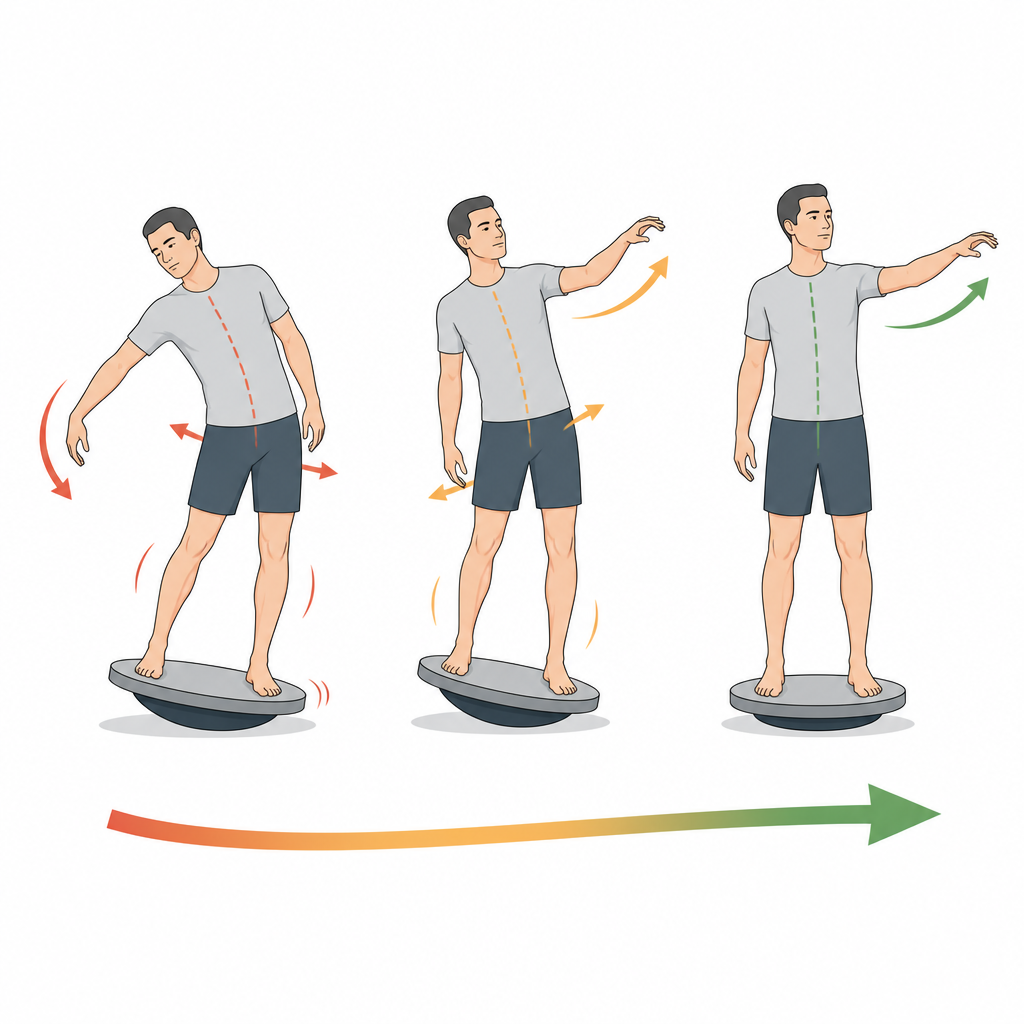
Three stages of recovery, not one straight line
The relationship between arm control and balance was not a straight, uniform line. Instead, it followed three stages. At very low arm function, early improvements were linked to big gains in steadiness, likely because the arm stopped acting like a heavy, unhelpful weight pulling the body off center. In the middle range, further changes in arm ability did not bring much extra balance benefit, possibly because people relied on awkward trunk movements to compensate. At higher levels of arm recovery, the link became strong again, as smoother, more precise arm movements helped the body react quickly to shifts and stay upright.
What this means for rehabilitation
These patterns have practical meaning for therapy. In the early stage, exercises that stabilize the shoulder and bring the arm back under basic control may sharply improve safety in standing. In the middle stage, however, therapists may need to watch carefully for stiff, twisting trunk strategies that allow the arm to move but quietly disrupt balance. Later on, when the arm can move more freely, adding tasks that challenge both arm use and balance at the same time may help people return to more active, confident movement in daily life.
Takeaway for patients and families
For people living with stroke and their families, this study reinforces a simple message: working on the affected arm is not just about reaching or grasping, it is also about standing tall and preventing falls. The findings suggest that arm recovery and balance progress together in complex ways over time. Understanding these stages can help patients, caregivers, and therapists set realistic goals, time their efforts wisely, and design rehabilitation plans that support both safer movement and greater independence.
Citation: Han, Q., Xu, X., Lin, J. et al. Association between upper limb motor function and balance in patients after stroke: a multicenter cross-sectional study. Sci Rep 16, 15503 (2026). https://doi.org/10.1038/s41598-026-47744-8
Keywords: stroke rehabilitation, upper limb function, balance, postural control, motor recovery