Clear Sky Science · en
Toward sustainable energy production: a comparative machine learning framework for predicting green hydrogen cost across the african continent
Why the Price of Green Hydrogen Matters
As the world looks for ways to cut carbon pollution from ships, factories, and long-distance transport, green hydrogen has emerged as a promising clean fuel. But whether it can truly take off depends on a simple, stubborn question: how much will it cost to make each kilogram? This paper tackles that question for Africa, a continent with vast sun and wind resources but little hard data on what green hydrogen might actually cost in different countries.
Big Picture: A Continental Cost Map
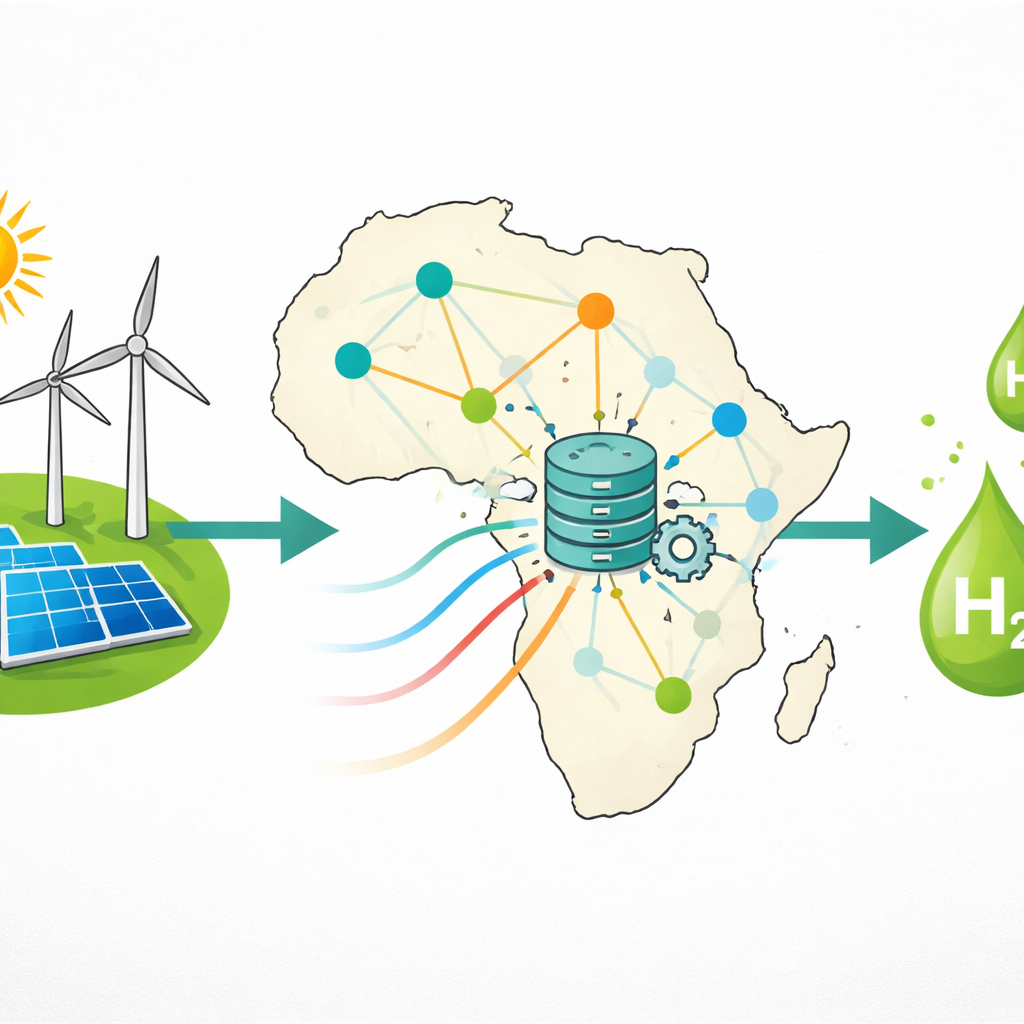
The researchers set out to build a continent-wide, data-driven picture of green hydrogen costs. Instead of focusing on a single plant or country, they gathered 54 scenarios covering many African nations, each describing a potential hydrogen project. For every scenario, they recorded the average lifetime cost of producing hydrogen and 14 other factors, such as the size of solar and wind farms, the capacity of hydrogen equipment, how much storage and pipeline infrastructure would be needed, how secure and reliable the local energy system is, the project’s stage of development, and how much water the project might use. By putting all these pieces into a common, carefully harmonized table, they created a foundation for comparing countries in a consistent way.
How the Smart Screening Tool Works
Rather than hand-calculating costs for each case, the team trained a suite of machine-learning models to learn the links between project characteristics and the final cost of hydrogen. They split the data so that most scenarios were used for training and the rest were held back as an independent test. Eleven different methods were tried, from simple linear formulas to more flexible tree-based approaches and deep neural networks. To avoid fooling themselves with overfitting—models that memorize instead of generalize—they used nested cross-validation, repeatedly shuffling and splitting the data to see how stable the predictions were across many runs.
What Drives Costs Up or Down
The best-performing model was a tuned gradient-boosting system, which stacks many simple decision trees to capture complex patterns. It reproduced observed hydrogen costs with striking accuracy, leaving only a few cents of average error per kilogram. Using a technique called SHAP, the authors then “opened the black box” to see which factors mattered most for the model’s decisions. Larger renewable power plants and larger electrolyzer systems (the devices that split water to make hydrogen) were strongly linked with lower predicted costs, reflecting economies of scale. Countries with higher energy security—more reliable, diversified power systems—also tended to see lower costs in the model. On the other hand, greater water demand and long distribution pipelines nudged predicted costs upward, hinting at the importance of local resource limits and infrastructure needs.
Patterns Across Countries and Project Stages
Looking across the 54 African scenarios, the typical cost of green hydrogen sat around 4.9 euros per kilogram, with values ranging from about 3.75 to 5.60 euros. But these numbers were not random. Projects that had advanced to detailed design or construction stages tended to cluster at the lower end of the cost range, while early “concept-only” ideas were noticeably more expensive. This suggests that as projects mature—clarifying their design, infrastructure, and financing—the expected cost of hydrogen comes down. The analysis also showed that low costs generally coincided with well-integrated, large-scale systems that pair big renewable plants with robust storage, pipelines, and strong energy governance, rather than with any one magic ingredient or single standout country.
Links to Broader Sustainability Goals
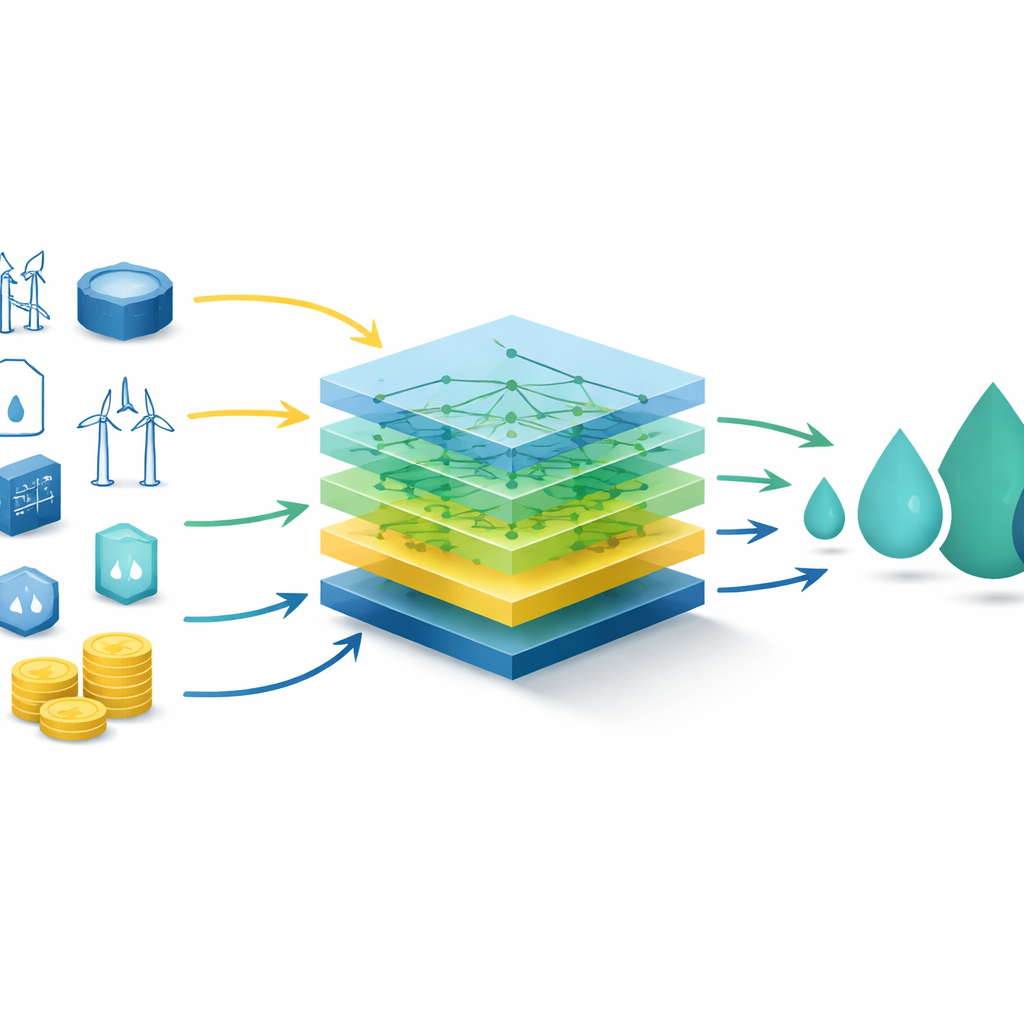
Because the same indicators used to predict cost are also tied to social and environmental questions, the authors examined how their findings relate to global Sustainable Development Goals. Higher renewable capacity and better energy security connect green hydrogen expansion to affordable clean energy and modern infrastructure. At the same time, indicators like carbon dioxide reductions, water demand, and investment levels reveal trade-offs and synergies with climate action and water stress. The framework does not claim to measure full real-world impacts, but it provides a transparent starting point for weighing cost, climate benefits, infrastructure, and resources together.
What This Means for Decision Makers
In plain terms, this study offers a rapid screening tool for governments, investors, and planners who must decide where to focus limited attention and capital. It shows that under the scenarios examined, African green hydrogen costs are competitive only when projects are large, well-integrated with reliable power systems, and carefully planned around water and infrastructure constraints. The machine-learning framework cannot replace detailed engineering and financial studies, but it can quickly highlight which countries and project designs look most promising—and which ones deserve deeper investigation—long before concrete is poured or pipelines are laid.
Citation: Elewa, A.M.T., Snousy, M.G., Saqr, A.M. et al. Toward sustainable energy production: a comparative machine learning framework for predicting green hydrogen cost across the african continent. Sci Rep 16, 12855 (2026). https://doi.org/10.1038/s41598-026-47726-w
Keywords: green hydrogen, Africa energy, machine learning, renewable power, sustainable infrastructure