Clear Sky Science · en
Development and validation of a nomogram for overall survival in pancreatic solid pseudopapillary neoplasm: a population-based study
Why this rare tumor matters
Most people never hear of solid pseudopapillary neoplasm (SPN), a rare type of pancreatic tumor that mostly affects young women and often grows quietly for years. Yet for those who receive this diagnosis, one of the first questions is simple and urgent: “What does this mean for my future?” Because SPN is so uncommon, doctors have lacked reliable tools to estimate how long patients are likely to live and how aggressive treatment should be. This study set out to change that by building a practical, evidence-based way to forecast long‑term survival for people with SPN.
A quiet tumor with many unknowns
SPN accounts for only a small fraction of all pancreatic tumors and generally behaves less aggressively than typical pancreatic cancer. Many patients have no symptoms, or only vague abdominal discomfort, and the tumor is often discovered incidentally on scans done for other reasons. Under the microscope, SPN has a distinctive appearance and a genetic signature involving a key cell‑signaling pathway, but its behavior in real life is surprisingly mixed: most patients do very well after surgery, while a smaller group develops spread to lymph nodes or distant organs and can face serious, even life‑threatening disease. Because published reports have usually involved only a handful of patients at a time, doctors have struggled to predict which newly diagnosed patient will fall into which group.
Turning scattered records into a clear picture
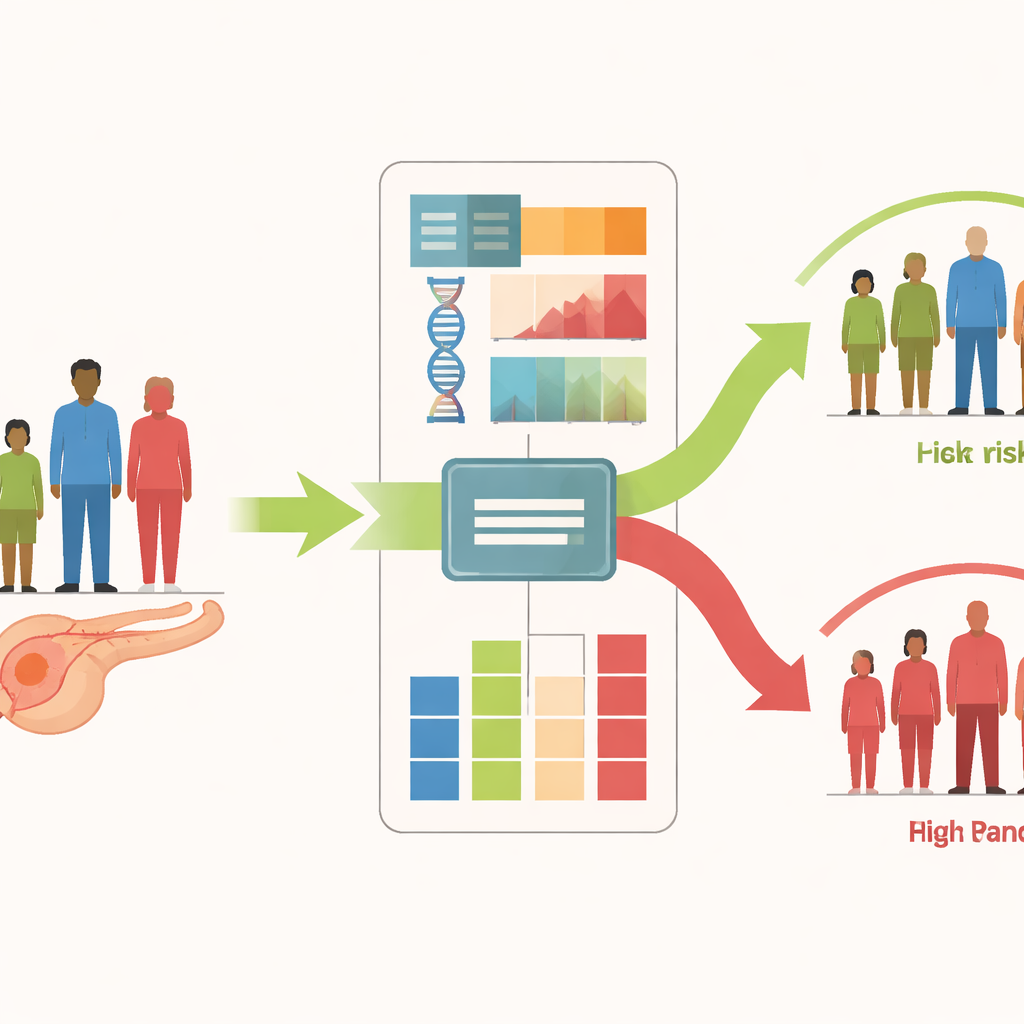
To tackle this problem, the researchers turned to the Surveillance, Epidemiology, and End Results (SEER) program, a large U.S. cancer registry that tracks about 30% of the population. They identified 341 people diagnosed with SPN between 2000 and 2018 who met strict quality criteria and split them into two sets: one to build a prediction tool and one to test it. For each patient, they gathered straightforward clinical details that any hospital can record, such as age, tumor size and location in the pancreas, how far the disease had spread at diagnosis, whether lymph nodes contained tumor cells, and what kind of operation was performed. By following these individuals over time, they could see who survived and for how long, and which features were linked to better or worse outcomes.
Building a survival “scorecard”
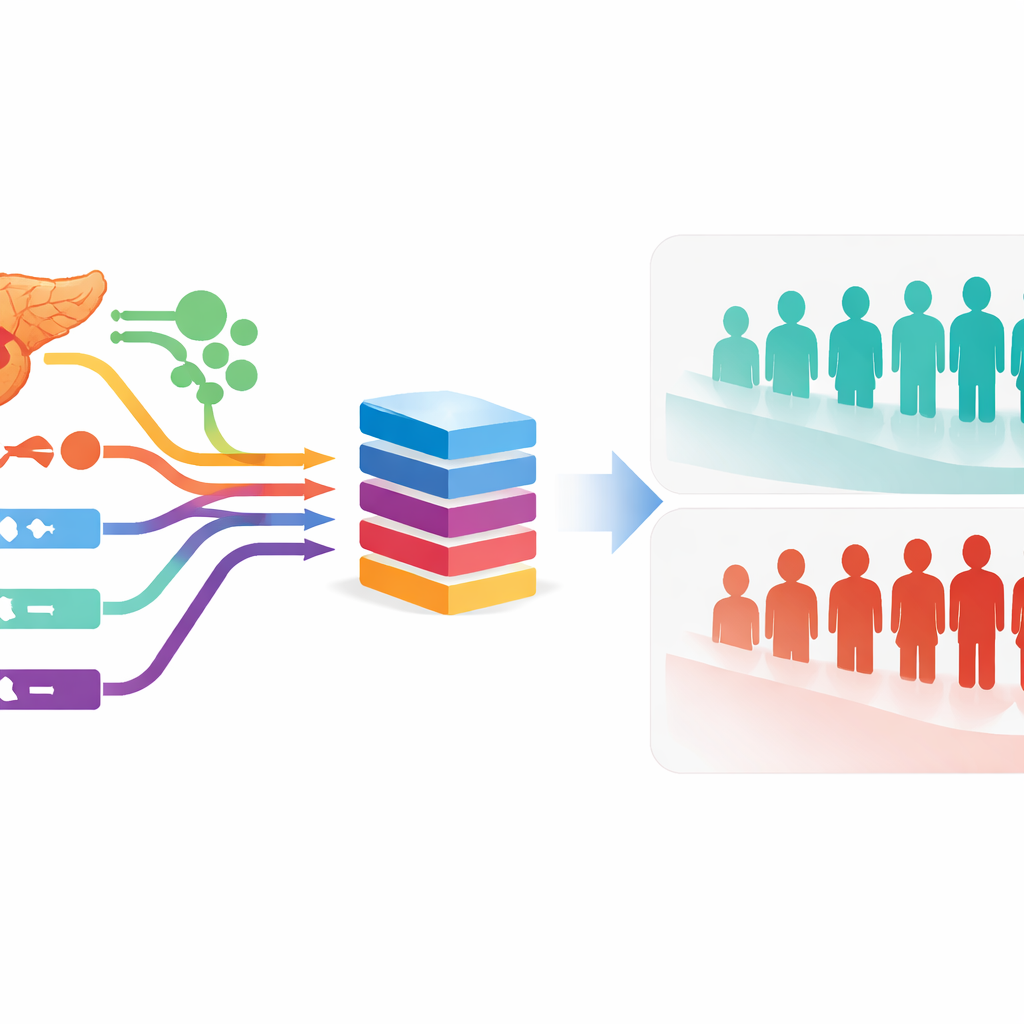
Using standard statistical methods for survival data, the team first screened many possible factors and then identified four that independently shaped a patient’s overall survival: age at diagnosis, the number of lymph nodes containing tumor, the broad stage of disease (localized, regional, or distant), and the type of surgery performed. They combined these into a nomogram—a visual scorecard that assigns points to each factor and converts the total into a personalized estimate of the chance of being alive 5, 6, or 7 years after diagnosis. In this design, more extensive spread of disease, older age, and involved lymph nodes increase risk, while having any form of surgical removal of the tumor strongly improves the outlook. The tool also allows patients to be grouped into “low‑risk” and “high‑risk” categories, which showed strikingly different survival patterns.
Checking the tool against reality
A prediction tool is only useful if it works reliably in different groups of patients. The researchers therefore tested their nomogram three ways. Within the SEER data, it separated outcomes very accurately: measures of discrimination—how well the model tells higher‑risk from lower‑risk patients—were notably higher than those for a simple stage‑based system alone. The predicted survival rates closely matched the actual survival observed over 5 to 7 years, indicating good calibration. The team also ran a decision curve analysis, a method that weighs the benefits and harms of acting on a prediction, and found that using the nomogram would lead to better treatment choices across a realistic range of clinical thresholds. Finally, they applied the tool to 26 SPN patients treated at their own hospital in China and again found excellent performance, suggesting the model can generalize beyond the original registry.
What this means for patients and doctors
For people facing a rare and unsettling diagnosis, this work offers something concrete: a way to turn a few familiar data points—age, imaging and surgical findings—into a tailored estimate of long‑term survival. The study confirms that most patients with SPN, especially younger individuals with disease confined to the pancreas and no involved lymph nodes, can expect very high survival after surgery. At the same time, it highlights a smaller group whose tumors have spread or affected lymph nodes, who may benefit from closer follow‑up and more cautious planning. While the model cannot capture every nuance of tumor biology and needs continued refinement with larger and more diverse datasets, it represents the first widely applicable survival prediction tool for SPN and a step toward more personalized, informed care for this rare pancreatic tumor.
Citation: Zhong, P., Tao, Q. & Hu, F. Development and validation of a nomogram for overall survival in pancreatic solid pseudopapillary neoplasm: a population-based study. Sci Rep 16, 11677 (2026). https://doi.org/10.1038/s41598-026-47722-0
Keywords: pancreatic tumor, solid pseudopapillary neoplasm, survival prediction, nomogram, cancer surgery