Clear Sky Science · en
Utilization of okra (Abelmoschus esculentus L.) and its byproducts for developing novel nutrient-rich food products
Turning a Familiar Vegetable into a Better Snack
If you enjoy crunchy crackers but worry about their nutritional value, this research offers an appealing twist: using okra, a common vegetable in many cuisines, to create healthier snack foods. The study explores how both edible parts of okra and its usual kitchen waste—pods and peels—can be milled into flour and added to crackers to boost protein, fiber, vitamins, and helpful plant compounds, all while trying to keep the taste and texture that snack lovers expect. 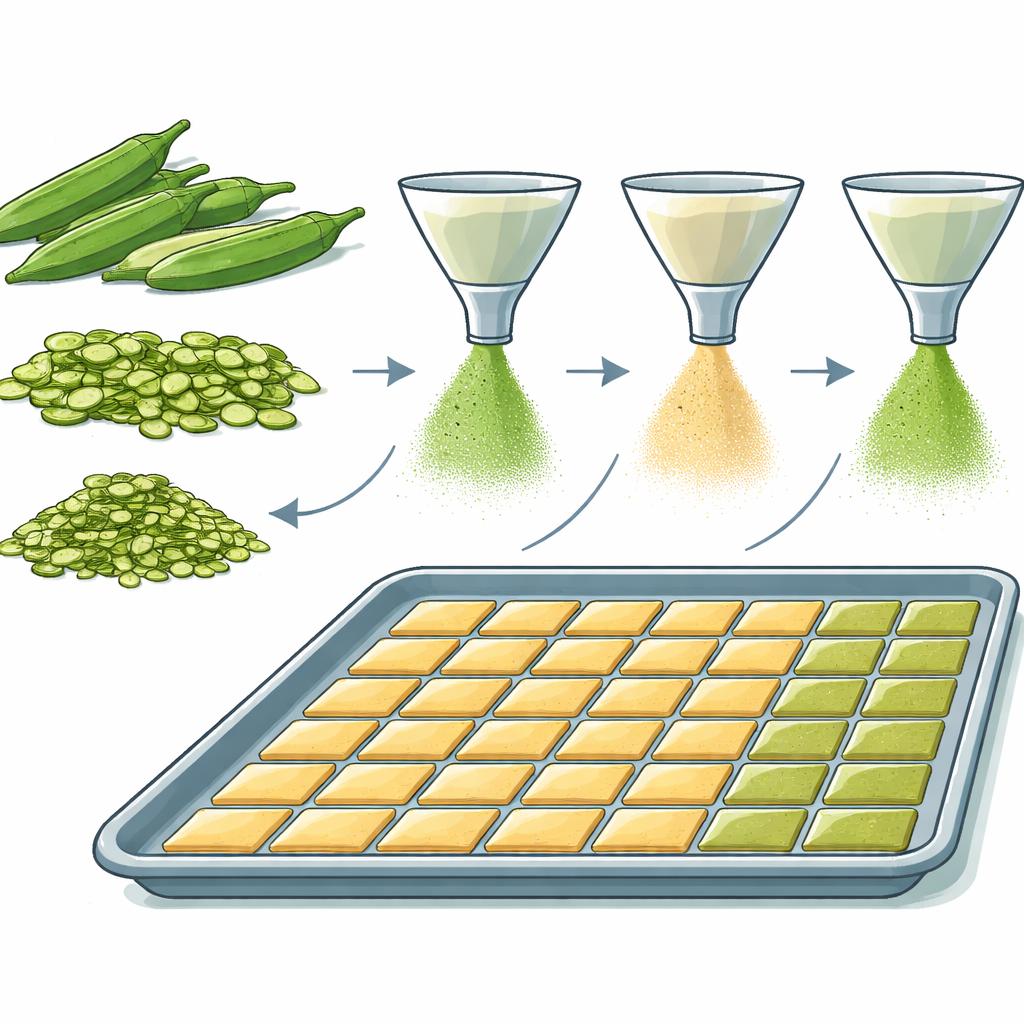
Why Okra Is More Than a Side Dish
Okra has long been valued in traditional cooking, but scientists now recognize it as a small nutritional powerhouse. Its pods, seeds, and mucilage (the characteristic “slimy” part) contain vitamins, minerals, quality plant protein with essential amino acids, and a wide range of natural chemicals that act as antioxidants and support blood sugar and fat balance. Earlier work has linked okra components to anti-diabetic, anti-fatigue, and heart-friendly effects in animal and human studies. This makes okra and even its byproducts attractive ingredients for modern “functional foods” that aim to nourish and protect health at the same time.
From Market Stall to Cracker Dough
In this study, researchers bought fresh okra from a local market, removed the tops (treated as waste), and prepared three types of powders: one from dried fresh pods, one from pods that were boiled then dried, and one from the discarded tops and peels. These powders replaced either 5% or 10% of the wheat flour in a standard cracker recipe. The crackers were baked as usual, then tested in the lab for basic nutrients (protein, fat, fiber, carbohydrates, moisture, and minerals), vitamins and fatty acids, and health-related plant chemicals. Trained taste panelists also scored the crackers for color, flavor, aroma, crispness, and overall liking. 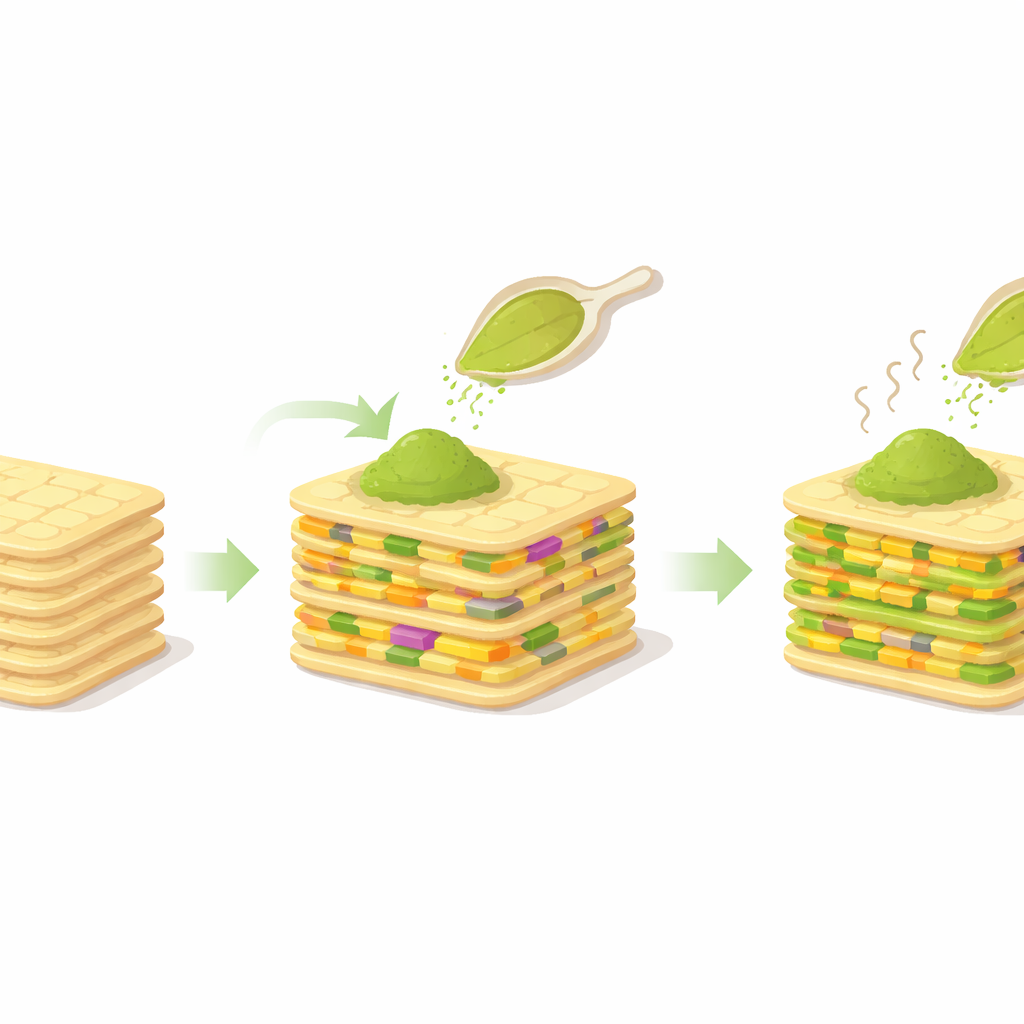
What Happens to Nutrition When Okra Is Added
The okra powders themselves were rich in valuable nutrients. Fresh okra powder had the highest protein levels and was particularly rich in minerals such as calcium, iron, magnesium, phosphorus, and potassium. The waste powder, though lower in protein, had the most crude fiber, making it a strong candidate for boosting dietary fiber. Fresh okra also contained more vitamins C and E and high levels of beta-carotene (a source of vitamin A), which declined somewhat with boiling but still remained meaningful. The fatty acid profile across fresh, boiled, and waste powders was dominated by linoleic acid, an essential omega-6 fat, along with palmitic, linolenic, oleic, and stearic acids, indicating that okra provides a useful mix of beneficial fats even though its total fat content is modest.
Protein Quality and Protective Plant Compounds
Beyond basic nutrients, the team analyzed amino acids, the building blocks of protein. Okra powders contained a broad spectrum of both essential and non-essential amino acids, with notable amounts of lysine, which is often lacking in cereal-based foods. Although slightly low in methionine, okra works well as a complementary protein alongside grains. Fresh okra also had the highest levels of total phenolic compounds and flavonoids, two major classes of plant antioxidants. These molecules help neutralize harmful free radicals and may contribute to the anti-diabetic and heart-protective effects seen in previous okra research. The waste material, while richer in certain anti-nutritional factors like phytic acid and oxalate, still carried many useful phytochemicals, suggesting that even discarded parts can be put to good use if handled properly.
How the Crackers Looked, Tasted, and Performed
When okra powders were mixed into the cracker dough, several changes followed. Compared with the plain control crackers, all okra-enriched versions showed higher protein, ash (a marker of mineral content), and especially crude fiber, while total carbohydrate content fell slightly. This pattern reflects okra’s dense nutrient profile and relatively low starch. However, nutrition is only half the story; snacks must also be enjoyable. Taste tests revealed that crackers containing 5% okra flour—whether from fresh, boiled, or waste sources—were well accepted and scored close to the control in flavor, color, and crunch. At the 10% level, though, many panelists disliked the stronger okra flavor and the stickier, more fibrous texture caused by the dehydrated mucilage and extra fiber. This shows that there is a practical upper limit to how much okra can be added before sensory quality suffers.
Healthier Bites from an Everyday Vegetable
Overall, the study demonstrates that okra and even its byproducts can be turned into useful ingredients for nutrient-rich snack foods. A modest 5% substitution of wheat flour with okra flour in crackers significantly boosts fiber and protein and brings along vitamins, minerals, beneficial fats, and protective plant compounds, without noticeably harming taste or texture. Higher levels offer even more nutrition on paper but become less pleasant to eat. For consumers, this work suggests that everyday foods like crackers can quietly become healthier by tapping into the full potential of familiar crops—and by reusing vegetable parts that would otherwise go to waste.
Citation: Abbas, E.R.M., Aly, T.A.A., Kelany, M.A. et al. Utilization of okra (Abelmoschus esculentus L.) and its byproducts for developing novel nutrient-rich food products. Sci Rep 16, 14646 (2026). https://doi.org/10.1038/s41598-026-47671-8
Keywords: okra, functional foods, high-fiber snacks, food waste valorization, plant-based protein