Clear Sky Science · en
Daily biomarker trajectories predict major bleeding in patients on venovenous ECMO for ARDS: a retrospective longitudinal cohort study
Why watching the blood matters
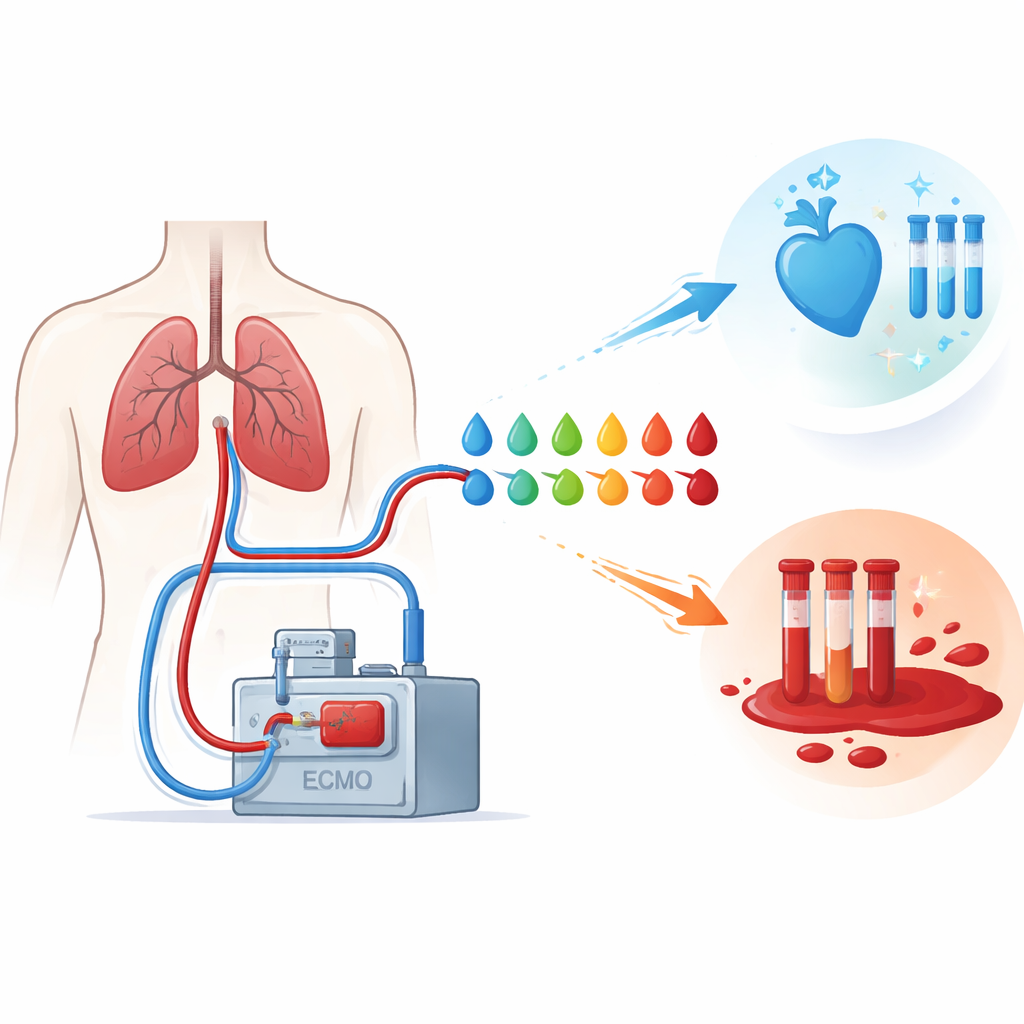
For patients whose lungs are so damaged that even a ventilator cannot supply enough oxygen, doctors can turn to a life‑support system called ECMO, which pumps blood outside the body to add oxygen and remove carbon dioxide. This powerful rescue therapy can save lives, but it also carries a serious downside: dangerous internal bleeding. This study asks a practical question with life‑or‑death consequences at the bedside: can daily routine blood tests give doctors a short early warning that a major bleed is about to happen, and can changing the ECMO circuit itself help stop the problem once it starts?
Life support on a knife edge
The researchers focused on adults with severe COVID‑19 lung failure who were being supported with a specific form of ECMO that connects to the veins. In these patients, blood continuously flows through plastic tubing and an artificial lung outside the body. Over time, this hardware can damage blood cells and trigger tiny clots, while patients also receive blood thinners to prevent the system from clogging. This delicate balance between clotting and bleeding often tips in the wrong direction: in the study, major bleeding occurred on about 8% of treatment days and affected most patients. These dangerous bleeds tended to cluster around the days when the ECMO circuit was replaced, hinting at an underlying process linked to the ageing and deterioration of the equipment.
Following daily ups and downs in the blood
To dig deeper, the team examined 93 separate ECMO circuit changes in 35 patients, looking at a 15‑day window around each replacement. They tracked everyday blood tests that intensive care units already collect: measures of clotting proteins, platelets (the tiny cell fragments that help seal wounds), fragments of dissolved clots, and white blood cells that signal inflammation. Instead of just checking single values, they used statistical models tuned for repeated measurements to follow how these markers rose or fell day by day. They then linked these patterns to whether patients experienced major bleeding on each specific day.
Warning signals before a dangerous bleed
The most striking finding was that changes in certain markers provided a short early warning before major bleeding. Levels of a clot‑breakdown fragment called D‑dimer climbed sharply in the one to two days before a bleed, while two key building blocks of clotting—fibrinogen and platelets—tended to fall. This combination suggests that the body is forming and then dissolving large amounts of clot, gradually using up the materials needed to stop bleeding, a process often called consumptive coagulopathy. At the same time, white blood cell counts were consistently higher in patients who bled, and they predicted bleeding risk up to four days in advance, pointing to a role for ongoing inflammation that goes beyond clotting alone.
What happens when the circuit is replaced
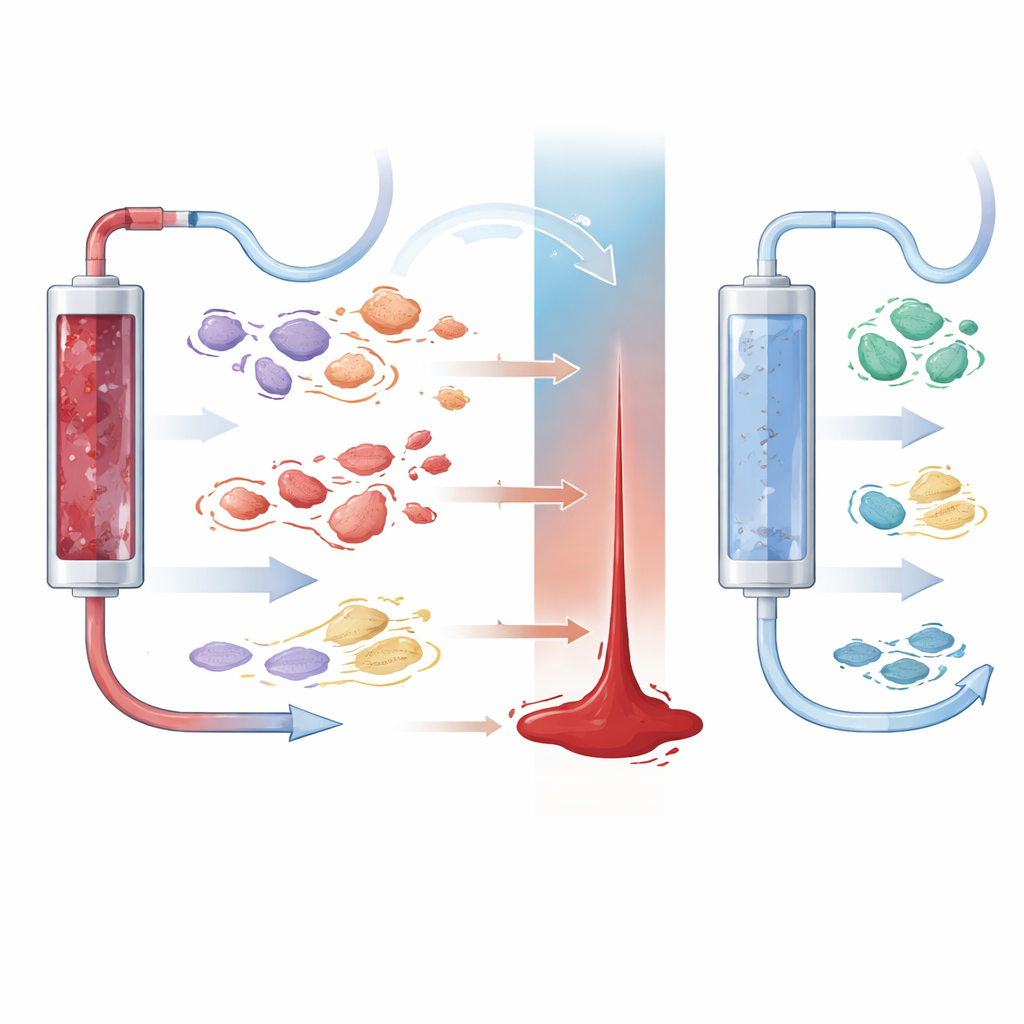
When doctors changed out the ECMO circuit—the pump, tubing, and artificial lung—several things improved in tandem. D‑dimer levels fell, while fibrinogen and platelets recovered over the following days. Major bleeding became less common and, when it did occur, tended to resolve more quickly after a circuit change. This pattern supports the idea that an ageing, clot‑laden circuit helps drive the consumptive process: as more clot forms inside the hardware, the patient’s blood is progressively stripped of its clotting capacity. Replacing the circuit appears to remove this hidden trigger, allowing the blood system to regain some balance.
What this means for patients and care teams
For a layperson, the study’s message is that the everyday blood tests drawn from patients on ECMO may do more than simply report current status—they can offer a brief but valuable look into the near future. Rising D‑dimer coupled with falling fibrinogen and platelets over one to two days, especially in the setting of increasing white blood cells, marks a narrow window when the risk of a serious bleed is climbing but may still be preventable. Acting during this window—by adjusting blood thinners, giving targeted blood products, or planning an ECMO circuit change before catastrophe—could help doctors steer patients away from life‑threatening hemorrhage. Larger, prospective studies will be needed to confirm how best to use these signals, but this work lays the groundwork for more personalized, biomarker‑guided care in some of the sickest patients in intensive care units.
Citation: Stueber, T., Homeier, JM., Gillmann, HJ. et al. Daily biomarker trajectories predict major bleeding in patients on venovenous ECMO for ARDS: a retrospective longitudinal cohort study. Sci Rep 16, 12041 (2026). https://doi.org/10.1038/s41598-026-47560-0
Keywords: ECMO, ARDS, bleeding risk, biomarkers, COVID-19