Clear Sky Science · en
Efficient elimination of basic red 9 from wastewater using ceramic metal oxides containing carbon as novel nanohybrids
Why cleaning colored water matters
Bright synthetic dyes make our clothes, papers, and lab samples eye-catching, but once they are washed down the drain they become a stubborn form of water pollution. One such dye, known as basic red 9, can linger in rivers and groundwater, harm aquatic life, and pose health risks to people. This study explores a new kind of tiny, solid material that can efficiently pull this troublesome dye out of water, offering a practical route toward cleaner, safer supplies.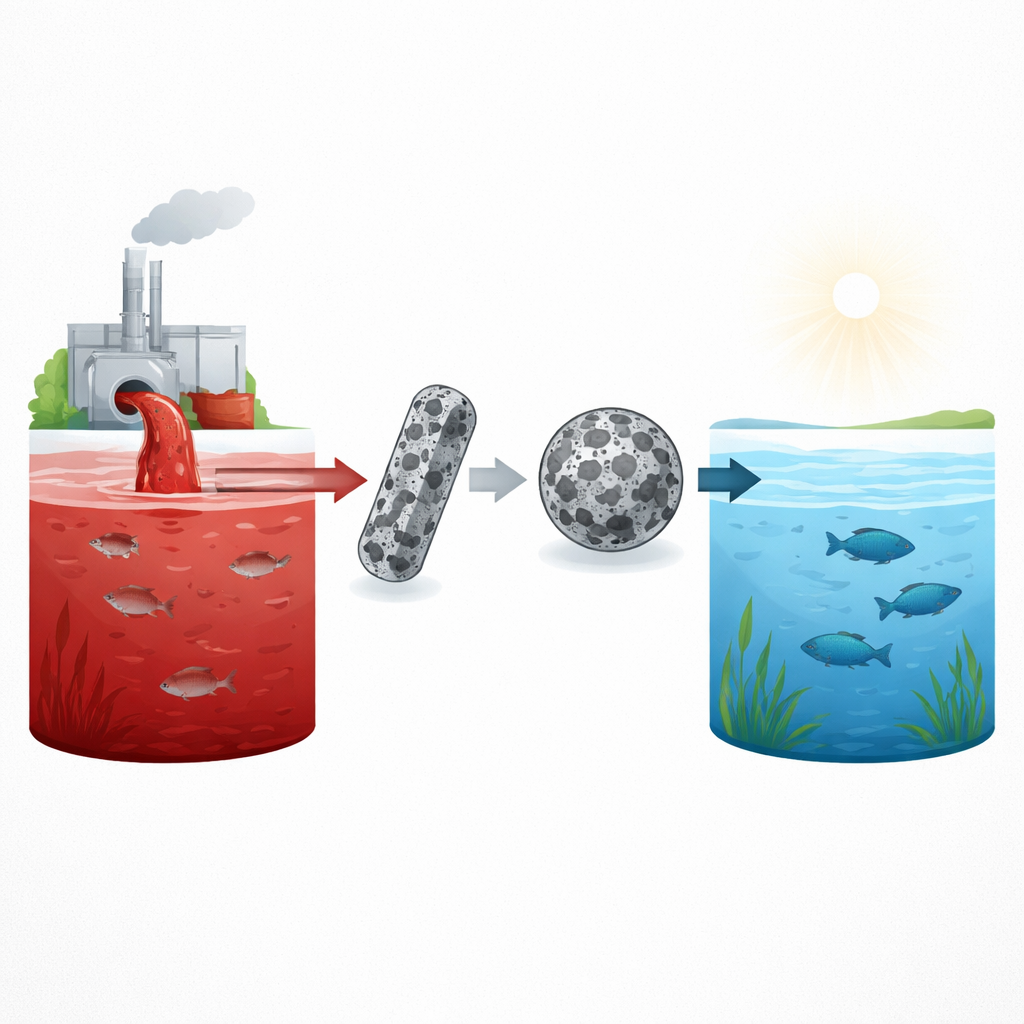
A stubborn red dye in everyday wastewater
Basic red 9 is widely used in textiles, paper, and laboratory work, and only a fraction of it sticks to the final product. The rest often ends up in wastewater, where its intense color blocks sunlight, disrupts photosynthesis in aquatic plants, and can interfere with living cells. Many existing treatment options—like membranes, chemical settling, or advanced light-driven breakdown—either cost too much, create additional waste, or struggle in real, messy wastewater. Simple adsorption, where pollutants stick to the surface of a solid, is attractive because it is easy to run, does not need complex equipment, and the solids can sometimes be cleaned and reused. The challenge is to design a solid that can capture a lot of dye quickly and keep working in the presence of salts and other substances commonly found in real water.
Building new tiny cleaners from ceramics and carbon
The researchers created two related materials by combining metal oxides of strontium, cobalt, and magnesium with carbon into what they call nanohybrids—solids made of several different tiny crystal phases woven together. They used a Pechini sol–gel process, a controlled way of mixing metal salts with an organic agent and heating them so they form fine, uniform particles. Heating the starting mixture to 600 °C produced one material, MSC600, with a rod-like, more open structure. Heating to 800 °C produced MSC800, which had more compact, nearly spherical grains and slightly larger crystal domains. In both cases, the finished solids contained several ceramic phases plus carbon, giving them a rich mix of surface sites where dye molecules could stick.
How the new materials grab the dye
When the team tested these nanohybrids in basic red 9 solutions, they found that the dye removal strongly depended on the water’s acidity. Under acidic conditions, the solid surfaces carried a positive charge, which repelled the positively charged dye and led to very poor cleanup. At alkaline pH, the surfaces became negatively charged and strongly attracted the dye, especially for MSC600, whose charge state and more open texture favored uptake. Detailed infrared measurements showed that several types of interactions were at play: electrostatic attraction between opposite charges, hydrogen bonding, stacking between the dye’s ring-shaped units and the carbon in the solid, and binding to metal–oxygen sites. Nitrogen gas measurements confirmed that both materials had large, accessible pores, with MSC600 offering more surface area and pore volume, helping bulky dye molecules diffuse inside and find places to attach.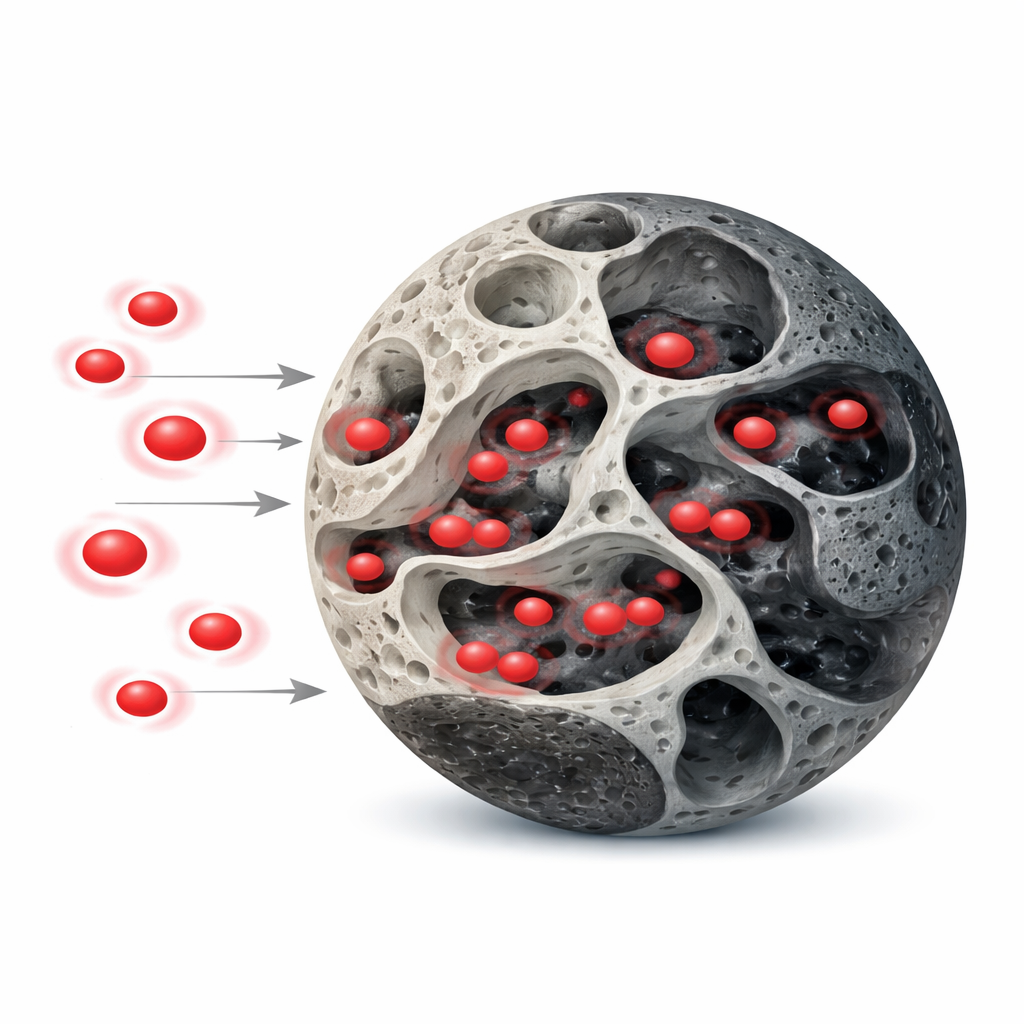
Fast, strong, and reusable cleanup
In performance tests, both materials captured large amounts of basic red 9, far exceeding the capacity reported for common alternatives such as activated carbon, biochar, or agricultural wastes. MSC600 reached a maximum of about 437 milligrams of dye per gram of solid, while MSC800 reached about 313 milligrams per gram. The uptake happened quickly, leveling off within about an hour for MSC600 and a bit longer for MSC800. Analysis of how the dye concentration changed over time and with temperature showed that the process was physical rather than chemical in nature, happened spontaneously, and released heat. Importantly, the dye could be stripped off almost completely using acid, allowing the solids to be reused several times with only a modest drop in performance. They also worked well in real laboratory wastewater that contained a mix of salts and other ions, still removing most of the added dye.
What this means for cleaner water
To a non-specialist, the main takeaway is that the authors have designed tiny, reusable "sponges" that can grab a problematic red dye from water much more effectively than many existing materials. By carefully tuning how the ceramic and carbon components are mixed and how hot they are processed, they created surfaces that attract the dye strongly, fill up quickly, and then can be cleaned and used again. While these tests were done on basic red 9, the same design principles could be adapted to other dyes and pollutants. This kind of simple, efficient cleanup tool could become part of practical treatment systems for industrial and laboratory wastewater, helping to keep rivers and groundwater clearer, safer, and closer to the goals of global clean water initiatives.
Citation: Al-Kadhi, N.S., Aljlil, S.A., Basha, M.T. et al. Efficient elimination of basic red 9 from wastewater using ceramic metal oxides containing carbon as novel nanohybrids. Sci Rep 16, 12235 (2026). https://doi.org/10.1038/s41598-026-47555-x
Keywords: wastewater dye removal, adsorbent nanomaterials, ceramic carbon hybrids, basic red 9, water purification