Clear Sky Science · en
Plasma tool as green route for incorporation of flame retardancy and ultraviolet protection of textile fabrics
Safer fabrics for everyday life
From sofas and curtains to car seats and sweaters, synthetic fabrics surround us. Yet many of these materials burn easily, offer little protection from the sun’s ultraviolet (UV) rays, and can harbor bacteria. This study presents a “greener” way to upgrade a common synthetic fabric—polyacrylic—so that it resists flames, blocks UV light, fights germs, and even becomes slightly stronger, all while reducing toxic fumes released during burning.
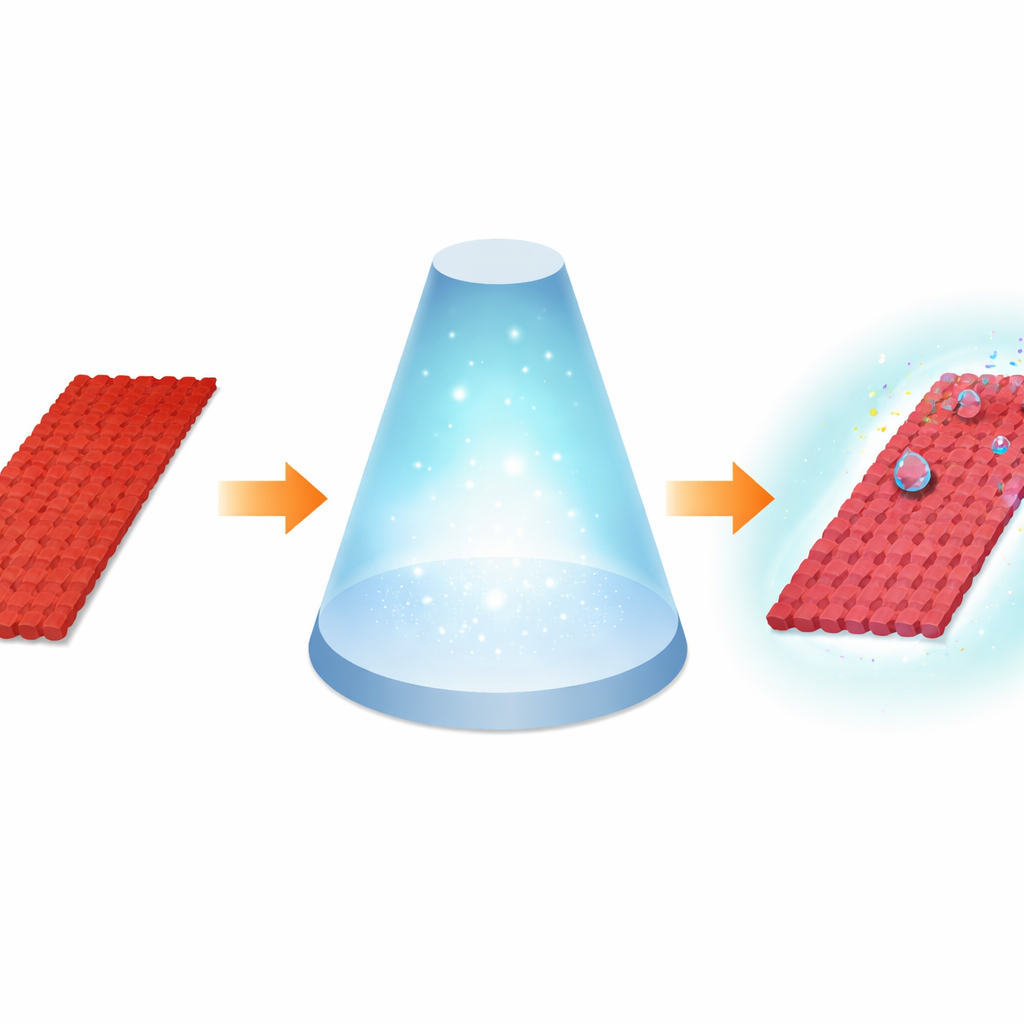
A gentle glow that changes fabric surfaces
The researchers started with an invisible tool called gas plasma—a low-temperature, partially ionized gas often described as a gentle glow. They exposed polyacrylic fabric to either oxygen or nitrogen plasma for up to 90 minutes. This treatment does not melt or coat the fabric; instead, it quietly adds new chemical groups to the fiber surface, changing it from water-repelling to more water-loving. That small shift makes it easier for later coatings to cling tightly to the fibers, solving a long-standing problem: synthetic fabrics typically lack the right “hooks” on their surface for durable finishes.
A plant-based nano shield
Next, the team prepared a thin protective coating built around zinc oxide nanoparticles. Unusually, they made these nanoparticles using an extract from molokhia plant stems, offering a more environmentally friendly route than many conventional syntheses. The zinc oxide particles, averaging only 6.2 nanometers in diameter, were mixed with two phosphorus-rich compounds—sodium tripolyphosphate and tetra-n-butylammonium hexafluorophosphate—that encourage the formation of a protective char during burning. This mixture formed a “green nanocomposite” that could be spread over the plasma-treated fabric, where it adhered much better than on untreated fabric.
Putting flames, germs, and sunlight to the test
To see if their upgraded fabric performed as intended, the scientists ran a series of standard tests. In flammability tests, untreated polyacrylic burned rapidly, while coated and plasma-treated samples burned far more slowly. The best-performing version, using oxygen plasma followed by the nano-coating, cut the rate of burning by about 83 percent. It also needed more oxygen to keep burning and released notably less carbon dioxide, nitrogen oxides, and sulfur dioxide—gases associated with toxic smoke—thanks to a thicker, more compact char layer that sealed the fabric surface. At the same time, mechanical tests showed that the coating did not weaken the fabric; in some cases, tensile strength improved by about 10 percent, indicating a slight reinforcing effect of the nano-layer.
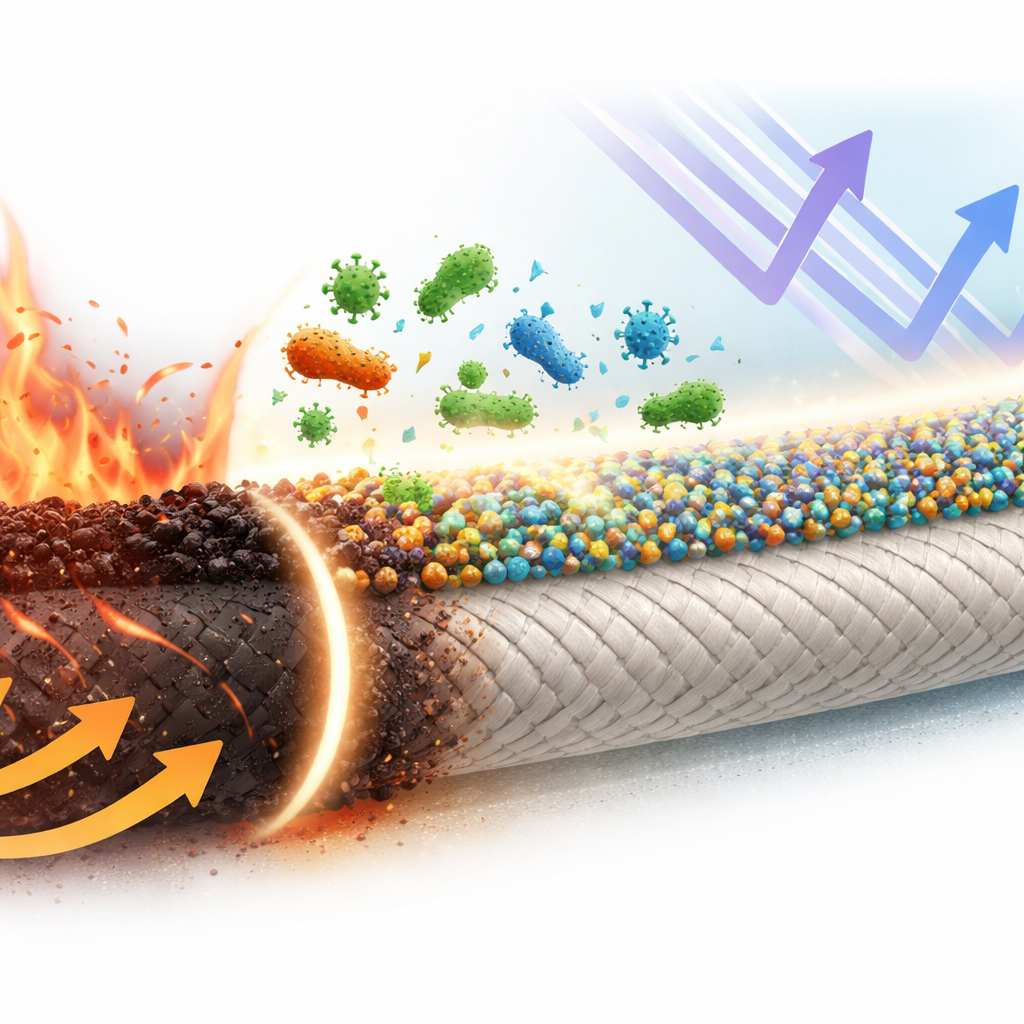
Protection against microbes and harsh sunlight
The same treated fabrics also gained new health-related benefits. In petri dish tests, untreated polyacrylic allowed two common bacteria—Staphylococcus aureus and Escherichia coli—to grow freely. By contrast, fabrics bearing the plant-based zinc oxide coating showed clear bacteria-free zones several millimeters wide around the samples. This germ-fighting effect came from the combined antibacterial action of zinc oxide, the phosphorus compounds, and the molokhia extract, all held firmly on the plasma-activated surface. When the researchers measured protection against UV light, they found that the ultraviolet protection factor (UPF) jumped from 12.5 for plain fabric to as high as 39.6 after treatment—more than a threefold improvement and comparable to, or better than, many other advanced textile finishes reported in the literature.
Promise and limits of greener smart textiles
Finally, the team checked how the new finish survived washing. After a couple of wash cycles, the flame-retardant performance remained acceptable, but it declined with further washing, showing that the current coating is semi-durable rather than permanent. Even so, the overall picture is encouraging: with the help of a low-temperature plasma “primer” and a plant-assisted nanoparticle coating, a commonplace synthetic fabric can be transformed into a safer, more protective, and slightly stronger material. For everyday users, that could eventually translate into home and technical textiles that burn less readily, give better sun protection, slow bacterial growth, and produce less toxic smoke if they do catch fire—all achieved by a process designed with environmental considerations in mind.
Citation: Abdel-Razik, A.M., Nasr, H.E. & Attia, N.F. Plasma tool as green route for incorporation of flame retardancy and ultraviolet protection of textile fabrics. Sci Rep 16, 12474 (2026). https://doi.org/10.1038/s41598-026-47539-x
Keywords: flame-retardant textiles, nanoparticle coatings, plasma surface treatment, UV-protective fabrics, antibacterial materials