Clear Sky Science · en
Extraction of thorium from aqueous system using citric acid modified corn cob: characterization, kinetics, thermodynamics and adsorption mechanism
Turning Farm Waste into a Water Cleaner
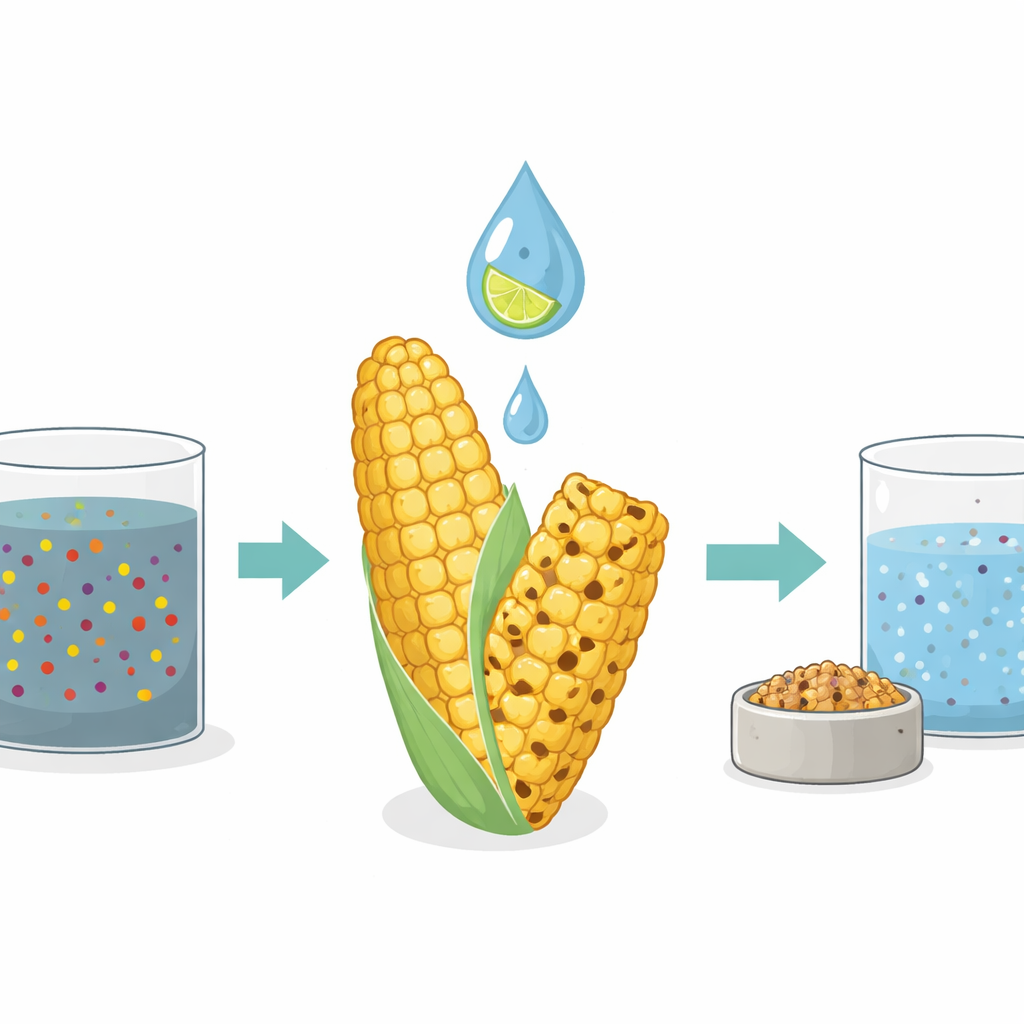
Thorium is a radioactive metal used in high-tech industries and nuclear research, but when it leaks into water it becomes an environmental and health concern. At the same time, vast piles of corn cobs are burned or discarded after harvest, adding to pollution. This study explores an elegant way to tackle both problems at once: using simple chemistry to turn leftover corn cobs into a low-cost material that can pull thorium out of water with high efficiency.
Why Thorium in Water Matters
Thorium occurs naturally in rocks and minerals and is valuable for uses ranging from advanced alloys to nuclear medicine. Extracting and processing it, however, can generate liquid wastes containing thorium and other metals. Conventional cleanup methods often rely on costly synthetic materials or complex processes. The idea behind this work is to replace such materials with a “biosorbent” made from agricultural waste, offering a cheaper and more sustainable route to capture thorium before it reaches the environment.
Giving Corn Cobs a Chemical Makeover
The researchers collected discarded corn cobs from Egyptian farmland and ground them into a fine powder. They then soaked this powder in a warm solution of citric acid—the same mild acid found in lemons—and heated it to trigger a reaction. This treatment rewired the surface of the corn cob particles, adding many extra oxygen-rich groups that can latch onto metal ions. Microscopy and surface analyses showed that the treated material, called modified corn cob, became much rougher and more porous, with nearly seven times more surface area than the raw cob, creating far more spots where thorium could stick.
How Well the New Material Grabs Thorium
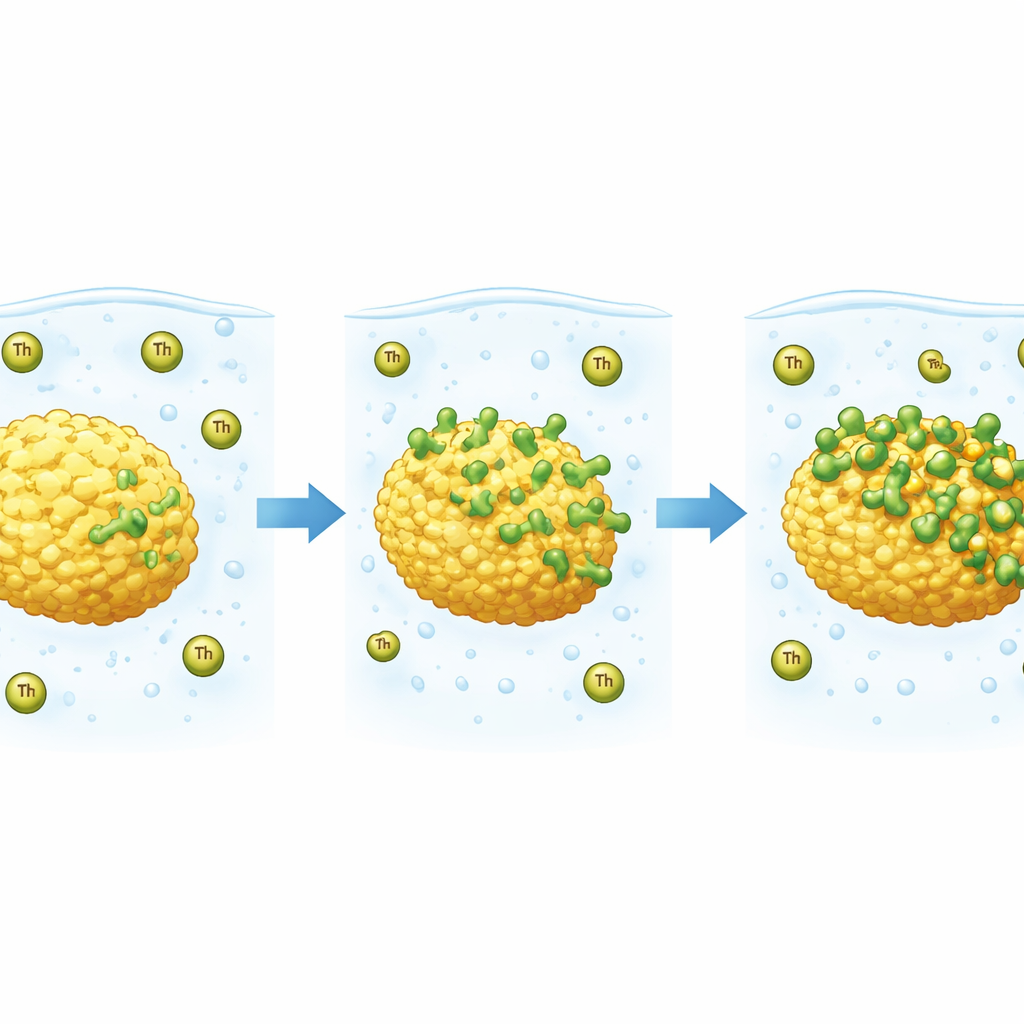
To test performance, the team mixed small amounts of modified corn cob with water containing dissolved thorium under different conditions. They found that acidity was crucial: at a slightly acidic pH of about 4, the corn-based particles were negatively charged and strongly attracted the positively charged thorium ions. Under these conditions, the material removed about 90 percent of thorium in just 25 minutes using only one gram per liter of water. Experiments across a range of thorium concentrations showed that the surface filled up in an orderly, single layer, and calculations indicated a high maximum loading capacity of nearly 200 milligrams of thorium per gram of adsorbent—competitive with or better than many other natural materials reported.
What Happens at the Microscopic Level
Advanced spectroscopic tools offered a window into the binding process. The added carboxyl and hydroxyl groups on the modified corn cob shifted their electronic signatures once thorium was attached, evidence that they form true chemical bonds rather than simply holding ions loosely on the surface. The way the uptake changed over time matched a kinetic model usually associated with chemisorption, meaning the thorium is captured through specific, relatively strong interactions. Thermodynamic analysis showed the process is spontaneous and slightly favors higher temperatures, suggesting that gentle warming can further improve removal.
Using, Releasing, and Reusing the Corn-Based Filter
For any practical cleanup technology, the ability to recover both the pollutant and the filter material is vital. Here, the thorium-loaded corn cob powder was rinsed with a dilute solution of nitric acid, which released about 94 percent of the captured thorium back into liquid form for potential recovery. The same batch of modified corn cob was then reused several times in fresh thorium solutions. Even after five adsorption–desorption cycles, it still removed over 80 percent of thorium, showing that the material is robust and can be recycled without major loss of performance.
From Field Waste to Useful Resource
In simple terms, the study shows that a cheap and abundant farm by-product can be turned into an efficient “sponge” for radioactive metal in water using a common food-grade acid. The treated corn cobs grab thorium quickly and strongly, work well under mildly acidic conditions, and can be regenerated with a gentle acid wash, making them promising for cleaning industrial or mining effluents. This approach turns what was once a source of smoke and waste into a practical tool for protecting water resources while enabling safer recovery of valuable thorium.
Citation: Attia, R.M. Extraction of thorium from aqueous system using citric acid modified corn cob: characterization, kinetics, thermodynamics and adsorption mechanism. Sci Rep 16, 14636 (2026). https://doi.org/10.1038/s41598-026-47530-6
Keywords: thorium removal, corn cob adsorbent, wastewater treatment, biosorption, citric acid modification