Clear Sky Science · en
Comparative study on changes in serum amino acid metabolic profiles in mice exposed to perfluorooctanoic acid and sodium ρ-perfluorous nonenoxybenzene sulfonate
Everyday Chemicals and the Body’s Building Blocks
From nonstick pans to waterproof coats, fluorinated chemicals quietly support many modern conveniences. But once these compounds escape into the environment, they linger and can end up in our bodies. This study asks a simple but important question: how do two such chemicals, an older one being phased out and a newer replacement, subtly change the tiny building blocks of proteins—amino acids—in the blood of mice, and what might that mean for health?
Two Pollutants Under the Microscope
The researchers focused on perfluorooctanoic acid (PFOA), a well-known “forever chemical,” and sodium ρ-perfluorous nonenoxybenzene sulfonate (OBS), a newer substitute now being used more widely. Both belong to a family of highly stable industrial compounds that resist breakdown and can accumulate in living organisms. Earlier work had shown that PFOA can disturb metabolism in the liver and brain, while OBS can upset gut bacteria and liver chemistry. However, no one had closely compared how these two pollutants change amino acids circulating in the bloodstream, which can act as an early warning system for nutritional stress and organ damage.
A Four-Week Test in Mice
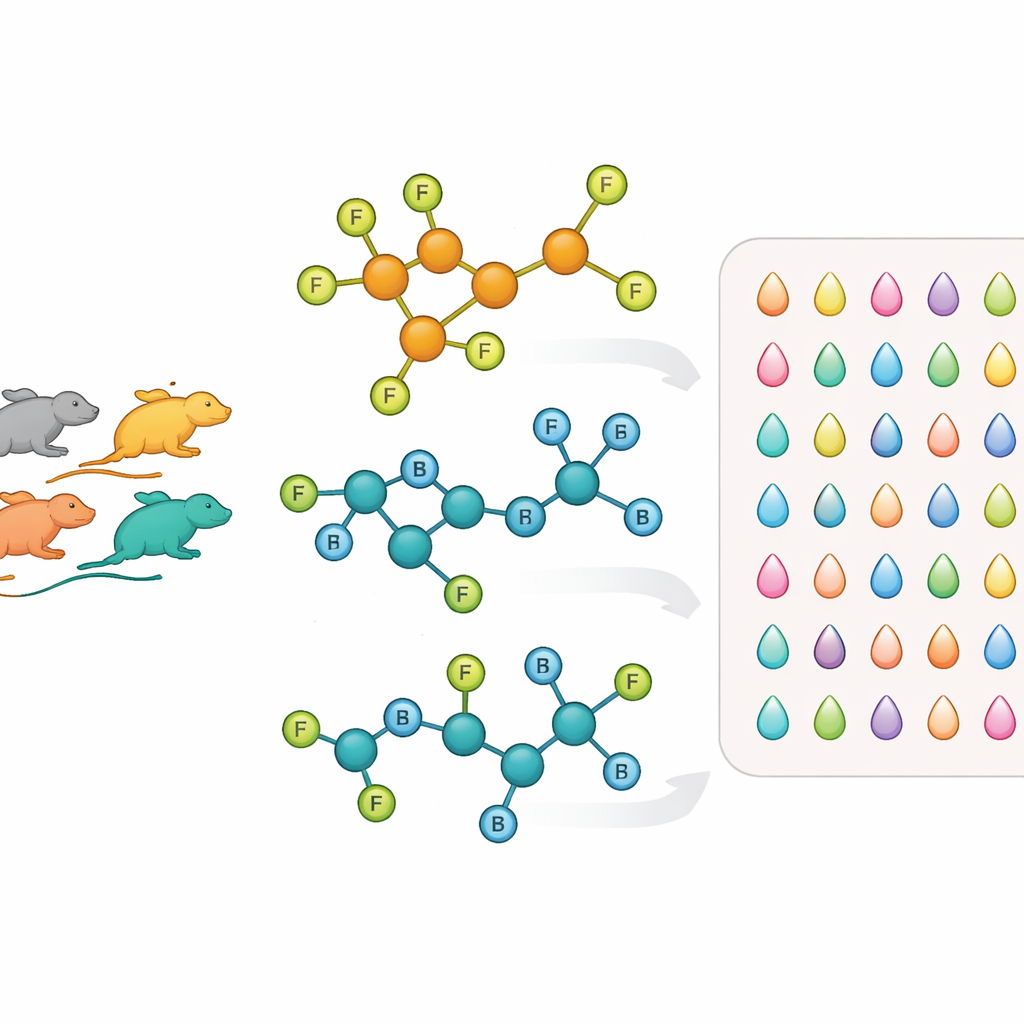
Fifteen healthy male mice were divided into three groups: one unexposed control group, one given PFOA, and one given OBS, all at the same dose for four weeks. After this period, the scientists collected blood samples and measured dozens of free amino acids and related small molecules using an automatic analyzer. They then applied advanced statistical methods to see whether the overall “amino acid fingerprints” differed among groups. These analyses showed that each group formed its own cluster, meaning the mixture of amino acids in blood shifted markedly after exposure to either chemical, even though the total amount of amino acids stayed roughly the same.
Subtle Shifts with Big Implications
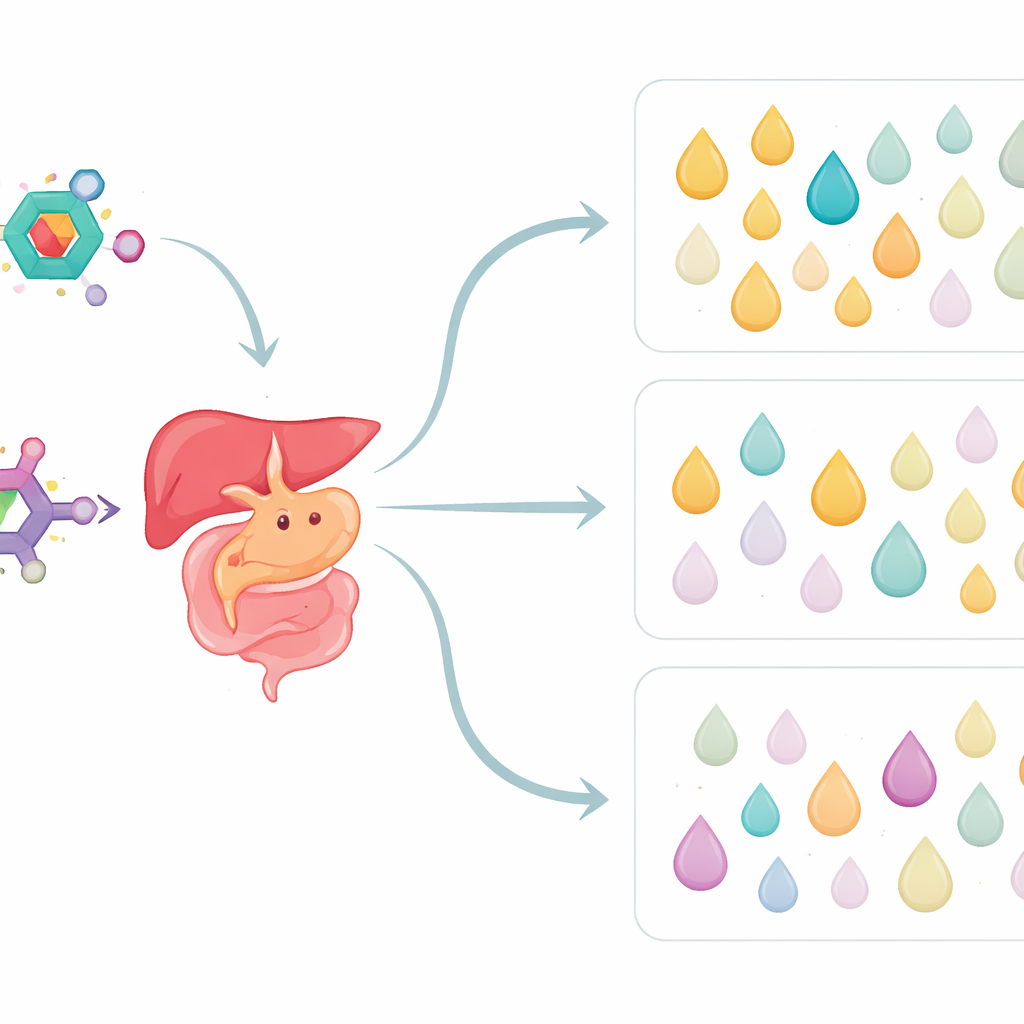
Digging deeper, the team identified 23 amino acids and derivatives that changed in meaningful ways. Some essential amino acids—the ones animals must obtain from food—were affected. Leucine, which helps control muscle protein and energy use, rose in both PFOA- and OBS-treated mice, a pattern previously linked to higher risk of type 2 diabetes. Threonine, important for gut lining and immune balance, moved in opposite directions: it dropped with PFOA but increased with OBS, hinting at different ways these chemicals may stress the intestine and immune system. Several non-essential amino acids, including serine, asparagine and glutamine, were especially elevated by OBS, suggesting this newer compound has a stronger impact on pathways tied to cell growth, tumor behavior, and gut health.
Warning Signs for Heart, Muscle, and Liver
The most striking changes appeared among amino acid derivatives, which act as signal carriers and intermediates in key body processes. Out of the measured derivatives, 14 shifted significantly. PFOA strongly increased homocysteine and related molecules, which are well-known red flags for cardiovascular strain, oxidative stress, and nervous system injury. PFOA also boosted markers linked to muscle breakdown, pointing to a higher risk of muscle damage than with OBS. Both chemicals lowered α-aminoadipic acid, a compound that helps regulate insulin and fat burning, potentially nudging metabolism toward obesity and diabetes. Meanwhile, OBS tended to raise certain derivatives such as sarcosine and α-aminobutyric acid, whereas PFOA often pushed them down, revealing opposite effects on liver- and gut-related pathways.
Different Roads to Potential Harm
Although neither chemical dramatically changed the overall amount of amino acids in the blood, both rewired the balance among specific ones and their byproducts. To a non-specialist, this means that PFOA and OBS may harm the body not by brute force, but by steadily tugging on the delicate network that controls energy use, tissue repair, and organ protection. OBS appears to have a wider influence on everyday amino acids, especially those tied to cell growth and gut integrity, while PFOA is more clearly linked to markers of heart, blood vessel, and muscle stress. These patterns suggest that the older and newer “forever chemicals” may pose different kinds of health risks, and that distinct sets of amino acids in blood could someday serve as early warning signs of exposure in people.
Citation: Guo, X., Jing, N., Liang, S. et al. Comparative study on changes in serum amino acid metabolic profiles in mice exposed to perfluorooctanoic acid and sodium ρ-perfluorous nonenoxybenzene sulfonate. Sci Rep 16, 11684 (2026). https://doi.org/10.1038/s41598-026-47516-4
Keywords: perfluorinated chemicals, amino acid metabolism, PFOA, OBS, mouse toxicology