Clear Sky Science · en
Magnetite sand as a low-cost material for electromagnetic shielding and mechanical enhancement of concrete
Why safer walls matter in a wireless world
Modern life is bathed in invisible waves from phones, Wi‑Fi routers, radar, and medical devices. While these signals make our gadgets work, scientists worry that long-term exposure to strong electromagnetic waves could affect human health and sensitive electronics. This study explores a simple idea with big implications: can we turn ordinary concrete walls into low‑cost shields that both block some of this radiation and make buildings structurally stronger at the same time?
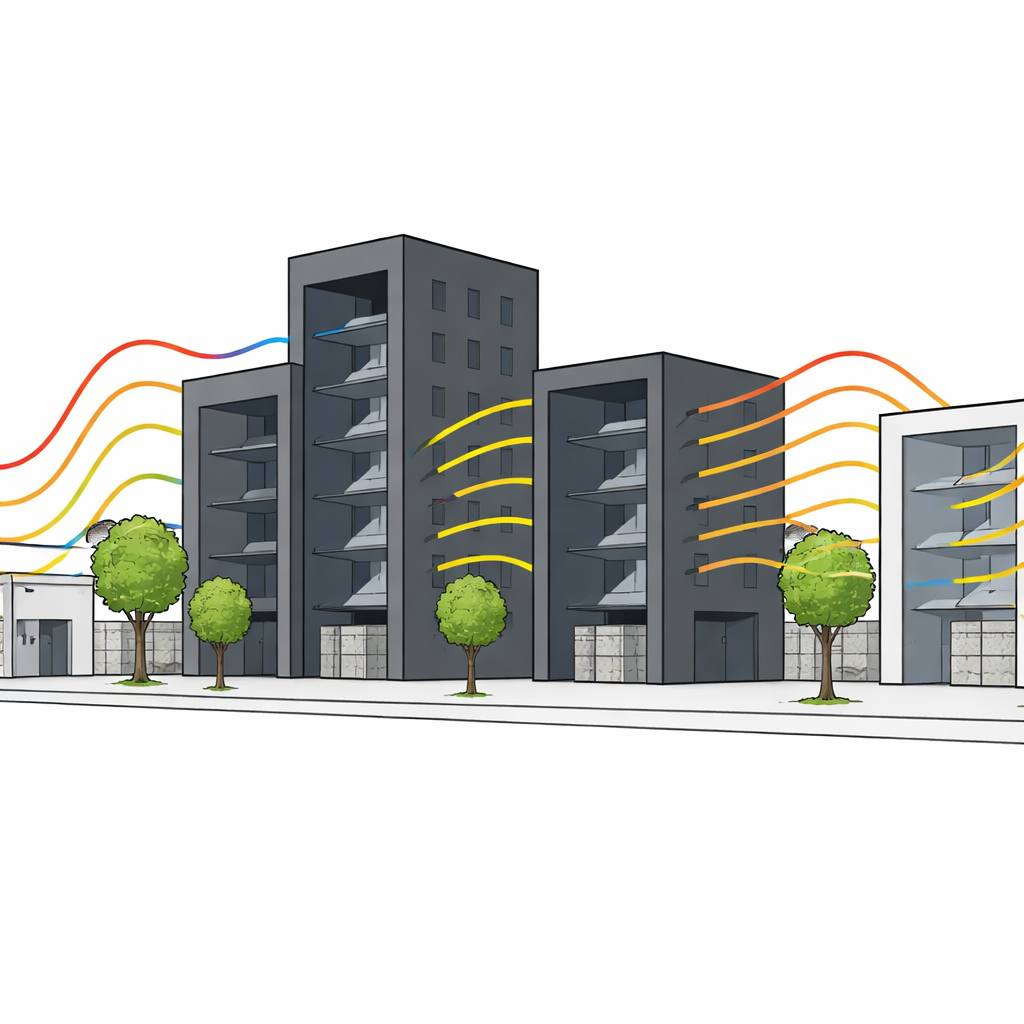
Turning beach sand into protective walls
The researchers focused on magnetite, a naturally magnetic iron-rich mineral found in Egypt’s black sands. Instead of using it as a high-tech powder or coating, they treated it like regular sand, blending it directly into standard concrete mixtures. By replacing 10, 20, 30, and 40 percent of the normal sand with finely ground magnetite, they created a series of concrete tiles and test blocks that could be compared with conventional concrete. This approach keeps costs down and uses a resource that can be obtained in large quantities, making it realistic for everyday construction.
How the new concrete handles stray waves
To see how well the magnetite concrete could weaken passing electromagnetic waves, the team placed the tiles between two antennas and measured how much signal got through across a wide band of frequencies (2 to 12 gigahertz, which covers many radar, Wi‑Fi, and communication uses). As the share of magnetite increased, the tiles blocked more of the incoming energy. The best-performing mix, with 40 percent of the sand replaced, reduced the wave power by about 18 decibels around 8 gigahertz—meaning only a small fraction of the original energy emerged on the other side. This level is not enough to create a perfect “radio silent” bunker, but it is substantial for ordinary building elements that are already needed for structural reasons.
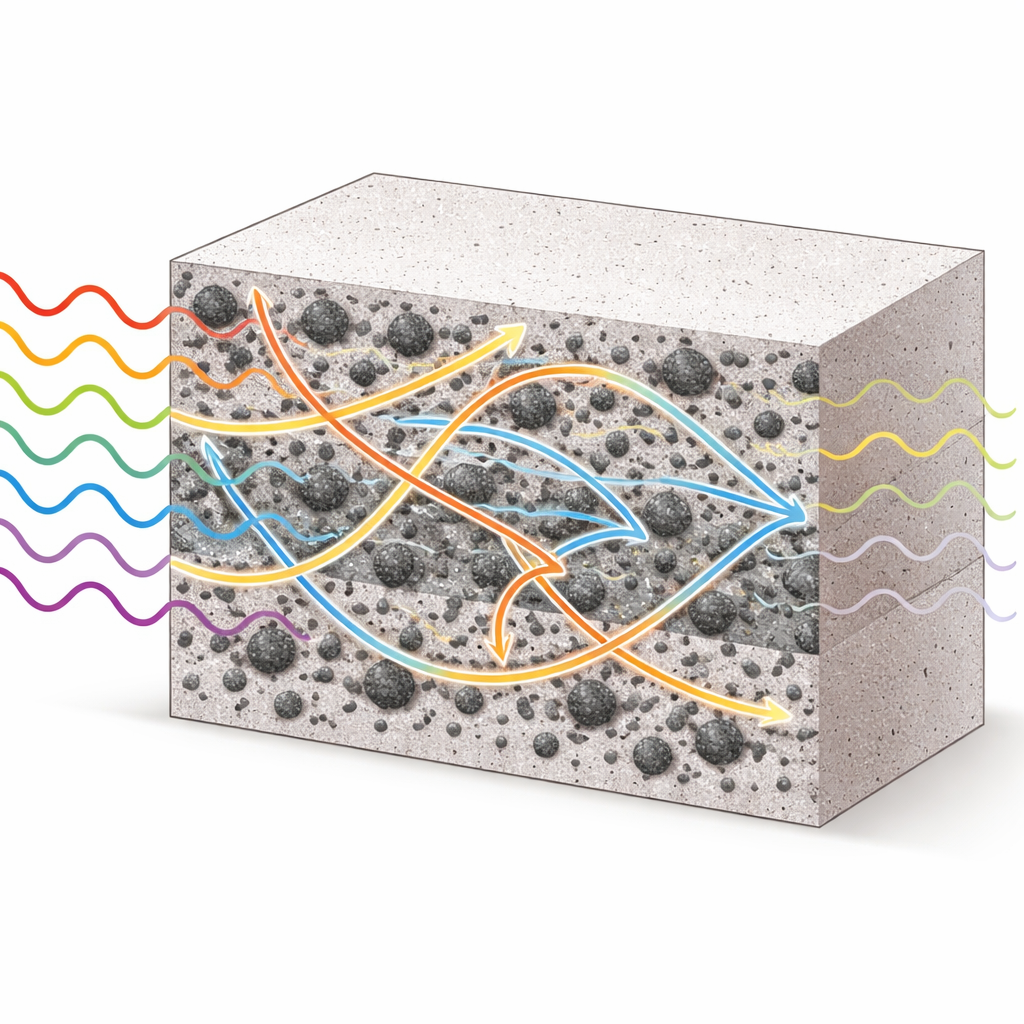
Stronger, denser, but a bit harder to pour
The magnetite did more than interact with waves; it also changed the concrete itself. Because magnetite grains are much heavier and pack more tightly than ordinary sand, the concrete became denser as their share rose, gaining about 13 percent in dry density at the highest level. This densification translated into clear mechanical benefits: compressive strength (how much load a block can bear when squeezed) rose by roughly 35 percent, and both tensile and flexural strengths—important for resisting cracking and bending—also improved, though more modestly. Test specimens with magnetite showed narrower, more winding cracks and less sudden, brittle failure, suggesting they could better dissipate energy under stress. The trade-off is that fresh concrete with a lot of magnetite was less “flowable,” making it slightly harder to place without using admixtures that restore workability.
Balancing performance, cost, and practicality
Compared with many experimental shielding materials—such as carbon nanotubes, advanced fibers, or graphene-based fillers—the magnetite approach stands out for its simplicity and price. Exotic additives can block more radiation, but they are expensive and difficult to scale up for massive uses like apartment blocks, hospitals, or data centers. Cheaper options like waste metal filings or simple carbon powders offer limited protection. In contrast, Egyptian magnetite sand is relatively abundant and sells for a modest price per ton, yet still delivers meaningful shielding and mechanical gains when mixed into concrete using standard methods and equipment.
A path toward smarter everyday buildings
In plain terms, the study shows that swapping part of the sand in concrete for magnetite can give ordinary walls a “double job.” They still carry the weight of the building, but now also help muffle certain electromagnetic waves, creating quieter spaces for people and electronics inside. While this does not eliminate the need for specialized shielding where absolute protection is required, it offers an affordable way to reduce background electromagnetic pollution in homes, offices, and critical facilities. As wireless technologies continue to expand, such multi-purpose building materials could become a practical tool for designing safer and more resilient structures.
Citation: El-Gohary, S.H., El-Nadoury, W.W., Kholief, E.A. et al. Magnetite sand as a low-cost material for electromagnetic shielding and mechanical enhancement of concrete. Sci Rep 16, 14651 (2026). https://doi.org/10.1038/s41598-026-47469-8
Keywords: electromagnetic shielding, concrete, magnetite sand, building materials, wireless radiation