Clear Sky Science · en
Assessment of the carcinogenic potential of particulate matter and organic compound mixtures generated from 3D printing devices in Balb/c 3T3-1-1 cells
Why 3D Printing Fumes Matter
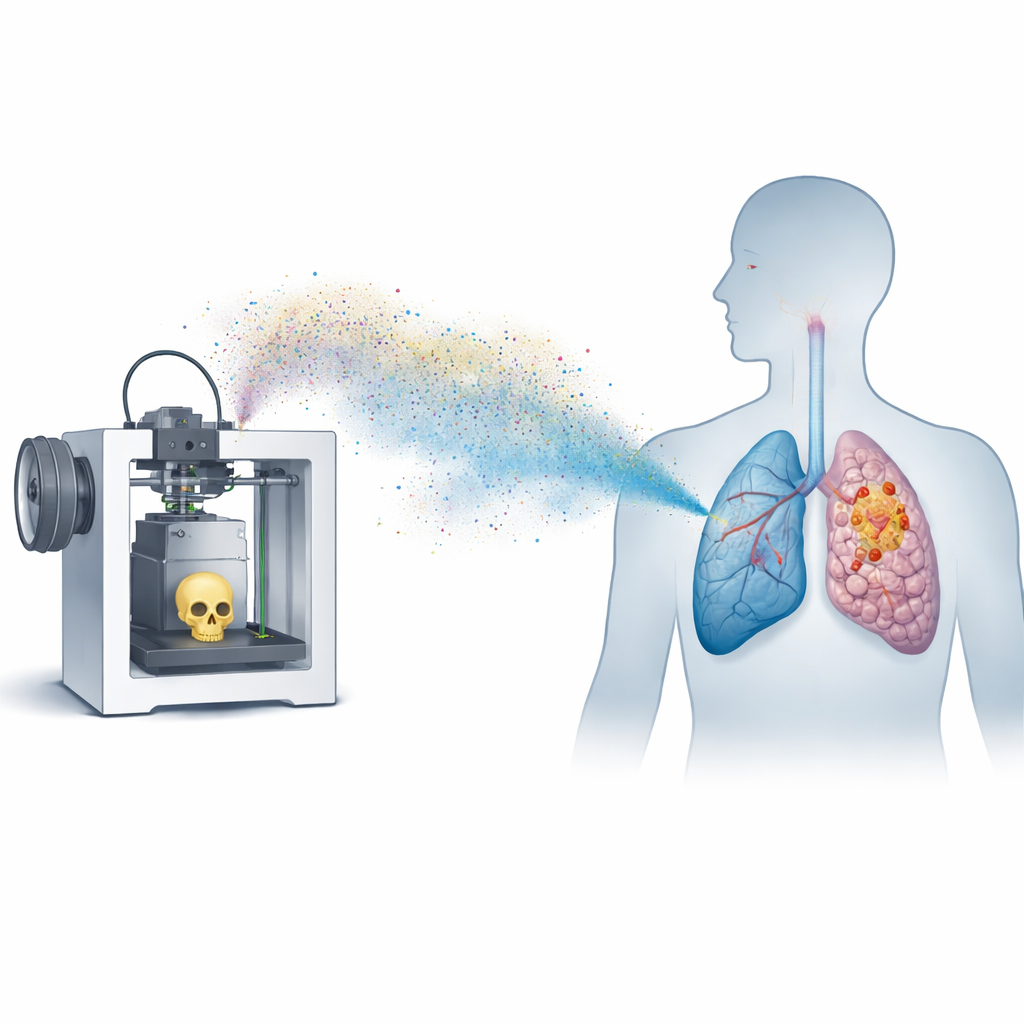
Desktop 3D printers have moved from factories into classrooms, offices, and homes. They are praised for fast, low‑cost manufacturing of custom parts, but they also emit invisible tiny particles and chemical vapors while they run. A few alarming case reports of teachers who developed rare cancers after years of using these machines have raised a simple question: can the mix of particles and chemicals from common 3D‑printing plastics quietly damage our cells in ways that might lead to cancer?
What the Researchers Wanted to Find Out
This study focused on fused‑deposition‑modeling (FDM) printers that melt two popular plastics: ABS, used for its toughness, and PLA, often marketed as a more eco‑friendly option. Earlier work had shown that printing with these materials releases clouds of microscopic particles and a suite of industrial chemicals, including some that major health agencies already list as possible or known carcinogens. Yet almost nothing was known about how the combined mixture of particles and solvents affects living cells. The researchers set out to test whether realistic mixtures of emitted particles plus key accompanying chemicals could push mouse cells toward early cancer‑like changes in the lab.
How the Team Tested 3D Printer Emissions
The scientists collected particles produced when ABS and PLA filaments were printed, then recreated the main chemical companions found in the air around printers. For ABS, they used a mix of styrene and ethylbenzene; for PLA, they used lactic acid, its main breakdown product. They exposed a standard mouse cell line, often used to probe cancer risk, to mixtures containing either 1% or 10% particles in these solvents at doses chosen to mimic long‑term workplace exposure. The team then ran a battery of tests: they checked basic cell survival, looked for abnormal cell clusters that signal transformation toward a tumor‑like state, measured how cells moved through their division cycle, examined programmed cell death, and analyzed changes in cancer‑related genes, specialized DNA caps called telomeres, and hundreds of regulatory microRNAs.
What They Saw Inside the Cells
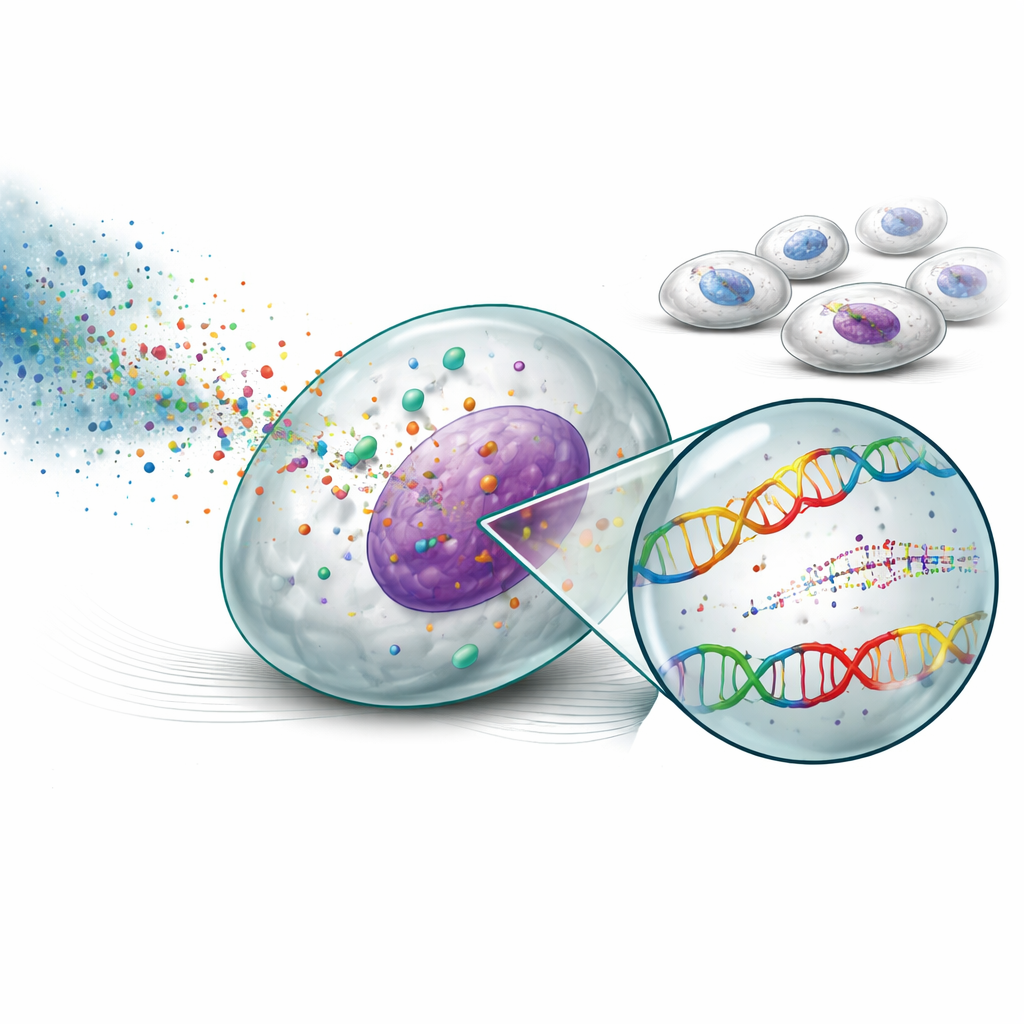
On their own, the solvents at tested levels were not very toxic, but once mixed with ABS or PLA particles they killed more cells, especially at higher particle percentages. In the transformation assay, which looks for dense overgrowing patches of cells, the positive control chemical produced many clear foci, confirming the test was working. The 3D‑printing mixtures produced only one or two foci in some exposure groups. Statistically this was not enough to declare them cancer‑causing, but those rare foci stood out because the untreated control cells showed none at all. Cell‑cycle measurements added another clue: after longer exposure, cells treated with the highest ABS and PLA mixtures showed more cells stalled in the DNA‑copying S phase than controls, hinting at subtle disruption of normal growth controls.
Signals in Genes but Not in Cell Death or Telomeres
When the team probed deeper, they found that classic endpoints linked to full‑blown cancer were not clearly triggered. Telomere lengths, which often change dramatically in tumors, remained within normal range across all groups. Overall rates of programmed cell death also did not shift in a way that would indicate emerging malignant behavior. However, the researchers did see molecular warning signs. A lactic‑acid exposure similar to PLA solvent alone roughly doubled the activity of two genes, HMGA1 and HMGA2, which are usually quiet in adult tissues but are frequently re‑awakened in cancers. At the same time, panels of microRNAs—tiny RNA molecules that fine‑tune many genes involved in growth and repair—showed dozens of increases or decreases after exposure to the ABS and PLA mixtures. Many of the altered microRNAs have previous links to tumor development and control of the cell cycle.
What This Means for Everyday 3D Printer Use
Putting all of these results together, the authors conclude that the tested 3D‑printing emissions do not yet qualify as clearly carcinogenic in their cell system. The mixtures did not strongly transform cells, lengthen telomeres, or shut down cell death in a way typical of established cancer‑causing agents. Still, the scattered abnormal foci, shifts in how cells progress through division, and changes in cancer‑related genes and microRNAs are difficult to dismiss. They suggest that long‑term exposure to the combination of fine particles and solvents from ABS and PLA printing could nudge cells toward risky states, even if the danger is not fully proven. The study underscores that as 3D printers become fixtures in schools and offices, careful ventilation, exposure limits, and follow‑up research are essential before we can safely assume that the air around these devices is harmless.
Citation: Seo, D., Lim, C. Assessment of the carcinogenic potential of particulate matter and organic compound mixtures generated from 3D printing devices in Balb/c 3T3-1-1 cells. Sci Rep 16, 11731 (2026). https://doi.org/10.1038/s41598-026-47445-2
Keywords: 3D printing emissions, ABS and PLA plastics, particulate matter, cellular carcinogenicity, occupational exposure