Clear Sky Science · en
Regulatory impact of a 5’UTR resident single nucleotide variant on EDN1 gene expression and RNA-protein interactions
Why a tiny change in our DNA matters
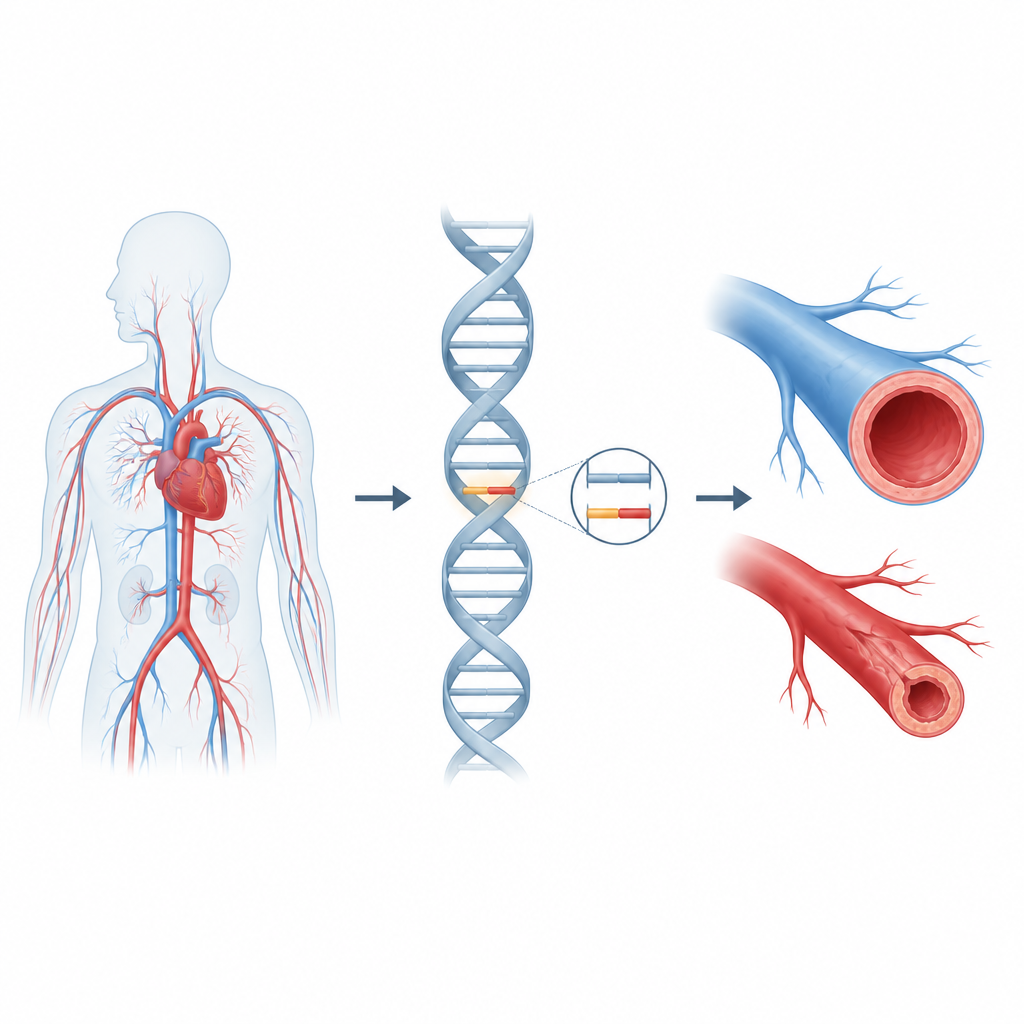
High blood pressure and heart disease are usually blamed on salt, stress, and lack of exercise. But this study shows how a single extra "letter" in our DNA, in a quiet stretch that does not code for protein, can still tilt the body toward tighter blood vessels and higher cardiovascular risk. By zooming in on one subtle variation in the endothelin-1 gene, the researchers uncover how invisible tweaks in gene control can affect the levels of a powerful vessel-narrowing molecule in our blood.
A traffic light molecule for blood vessels
Our blood vessels constantly balance between narrowing and widening to keep blood flow steady. A small peptide called endothelin-1 acts like a traffic light that tells vessels when to constrict. Too much endothelin-1 shifts the system toward narrowing, which can foster high blood pressure, strain the heart, and damage vessel walls. The gene that encodes this peptide, called EDN1, contains stretches of non-coding sequence at its front end that help control how much endothelin-1 the cell makes, even though these segments do not become part of the protein itself.
The extra DNA letter linked to heart disease
Earlier studies had hinted that some people carry a tiny insertion of one DNA base, an extra "A," in the front region of the EDN1 gene. This study examined patients with coronary artery disease and confirmed that a small fraction carried two copies of this insertion, and these rare individuals showed noticeably higher levels of endothelin-1 in their blood. Because there were only two such patients, the clinical numbers alone could not firmly prove a risk. The team therefore moved into the lab, using engineered DNA constructs and cell models to test whether this extra letter truly boosts gene output.
How the extra letter boosts gene activity
To probe the mechanism, the researchers attached either the normal or altered EDN1 control region to a light-producing reporter gene in cultured human cells. Constructs carrying the extra "A" consistently produced several times more signal than those with the standard sequence, whether paired with an artificial promoter or the gene’s own natural promoter. This showed that the insertion acts after the gene is switched on, helping the cell make more message or translate that message more efficiently into protein. In simple terms, the extra letter turns up the volume knob on endothelin-1 production.
Proteins that read the altered message
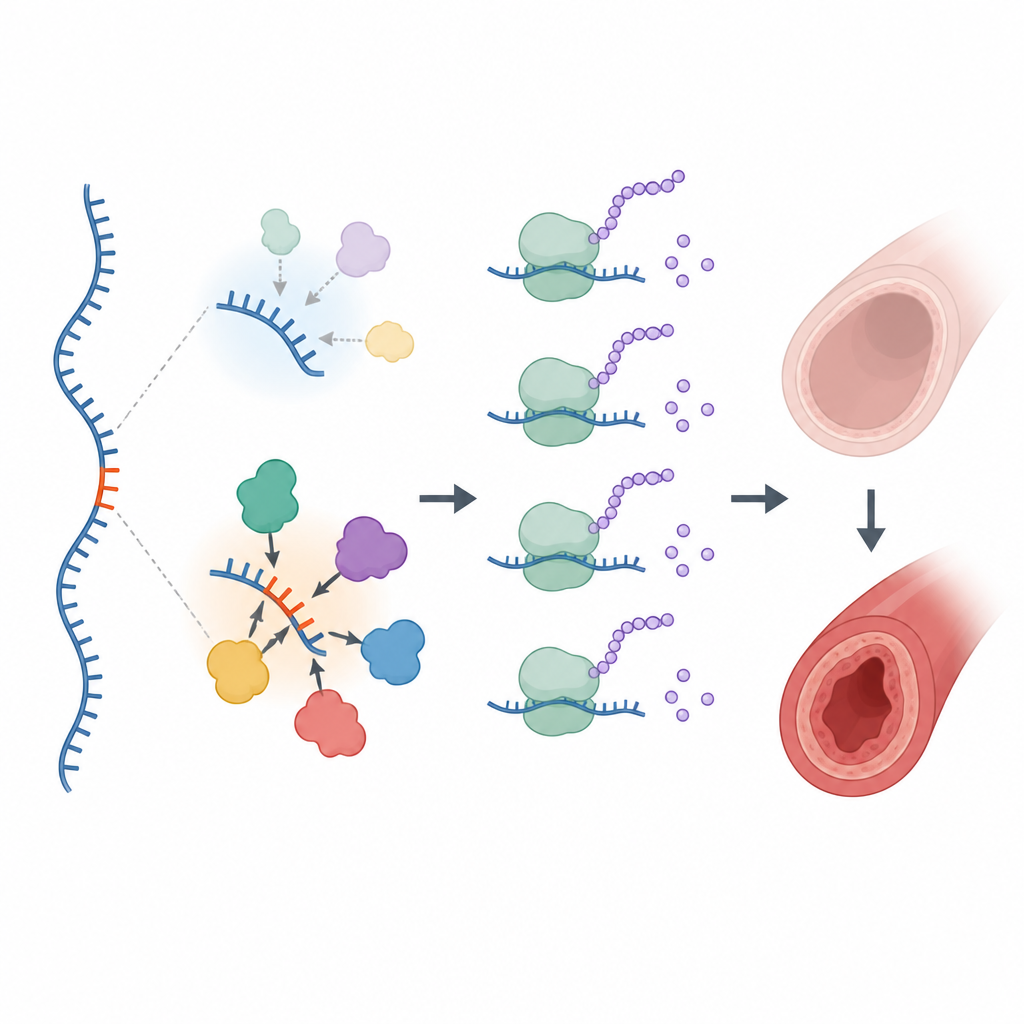
The team then asked how a single added base could have such an effect. They created short RNA pieces mimicking the normal and altered front segments of the EDN1 message and fished out cellular proteins that prefer to bind each version. The altered RNA attracted many more proteins, including known RNA-binding factors that influence how messages are processed, folded, and translated. Detailed computer modeling suggested that two such proteins, DHX9 and HNRPA3, clasp the altered RNA more tightly and make more extensive contact points than with the normal version, favoring structures that promote message stability and protein production.
What this means for heart health
Put together, the work supports a simple idea for non-specialists: a tiny extra DNA letter in a control segment of the endothelin-1 gene helps the cell recruit more helper proteins to its RNA, which in turn leads to higher levels of a vessel-tightening signal in the bloodstream. Although the variant is rare and the patient sample was small, such an increase could, in the right context, nudge individuals toward stiffer vessels and greater cardiovascular risk. The study highlights how non-coding regions of our genes, once thought to be passive, can quietly shape disease risk through subtle changes in how genetic messages are handled inside cells.
Citation: Sachdeva, E., Himanshi, Dimri, T. et al. Regulatory impact of a 5’UTR resident single nucleotide variant on EDN1 gene expression and RNA-protein interactions. Sci Rep 16, 16112 (2026). https://doi.org/10.1038/s41598-026-47439-0
Keywords: endothelin-1, non-coding DNA, RNA-protein interactions, hypertension, cardiovascular genetics