Clear Sky Science · en
The effectiveness of Ni@SiTiCNO nanocomposite coating for protecting steel used in agricultural machinery dealing with animal waste
Why barn machines rust so quickly
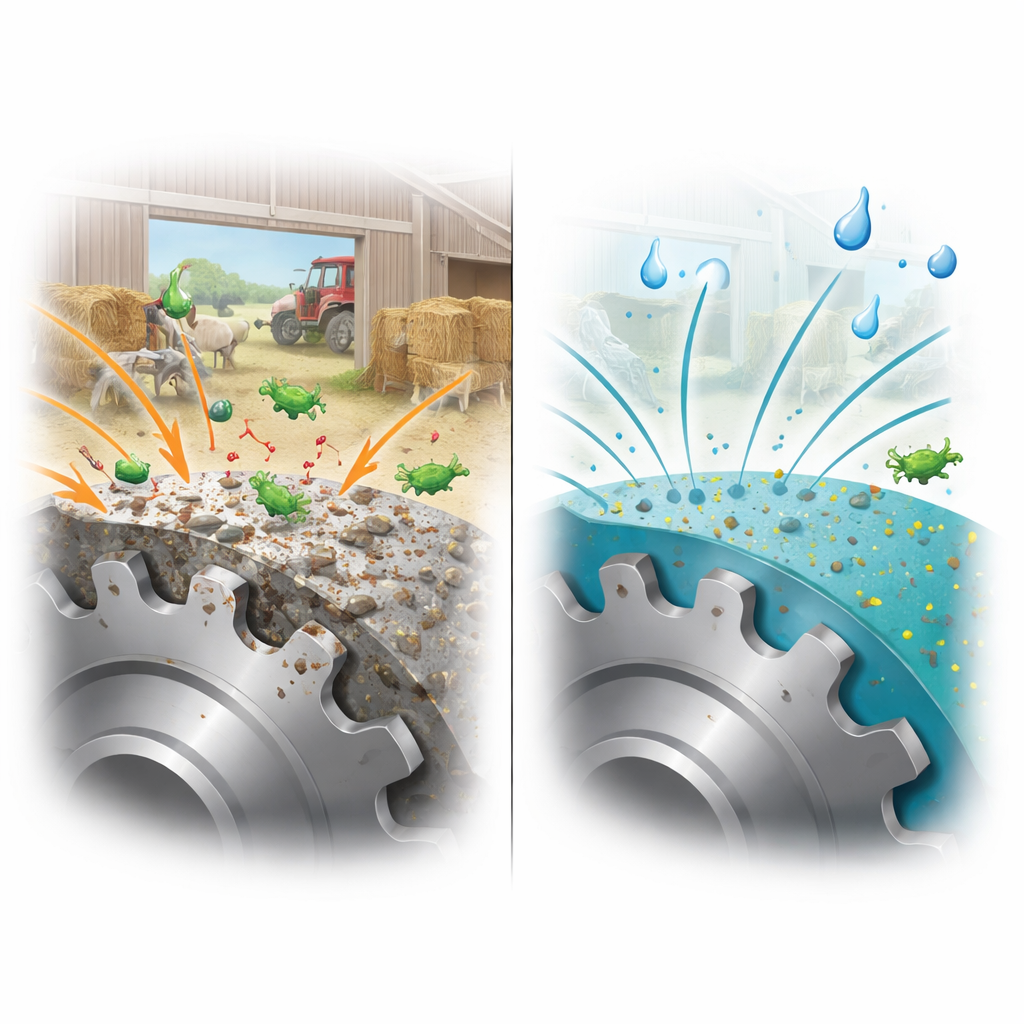
On modern livestock farms, metal equipment is constantly splashed with wet manure, urine, and cleaning solutions. This harsh mix quietly eats away at steel parts, causing rust, breakage, and expensive downtime. The paper behind this summary explores a new ultra-thin protective skin for common low‑cost steel that could dramatically slow both rust and wear in machinery that handles cow dung and other animal waste.
A hidden problem in everyday food production
From manure scrapers and pumps to transport trailers, much of the hardware that keeps barns clean is made from simple low‑carbon steel. In the humid air of animal houses, water vapor, ammonia from waste, and organic acids team up to corrode bare steel surprisingly fast. Traditional nickel coatings can help, but they may still contain tiny pores and defects that allow the corrosive liquid to reach the metal underneath. The authors set out to design a tougher, longer‑lasting barrier that could be applied using the same low‑cost methods already used in industry.
Designing a tough ceramic–metal shield
The team created a special ceramic powder called SiTiCNO, made from silicon, titanium, carbon, nitrogen, and oxygen. Using a sol–gel route and high‑temperature treatment, they formed a mix of extremely hard, heat‑resistant phases, including silicon carbide and titanium carbide, along with related compounds. High‑resolution microscopes showed long, rod‑like ceramic structures and tiny particles only billionths of a meter across, all well mixed. Optical and thermal tests revealed that this ceramic is stable up to at least 500 °C and has a modest surface area, making it suitable as a strong, inert filler inside a metal coating.
Building the coating layer by layer
Next, the researchers used an industrially common method—electrodeposition from a nickel "Watts" bath—to lay down nickel coatings on low‑carbon steel samples. Before coating, the steel was carefully polished, cleaned, and lightly etched to ensure good adhesion. During nickel plating, they added different amounts of the SiTiCNO powder (from 0 to 2 grams per liter of solution) and varied the electrical current that drives metal onto the surface. Under the right conditions, the negatively charged ceramic particles were attracted to the growing nickel layer and became trapped inside it, producing a dense nickel–ceramic composite only about a dozen micrometers thick, thinner than a human hair.
How the new skin resists rust and wear
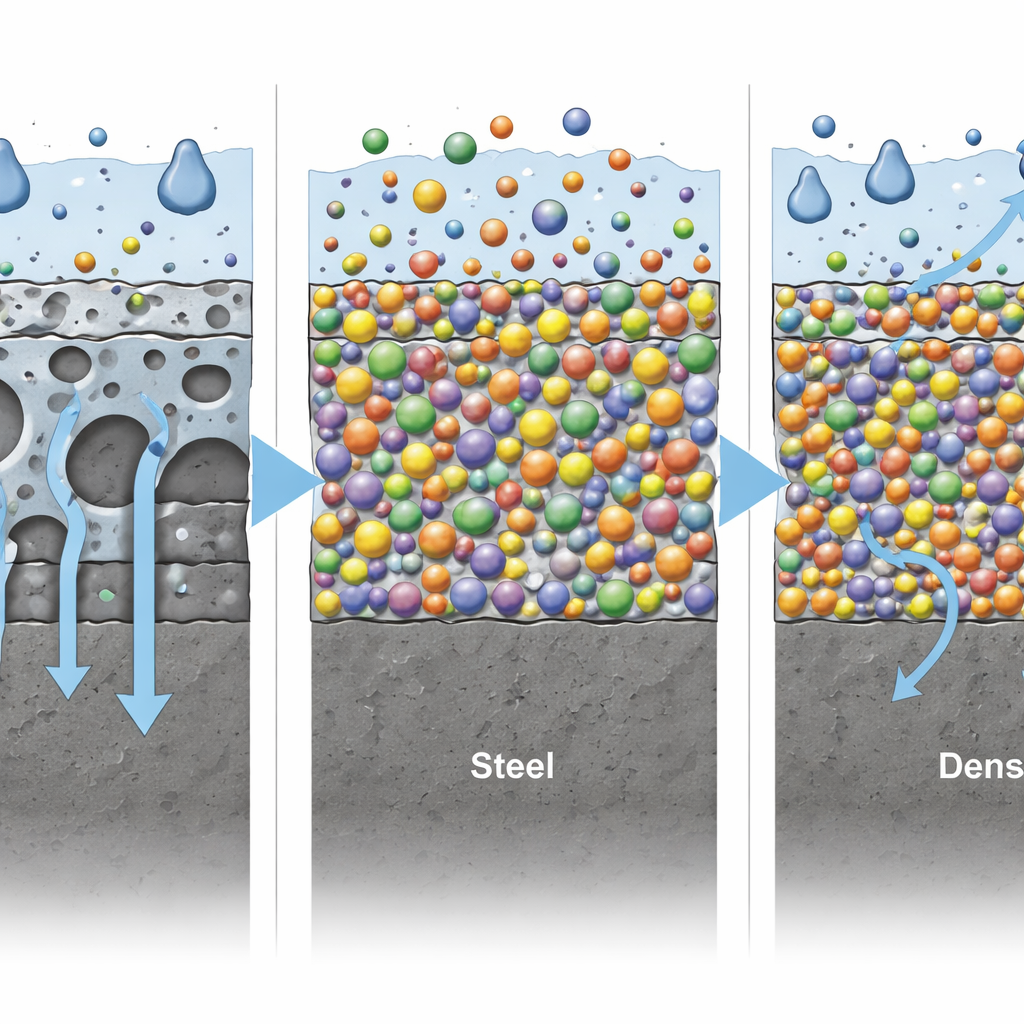
To see whether this new skin actually protects better, the authors immersed coated and uncoated steel in a urea solution that mimics the chemical environment of animal waste. They then used electrochemical tests to measure how easily corrosion reactions occurred at the surface. Bare steel corroded rapidly, with a calculated metal loss of about 0.556 millimeters per year. A traditional nickel layer reduced this rate, but the best Ni@SiTiCNO coating—made with 2 grams per liter of ceramic at the highest current tested—cut the corrosion rate to roughly 0.008 millimeters per year, more than a sixty‑fold improvement. Impedance measurements showed that this composite layer behaved like a strong electrical barrier, with very high resistance and low capacitance, meaning that corrosive ions had difficulty finding pathways to the steel. In sand‑water abrasion tests meant to mimic gritty manure and soil, the composite coatings also lost less material than pure nickel, indicating greater resistance to mechanical wear.
What this means for barn equipment
Put simply, embedding hard ceramic nanoparticles inside a nickel coating turns a basic metal skin into a much more robust armor. By filling microscopic pores and cracks, the Ni@SiTiCNO layer blocks the movement of corrosive liquids and slows the physical grinding of sand and waste. For farm operators, such coatings could mean steel parts that last much longer in contact with manure and cleaning solutions, reducing replacement costs, cutting downtime, and helping machinery run more reliably. The work shows how carefully engineered nanomaterials can quietly extend the life of everyday equipment that underpins global food production.
Citation: Nasr, G.E.M., Refai, M.A., Elaziz, A.G.A. et al. The effectiveness of Ni@SiTiCNO nanocomposite coating for protecting steel used in agricultural machinery dealing with animal waste. Sci Rep 16, 12725 (2026). https://doi.org/10.1038/s41598-026-47435-4
Keywords: corrosion protection, agricultural machinery, nanocomposite coatings, nickel plating, animal waste environments