Clear Sky Science · en
Hybrid ML and metaheuristic optimization of slag-fly ash-gypsum modified solidified sludge for construction
Turning City Sludge into Building Blocks
Modern cities generate enormous volumes of sewage sludge, a messy by-product that is costly to handle and risky to dump or burn. This study explores a cleaner, more useful path: transforming that sludge into a construction material by blending it with industrial by‑products and using advanced computer techniques to find the strongest, safest recipes. For readers, it is a story about how data science and waste recycling can work together to tackle pollution and resource scarcity at the same time.
Why Sludge Is a Growing Urban Problem
Wastewater treatment plants separate dirty water from solid residues, leaving behind sludge that is rich in organic matter but also laced with moisture and contaminants. Traditional disposal routes, such as landfilling and incineration, can release odors, greenhouse gases, and toxic substances. At the same time, construction projects consume vast quantities of natural clay and cement. The idea behind this research is simple but powerful: if sludge could be safely solidified into a reliable, low‑strength building material, we could ease pressure on landfills and quarries while cutting the environmental footprint of construction.
Blending Wastes into a Solid Material
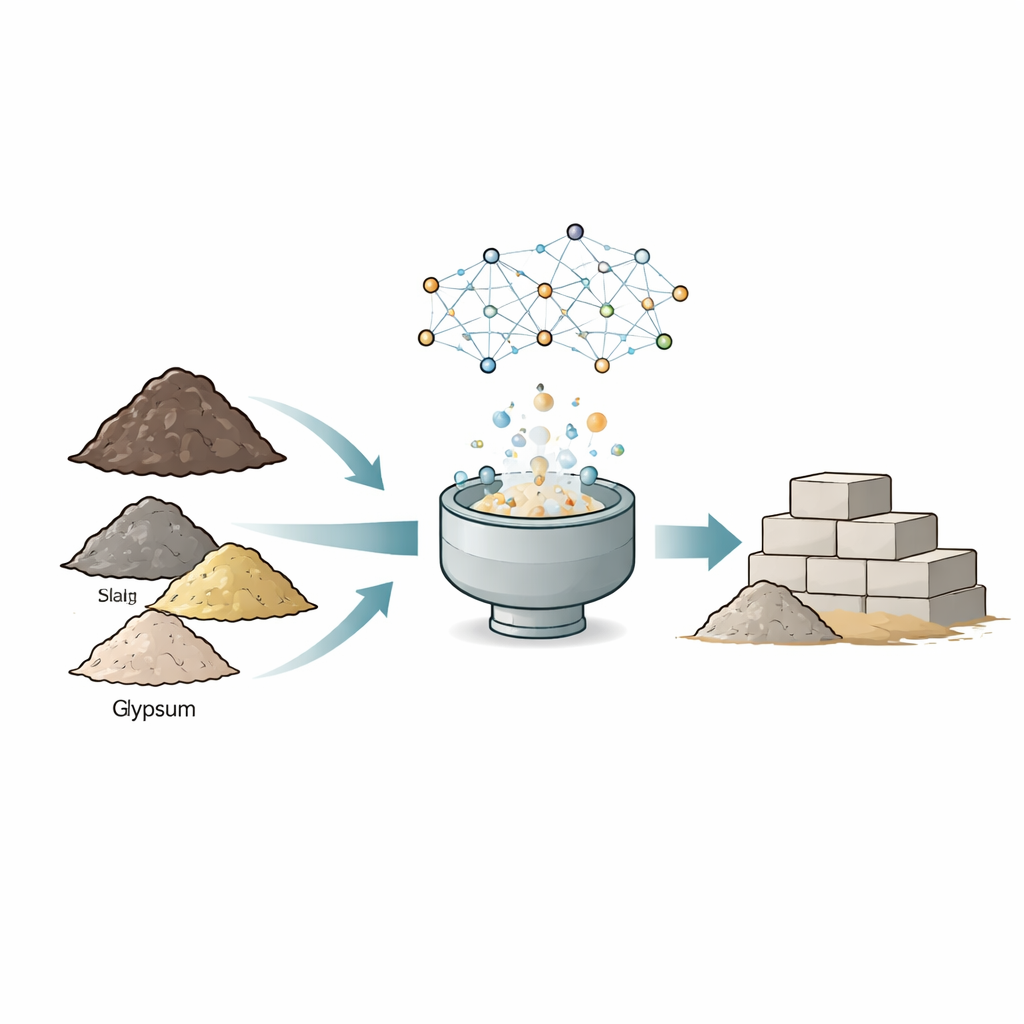
The team worked with dehydrated municipal sludge and three common industrial by‑products: steel slag, fly ash from power plants, and desulfurized gypsum from flue‑gas cleaning. By adjusting how much of each ingredient, plus a small dose of sodium hydroxide (an alkaline activator), went into the mix, they produced 190 specimens and measured how much pressure each could withstand after 28 days of curing. This property, known as unconfined compressive strength, tells whether the solidified sludge is robust enough to serve, for example, as a landfill cover or low‑load fill in civil works. The challenge is that the ingredients interact in complex, non‑linear ways: too much sludge weakens the mix, while moderate amounts of slag, gypsum, fly ash, and alkali can work together to form a denser, cement‑like structure.
Letting Algorithms Search for the Best Recipe
Instead of trying every possible combination in the lab, the researchers turned to machine learning and so‑called metaheuristic algorithms, which are smart search strategies inspired by phenomena like swarming birds or hunting wolves. First, eight different machine‑learning models were trained to predict strength from the five input ingredients. Then, these models were coupled with the Whale Optimization Algorithm and several other search methods to hunt through the vast recipe space for mixtures that maximize strength while respecting practical limits on each component. Tree‑based models, especially those known as Random Forest, Gradient Boosting, XGBoost, and CatBoost, proved particularly adept at capturing the hidden patterns that govern how sludge, slag, fly ash, gypsum, and alkali knit together.
What Makes a Strong, Safer Sludge Brick
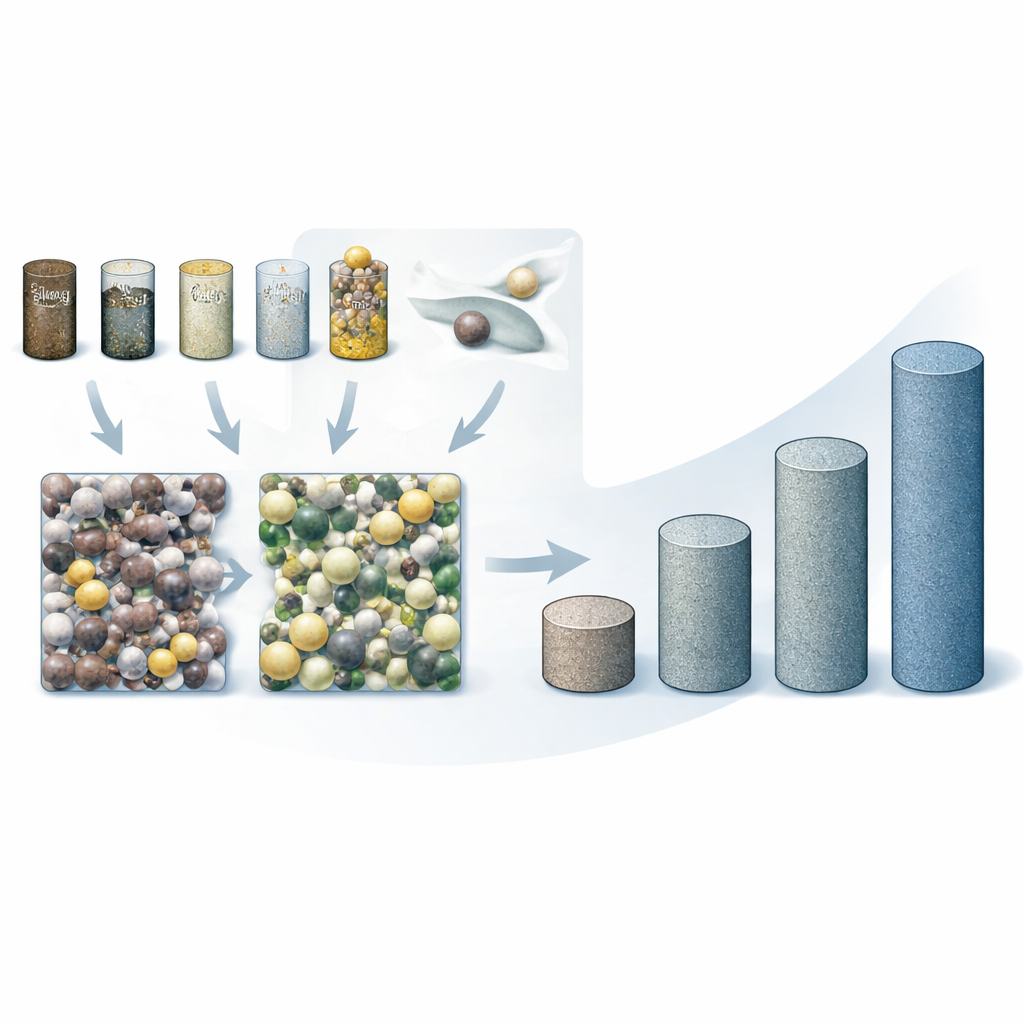
The optimized mixtures achieved strengths above 8 megapascals, high for a material partly made from waste. On average, the best blends used roughly 40–45% sludge, about 19–24% gypsum, 13–19% slag, 16–22% fly ash, and just over 2% sodium hydroxide. Too much sludge or fly ash tended to weaken the material, while moderate amounts of slag and gypsum helped build a denser internal network. The alkali dose showed a sweet spot: a small amount sharply boosted strength by activating the other powders, but higher levels offered little extra benefit. Advanced interpretation tools, including sensitivity analysis and SHAP values, confirmed that sodium hydroxide, sludge content, slag, and gypsum are the most influential levers for tuning performance.
Checking Reliability and Real‑World Use
To ensure that these computer‑designed recipes were trustworthy, the authors evaluated how closely model predictions matched lab results and how uncertain those predictions were. The best models achieved very high agreement with experiments and produced narrow confidence ranges, indicating stable, reliable forecasts. A separate statistical technique known as response surface methodology, applied to the original test data, independently arrived at similar optimal mixes, reinforcing the conclusions. Overall, the study shows that properly designed sludge blends can serve as low‑strength construction materials, such as landfill cover layers, while safely locking in contaminants.
From Waste Burden to Useful Resource
For non‑specialists, the main takeaway is that two problems—urban sludge disposal and industrial solid waste—can be addressed together using smart data tools. By combining sludge with by‑product powders and letting machine learning search for the best recipes, the researchers created a solid material strong enough for certain construction roles and far safer than raw sludge. While not a replacement for high‑grade concrete, this approach turns what was once an environmental liability into a useful resource, supporting a more circular and sustainable urban infrastructure.
Citation: Azarkhosh, H., Chen, Y. & Elias, S. Hybrid ML and metaheuristic optimization of slag-fly ash-gypsum modified solidified sludge for construction. Sci Rep 16, 12195 (2026). https://doi.org/10.1038/s41598-026-47428-3
Keywords: sludge solidification, waste-based construction materials, machine learning optimization, industrial by-products recycling, sustainable infrastructure