Clear Sky Science · en
Efficacy of Anti-VEGF therapy for different OCT Patterns in diabetic macular edema and the correlation between ellipsoid zone integrity and visual acuity
Why this eye study matters
For many people with diabetes, the first sign of trouble is blurred central vision that makes reading, driving, or recognizing faces difficult. This study looks at how a common injection treatment for a diabetes-related eye problem can help different kinds of swelling in the back of the eye, and asks a simple but vital question: which patients are most likely to see better afterward?
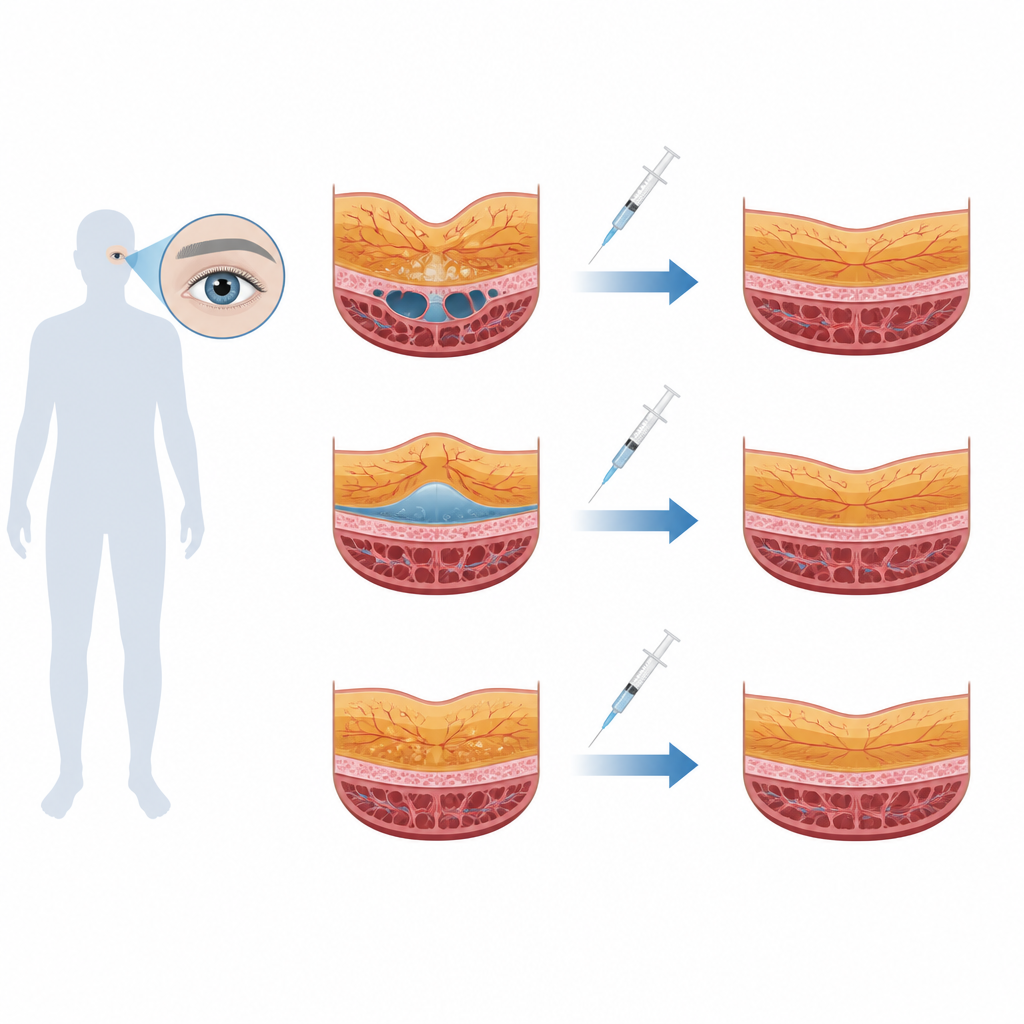
Swelling in the eye and how doctors see it
Diabetic macular edema is a type of swelling in the central part of the retina, the light-sensitive tissue at the back of the eye. High blood sugar can damage tiny blood vessels, allowing fluid to leak into or under the retina, blurring vision. Using a scanning technique called OCT, doctors can see cross sections of the retina and sort this swelling into three main patterns: a sponge-like thickening, pockets of fluid that look like tiny lakes, and a layer of fluid lifting the retina up like a blister. These patterns reflect different ways the tissue is being damaged and may respond differently to treatment.
The injection treatment tested
The researchers followed 64 people, covering 90 eyes, all with type 2 diabetes and macular swelling. Each eye received injections of an anti-VEGF medicine called conbercept directly into the gel of the eye. VEGF is a natural signal that, in excess, makes blood vessels leaky and encourages abnormal growth; blocking it can dry out the retina. Patients received three monthly injections at first and then additional injections only if their vision worsened or the swelling returned. The team tracked vision and retinal thickness at the center of the macula over a full year.
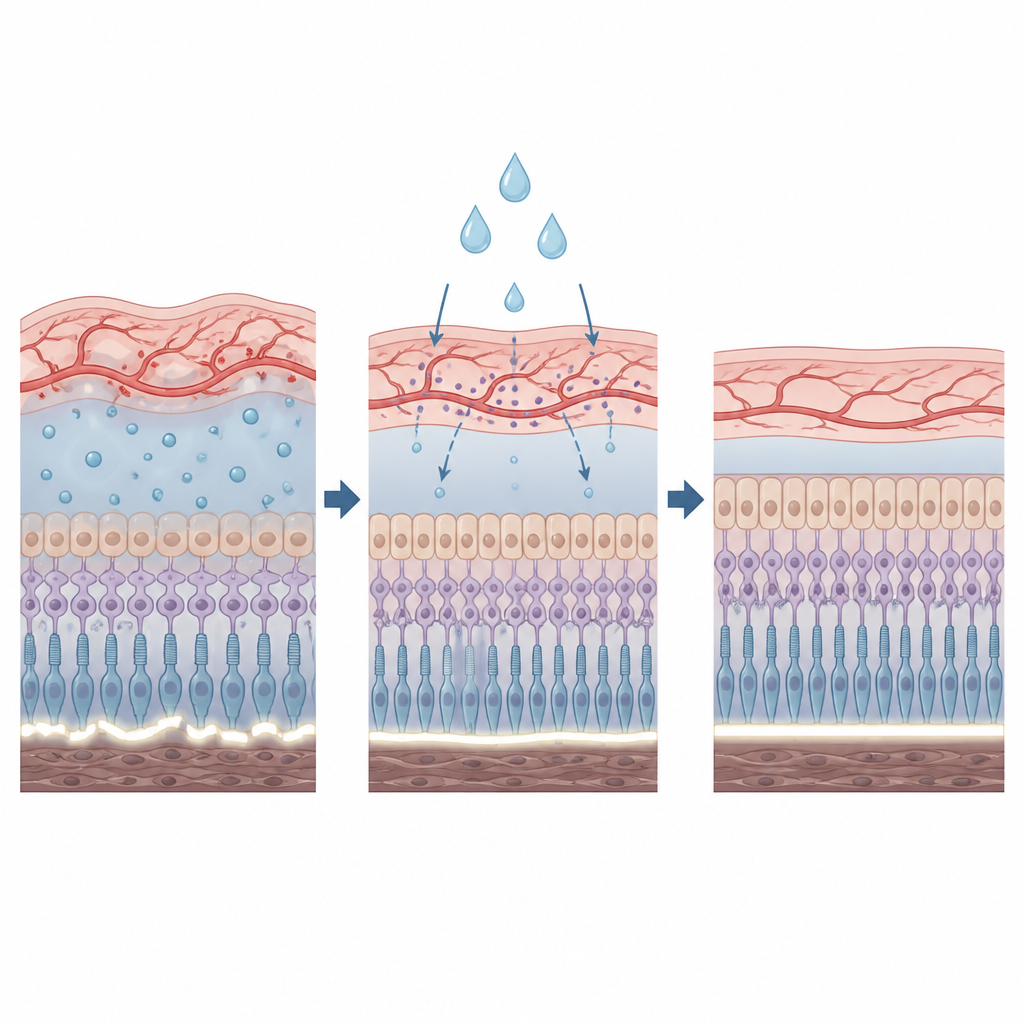
Which pattern of swelling did best
All three OCT patterns showed thinner retinas and better vision after treatment, but they did not improve equally. Eyes with the sponge-like thickening pattern started out with better vision and kept that advantage over one year. Eyes with cyst-like pockets and those with fluid lifting the retina had worse starting vision and, although they improved, still lagged behind. By six and twelve months, the average thickness in the center of the retina was similar across all three groups, yet vision remained different. This suggests that drying the retina alone does not fully explain how well people see; something else inside the light-sensing layer matters.
A key band that predicts how well people see
The study focused on a thin bright band on the OCT scan called the ellipsoid zone, which lines up with part of the light-sensing cells. When this band looks smooth and continuous, it is a sign that these cells are relatively healthy; when it is broken or missing, it suggests damage. The researchers graded each eye into three levels, from intact to severely broken. Across the board, eyes with an intact band had the best vision and those with the most disruption had the poorest vision, both before and after treatment. Even when swelling decreased to similar levels, the quality of this band remained strongly tied to how clearly patients could see a year later.
Other health factors and what they mean
The team also checked whether age, how long someone had diabetes, blood sugar control, and the stage of diabetic retinopathy were linked with vision after a year. While higher long-term blood sugar was more common in some swelling patterns, these general health measures did not show a strong direct link to vision at twelve months in their analysis. Instead, the type of swelling seen on OCT, the starting level of vision, how thick the retina was before treatment, and especially the condition of the ellipsoid zone stood out as the most informative clues.
What this means for patients and doctors
For people with diabetes worried about their sight, this study reinforces that anti-VEGF eye injections can improve vision across different kinds of macular swelling. It also shows that the fine structure of the light-sensing layer, captured in that thin bright band on the scan, offers a powerful hint about how much vision can return. In simple terms, drying the retina helps, but preserving or limiting damage to the deepest light-sensing cells may matter even more for seeing clearly in the long run.
Citation: Shi, Xn., Zhang, Qy., Ju, Cj. et al. Efficacy of Anti-VEGF therapy for different OCT Patterns in diabetic macular edema and the correlation between ellipsoid zone integrity and visual acuity. Sci Rep 16, 15903 (2026). https://doi.org/10.1038/s41598-026-47416-7
Keywords: diabetic macular edema, anti-VEGF therapy, optical coherence tomography, ellipsoid zone, visual acuity