Clear Sky Science · en
Machine learning models for smart grid stability prediction: a comparative analysis
Keeping the Lights On in a Changing Energy World
As more homes, cars, and industries plug into the power grid—and more electricity comes from wind and solar—the job of keeping the grid stable becomes both harder and more critical. A brief wobble in frequency or voltage can cascade into blackouts that affect millions. This paper explores how modern machine-learning techniques can act as an early-warning system for smart grids, spotting when the system is drifting toward trouble and doing so with an accuracy that is close to perfect.
From Traditional Grids to Smart, Data-Rich Networks
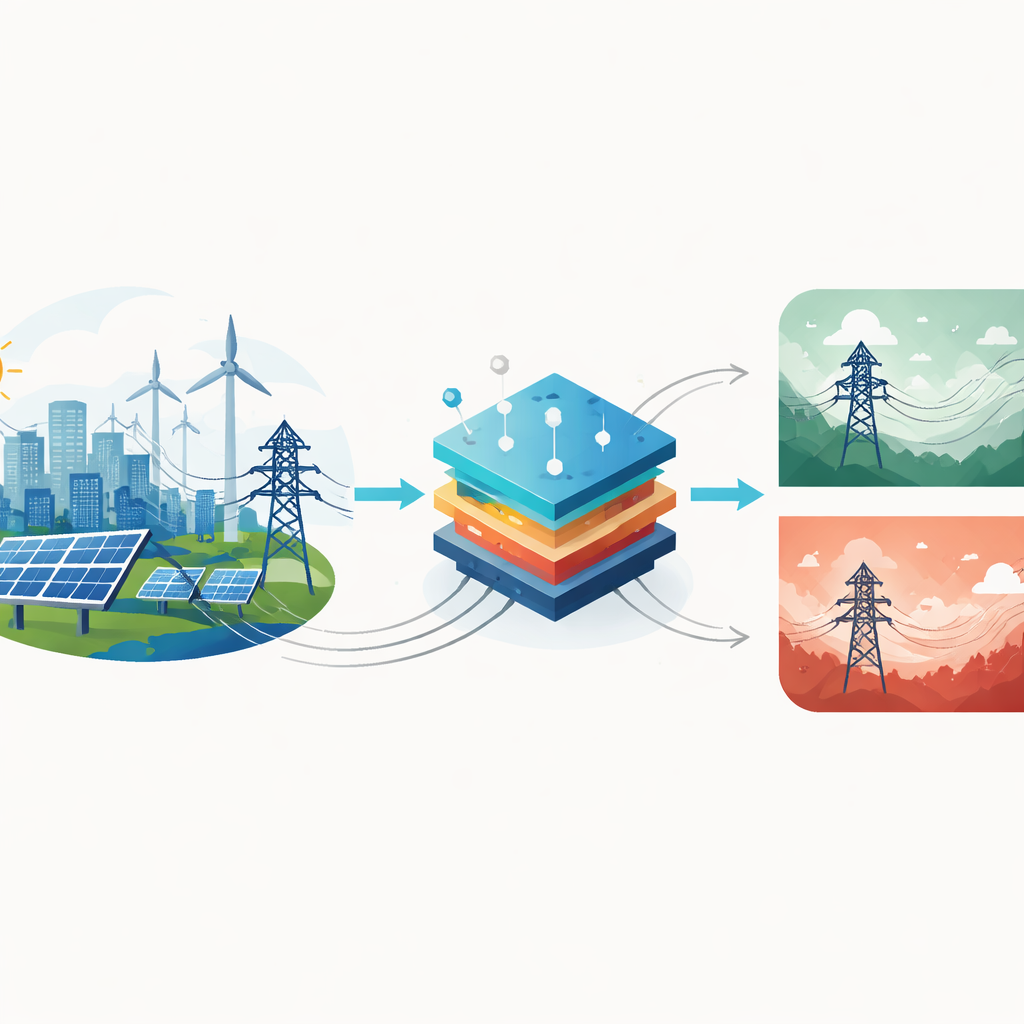
Conventional power grids were designed for one-way flow: big plants generate electricity, and customers simply consume it. Today’s smart grids are far more dynamic. Rooftop solar panels, wind farms, batteries, and electric vehicles all push and pull energy in complex patterns that change from minute to minute. That complexity makes it harder for operators to know whether the grid is in a healthy state. The authors focus on a specific task: given a snapshot of how a small but representative smart grid is operating, can a computer automatically decide whether the system is stable or unstable, fast enough to inform real-time control decisions?
Teaching Machines What a Stable Grid Looks Like
To tackle this challenge, the researchers use a large open dataset that simulates a small smart grid with one power producer and three consumers. For each of 60,000 simulated situations, the data describe how quickly each part of the grid reacts to price changes and how strongly it adjusts its power use or production in response. Each situation is labeled as either stable or unstable. Instead of feeding these raw values directly into algorithms, the team engineers new, physics-inspired features that combine delay and responsiveness, capturing how sluggish or agile the grid as a whole is when conditions change. They then narrow the full set of 19 candidate features down to 13 especially informative ones through a careful selection process that avoids overfitting.
Putting Fourteen Learning Methods Through Their Paces
Armed with this refined description of grid behavior, the authors conduct a broad comparison of 14 different machine-learning models, ranging from simple linear formulas to sophisticated tree-based ensembles. They also explore how best to rescale the input data for each model type, and they fine-tune the many internal “knobs” of these algorithms using two optimization strategies: a Bayesian search method called TPE and a nature-inspired approach known as the Grey Wolf Optimizer. Performance is judged not only by overall accuracy but also by more demanding measures that penalize missed instabilities and overzealous false alarms. Across this battery of tests, modern gradient-boosting models—especially LightGBM—consistently rise to the top.
Near-Perfect Warnings and Why We Can Trust Them
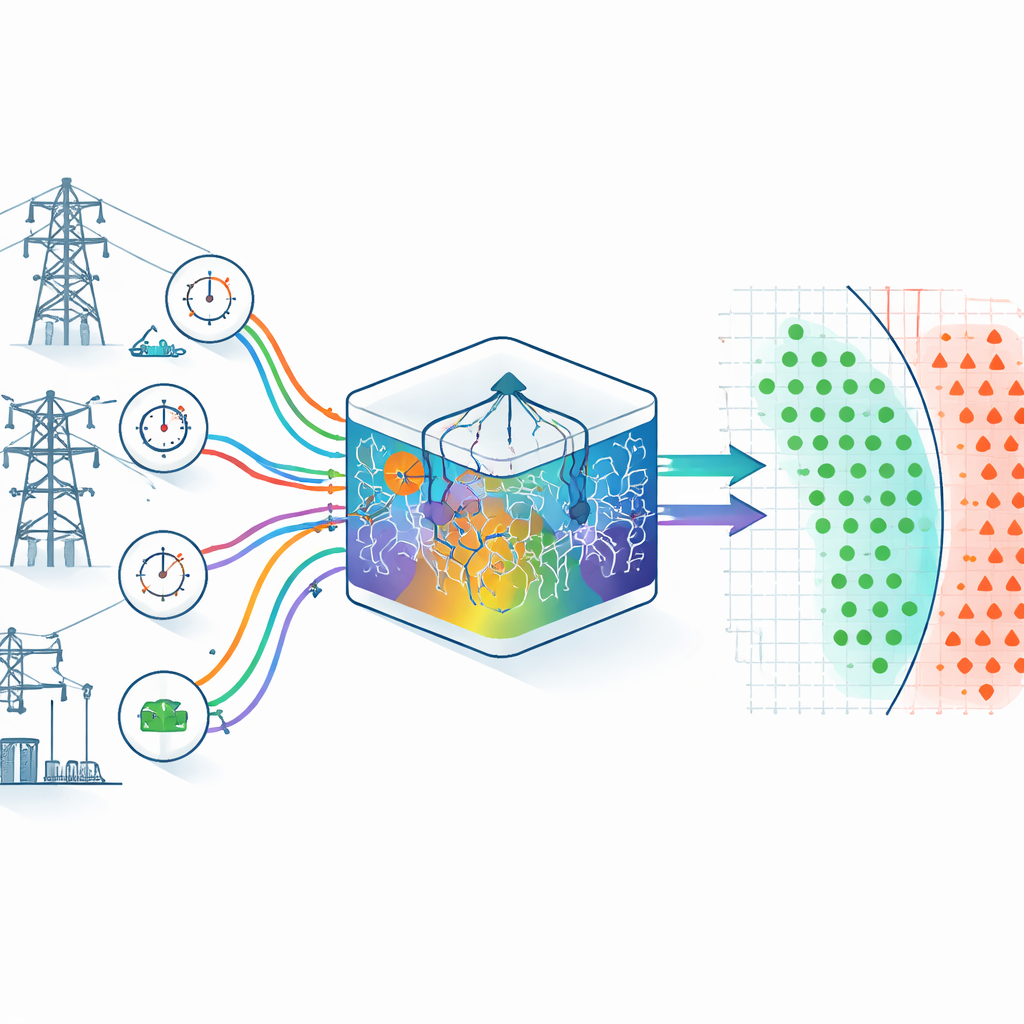
The best-performing model, a tuned version of LightGBM, correctly classifies about 99.9% of situations in a held-out test set, with only a handful of cases where an unstable state is mistaken for a stable one or vice versa. Crucially, the authors do not treat this as a mysterious black box. They apply several explainable-AI techniques that show which features the model relies on and how changing each one nudges a prediction toward stability or instability. The analysis reveals that combinations of response delay and corrective strength drive most decisions, aligning well with established engineering intuition: grids that respond both promptly and decisively to disturbances are more likely to stay stable.
What This Means for Future Power Systems
For non-specialists, the key takeaway is that machine learning, when combined with domain knowledge and transparency tools, can offer grid operators a highly reliable early-warning instrument. By turning raw data about timing and responsiveness into a nuanced picture of grid health, the approach in this paper pushes prediction errors down to a tiny fraction of cases while remaining interpretable. As real-world grids grow more complex and incorporate more renewable energy, such trustworthy, data-driven stability monitors could become an essential part of keeping the electricity system resilient, efficient, and ready for a low-carbon future.
Citation: Ali, A.M., Dawoud, O.K., Ghoneim, O.A. et al. Machine learning models for smart grid stability prediction: a comparative analysis. Sci Rep 16, 12694 (2026). https://doi.org/10.1038/s41598-026-47385-x
Keywords: smart grid stability, machine learning, renewable energy, power system monitoring, explainable AI