Clear Sky Science · en
Building and validating machine learning models to predict appendiceal perforation during conservative treatment of fecalith-associated appendicitis: a 20-algorithm multicenter retrospective analysis
Why this matters for people with stomach pain
Appendicitis is one of the most common reasons for emergency surgery, but many patients today are treated first with antibiotics instead of an immediate operation. For those whose appendix contains a hard stone-like plug of stool, called a fecalith, this choice can be risky because the appendix is more likely to burst. This study asks a question that matters to every patient and doctor facing that decision: can we safely tell, early on, who can stay on medicines and who is in real danger of a dangerous perforation?
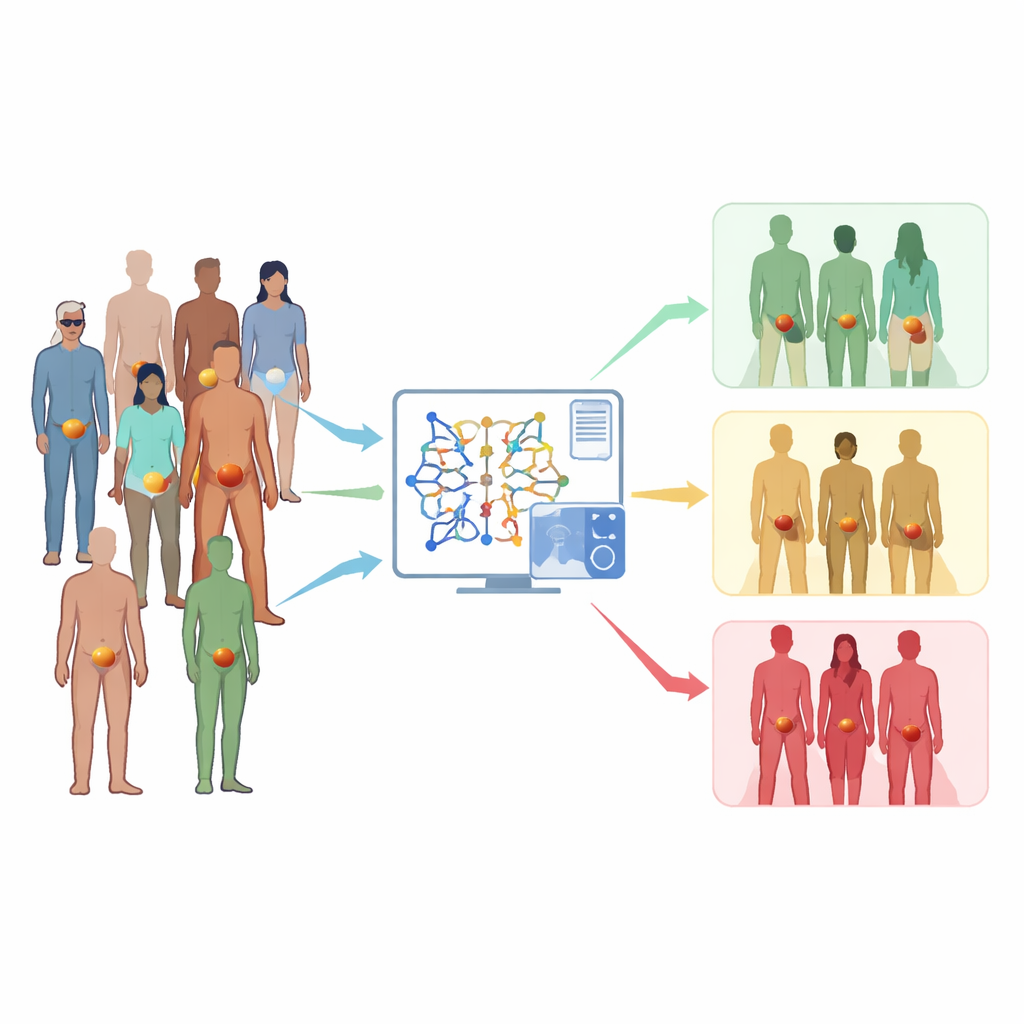
The challenge of a blocked appendix
Doctors have known for years that appendicitis behaves differently when a fecalith blocks the narrow tube of the appendix. The blockage raises the pressure, chokes off blood flow, and fuels infection, all of which raise the chance the organ will rupture even if antibiotics are started quickly. Yet common bedside scoring systems for appendicitis were built for all patients, not specifically for those with fecaliths, and they do not predict perforation very well in this higher-risk group. That uncertainty leaves clinicians torn between operating too often, with its own risks and costs, or waiting too long and facing a burst appendix.
Using patterns in hospital data
The researchers gathered records from 1,247 adults treated without immediate surgery for fecalith-associated appendicitis at four large hospitals between 2018 and 2023. About one in seven went on to suffer a perforation within three days. For each patient, the team collected simple information that is already part of routine care: age, vital signs, blood tests that show inflammation, and CT scan measurements of the appendix and the fecalith. They then trained 20 different computer algorithms to spot patterns linking these features to who did and did not go on to burst their appendix, reserving part of the data to test the models fairly.
The winning risk-prediction tool
Among all approaches, a family of methods that combine many decision trees, known as gradient boosting, performed best. After a feature-selection step, the final tool relied on eight readily available pieces of information, including the size of the fecalith, blood levels of C-reactive protein and white blood cells, and how thick and wide the appendix appeared on CT. In the main test group, the model correctly separated high- and low-risk patients with an excellent accuracy measure (AUC about 0.89). Most strikingly, when the model judged someone to be low risk, it was right more than 96 percent of the time that they would not perforate, offering strong reassurance for continued conservative treatment.
Turning numbers into clear risk groups
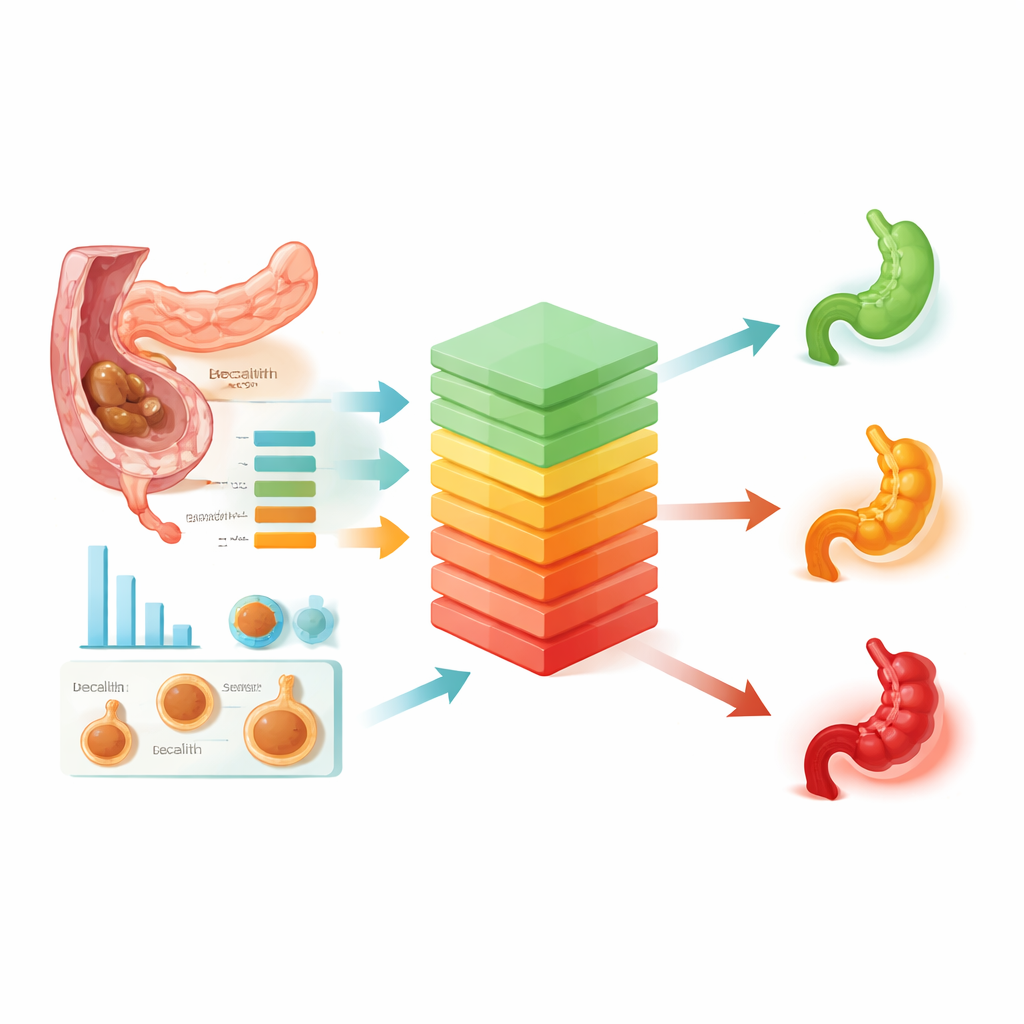
To make the tool practical at the bedside, the team converted its raw probability scores into three simple tiers. Patients with predicted risk under 30 percent were labeled low risk and had only a 3.8 percent actual perforation rate. Those between 30 and 60 percent were moderate risk, with about one in four perforating. Above 60 percent were high-risk patients, more than seven in ten of whom went on to perforate. Suggested actions follow this ladder: routine monitoring for the low-risk group, closer observation and repeat tests for the middle group, and early or urgent surgery for patients whose risk is highest. A separate set of 225 patients from a fifth hospital, not used to build the model, showed very similar performance, suggesting the approach can work beyond the original centers.
What this means for patients and doctors
In everyday terms, this study shows that a computer trained on ordinary lab tests and CT findings can give doctors a much clearer early warning about which patients with a blocked appendix are in real danger if they continue on antibiotics alone. While the tool is not perfect, it is especially strong at identifying people who are safe to watch and treat without rushing to the operating room. With further testing in different hospitals and real-time use, such models could support more personalized decisions, helping many patients avoid unnecessary surgery while ensuring that those at highest risk get timely operations before the appendix bursts.
Citation: Zhu, Y., Feng, J., Liu, R. et al. Building and validating machine learning models to predict appendiceal perforation during conservative treatment of fecalith-associated appendicitis: a 20-algorithm multicenter retrospective analysis. Sci Rep 16, 11728 (2026). https://doi.org/10.1038/s41598-026-47372-2
Keywords: appendicitis, machine learning, risk prediction, conservative treatment, gradient boosting