Clear Sky Science · en
Corrosion behavior of hybrid boride–aluminide layers grown on selective laser melted Inconel 718
Why this matters for real-world machines
From jet engines to power plants, many critical machines rely on a metal called Inconel 718, prized for staying strong and stable at high temperatures. Increasingly, engineers are making these parts with 3D printing methods such as Selective Laser Melting, which allow far more intricate shapes and less wasted material. But this design freedom comes with a hidden downside: tiny pores and defects that can let salty water attack the metal. This study explores how special heat-based surface treatments can build protective outer skins on 3D-printed Inconel 718, dramatically slowing its corrosion in seawater-like conditions.
3D-printed metal and its hidden weak spots
Inconel 718 is a nickel-based "superalloy" used in aircraft engines, turbines, and energy systems because it resists heat, mechanical fatigue, and chemical attack. When it is produced by Selective Laser Melting, layers of metal powder are fused by a laser to create complex shapes. This process also freezes the metal very quickly, leading to a fine internal structure that can be good for strength. However, the same process tends to leave behind tiny voids, unmelted particles, and microcracks. Under a microscope, the researchers saw a forest of column-like metal grains and scattered pores. In salty water, these imperfections become trap points where the protective film on the metal breaks down, allowing rust-like reactions to start and spread.
Building protective skins with heat and powders
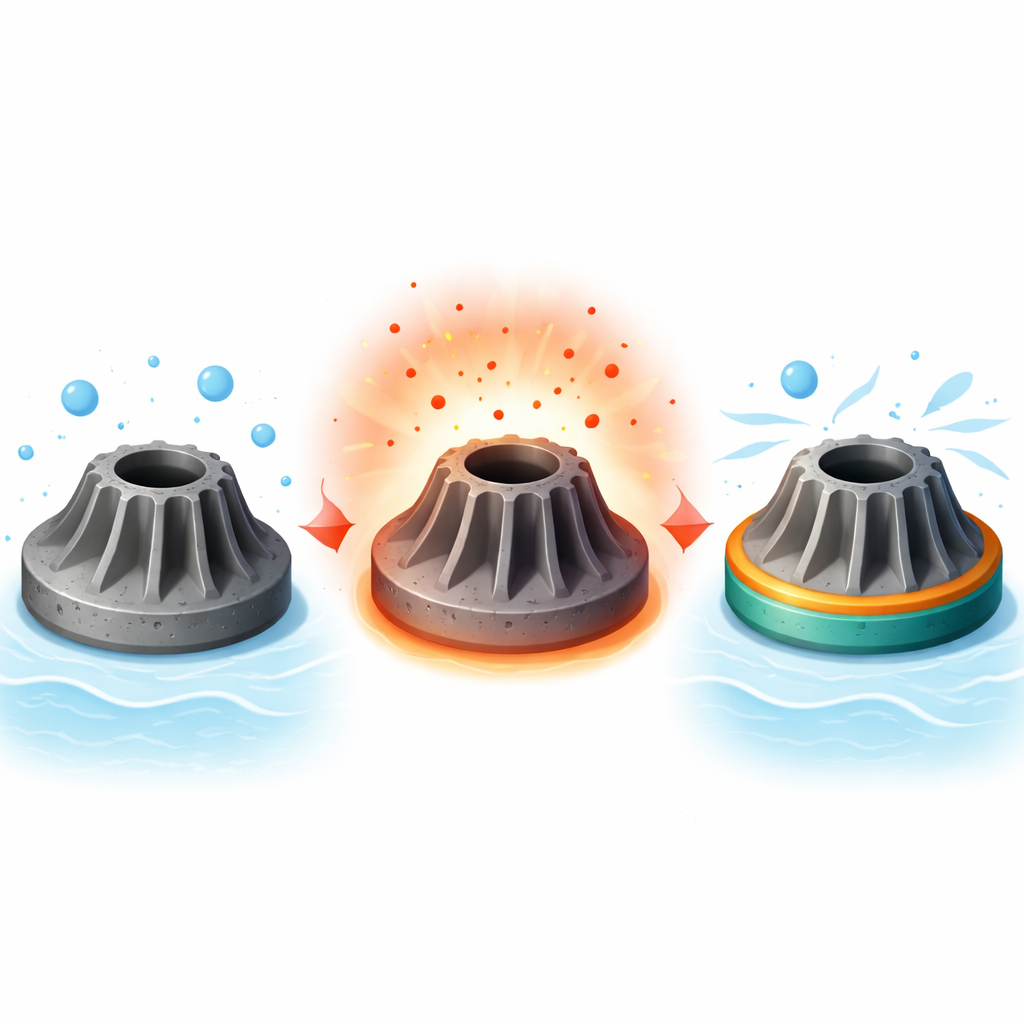
To tackle this, the team used thermochemical treatments, in which 3D-printed Inconel samples were packed in powder mixtures and heated to nearly 1000 degrees Celsius. At this temperature, atoms from the surrounding powders diffuse into the metal surface and form new, harder compounds. Some recipes were rich in aluminum, forming aluminide layers and a thin outer film of aluminum oxide. Others were rich in boron, creating hard boride layers. The most advanced recipes combined both elements at once or in sequence, forming hybrid boride–aluminide skins. Despite the harsh heat, the changes were confined to the outer region, leaving the bulk 3D-printed structure intact while transforming the surface into layered barrier zones.
How different coatings change the surface
Microscope and X-ray measurements showed that each treatment built a distinct architecture. Pure aluminizing produced a multi-layer structure of aluminum-rich compounds capped by a continuous aluminum oxide film, but with some cracks and pores. Pure boronizing led to stacked boride layers that were very hard yet somewhat porous and flaky. Treating aluminum and boron together yielded a relatively thin but compact mixed layer in which both elements were uniformly distributed. When the team applied the two elements in sequence, the order mattered. First aluminizing then boronizing produced a rough, highly porous and uneven coating. By contrast, first boronizing then aluminizing created a robust boride base topped with a dense aluminum-rich outer layer, producing a more continuous, tightly bonded skin.
Testing in salty water: winners and losers
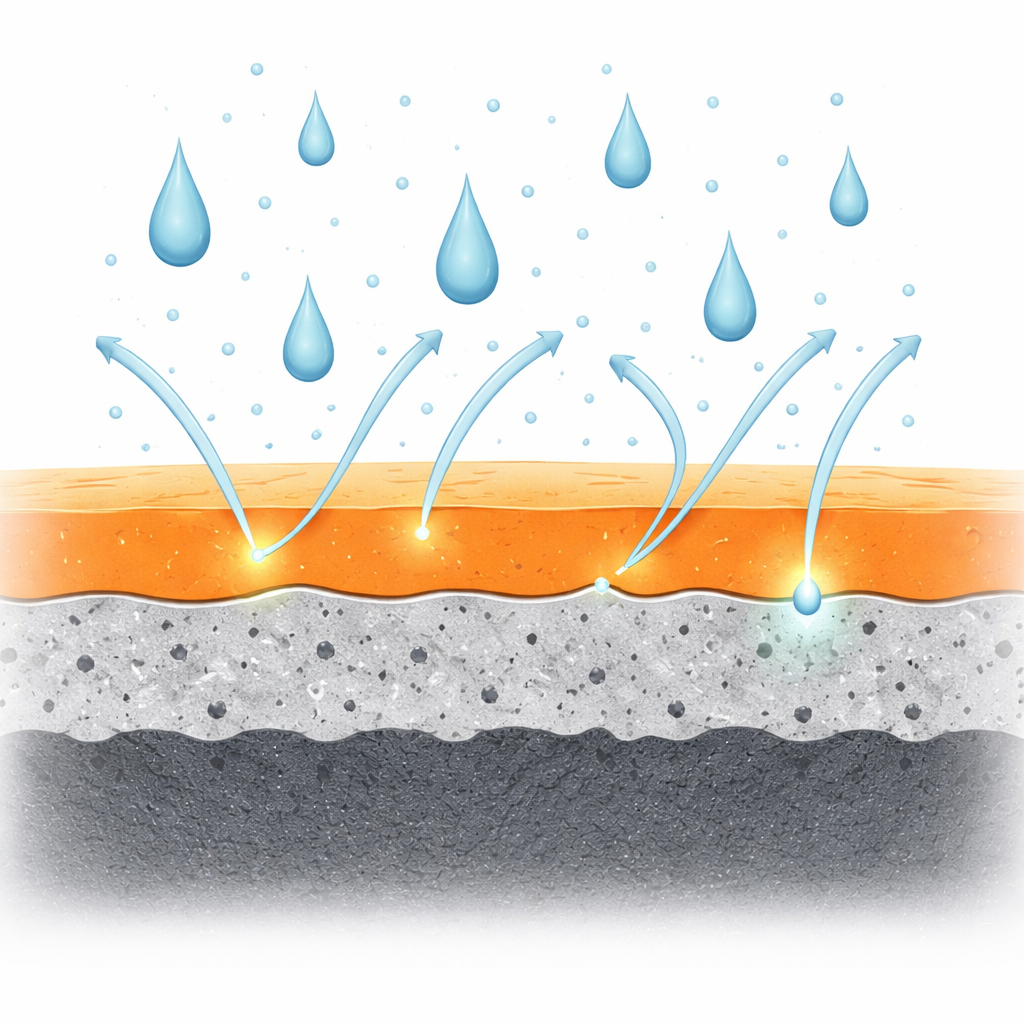
The researchers then immersed all samples in a sodium chloride solution similar to seawater and used electrochemical tests to measure how easily corrosion reactions proceeded. They monitored both the natural electric potential of each surface and the current flowing during controlled corrosion, which reflects how fast metal is dissolving. The worst performer was the sample treated first with aluminum and then with boron: its patchy, porous coating encouraged tiny galvanic cells and rapid attack. Untreated 3D-printed Inconel did better but still suffered from pit formation at its built-in defects. Pure aluminide and pure boride coatings provided moderate improvement, but still allowed the salt solution to penetrate through cracks and pores. The standout performers were the hybrid coatings. Co-deposited boron–aluminum layers significantly reduced corrosion, thanks to their compact and uniform structure. Even better, the sequence that put aluminizing on top of a boronized base produced the lowest corrosion current of all, indicating that the combination of a hard inner layer and a dense outer oxide film was especially effective at blocking the salt solution.
What this means for future high-performance parts
For non-specialists, the key message is that 3D-printed high-temperature metals can be made far more durable in salty or marine environments by carefully engineered surface skins. Simply printing Inconel 718 is not enough; the tiny flaws left by the process make it vulnerable to pitting and early failure. By diffusing boron and aluminum into the surface in the right way—especially by first building a hard boride foundation and then adding an aluminum-based barrier—engineers can create a tough, continuous shell that resists penetration by corrosive liquids. This hybrid coating strategy could extend the life and safety of critical components in aerospace, energy, and marine applications, while also reducing maintenance costs and material waste.
Citation: Günay, B., Günen, A., Gokcekaya, O. et al. Corrosion behavior of hybrid boride–aluminide layers grown on selective laser melted Inconel 718. Sci Rep 16, 14286 (2026). https://doi.org/10.1038/s41598-026-47359-z
Keywords: Inconel 718, additive manufacturing, corrosion protection, surface coatings, boride aluminide layers