Clear Sky Science · en
KDM8/c-Myc axis-mediated glucose metabolism reprogramming promotes the progression of ovarian cancer
Why this research matters
Ovarian cancer is one of the deadliest cancers affecting women, in part because it is often found late and responds poorly to treatment. This study looks under the hood of ovarian cancer cells to see how they fuel themselves with sugar, and pinpoints a pair of molecular "switches" that help tumors grow, spread and resist death. Understanding these switches could open the door to more precise tests and treatments in the future.
How cancer cells change their fuel use
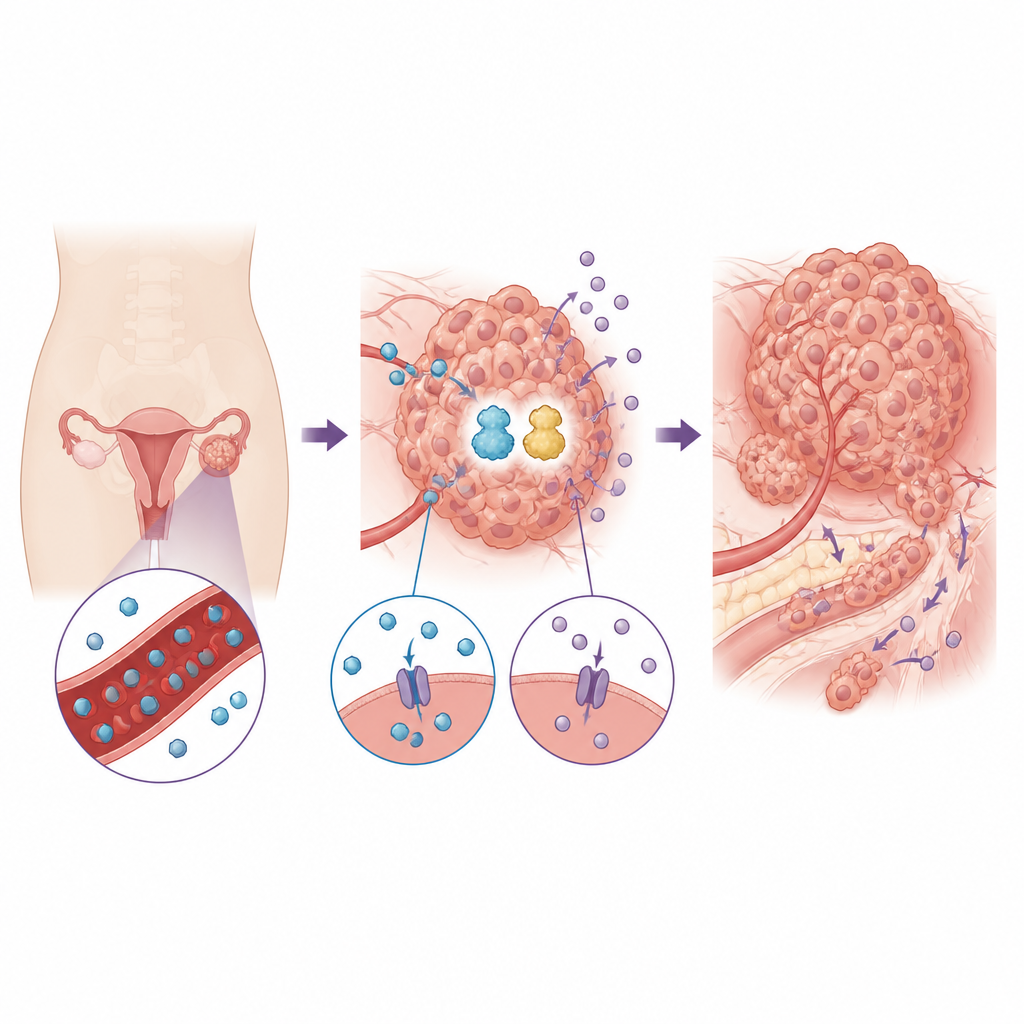
Most healthy cells burn sugar efficiently inside tiny power plants called mitochondria. Many cancer cells, however, prefer a faster but wasteful route, breaking down glucose into lactate even when oxygen is plentiful, a pattern known as the Warburg effect. This shift in fuel use does more than just supply quick energy. It also shapes the neighborhood around the tumor, helping cancer cells multiply, invade nearby tissue and fend off therapies. The authors focused on this altered sugar use in ovarian cancer, asking which internal switches help turn this metabolic shift on and keep it running.
Two key switches inside ovarian cancer cells
The team studied two proteins already linked separately to cancer behavior: KDM8, which helps control how tightly DNA is packaged, and c-Myc, a master regulator that turns many growth-related genes on or off. By examining tumor samples from five patients, the researchers found that both KDM8 and c-Myc were present at higher levels in ovarian cancer tissue than in nearby noncancerous tissue. They then used biochemical tools to show that these two proteins physically interact with each other inside cells. This suggested that KDM8 and c-Myc might not just act in parallel but work together to drive ovarian cancer progression.
What happens when the switches are turned up or down
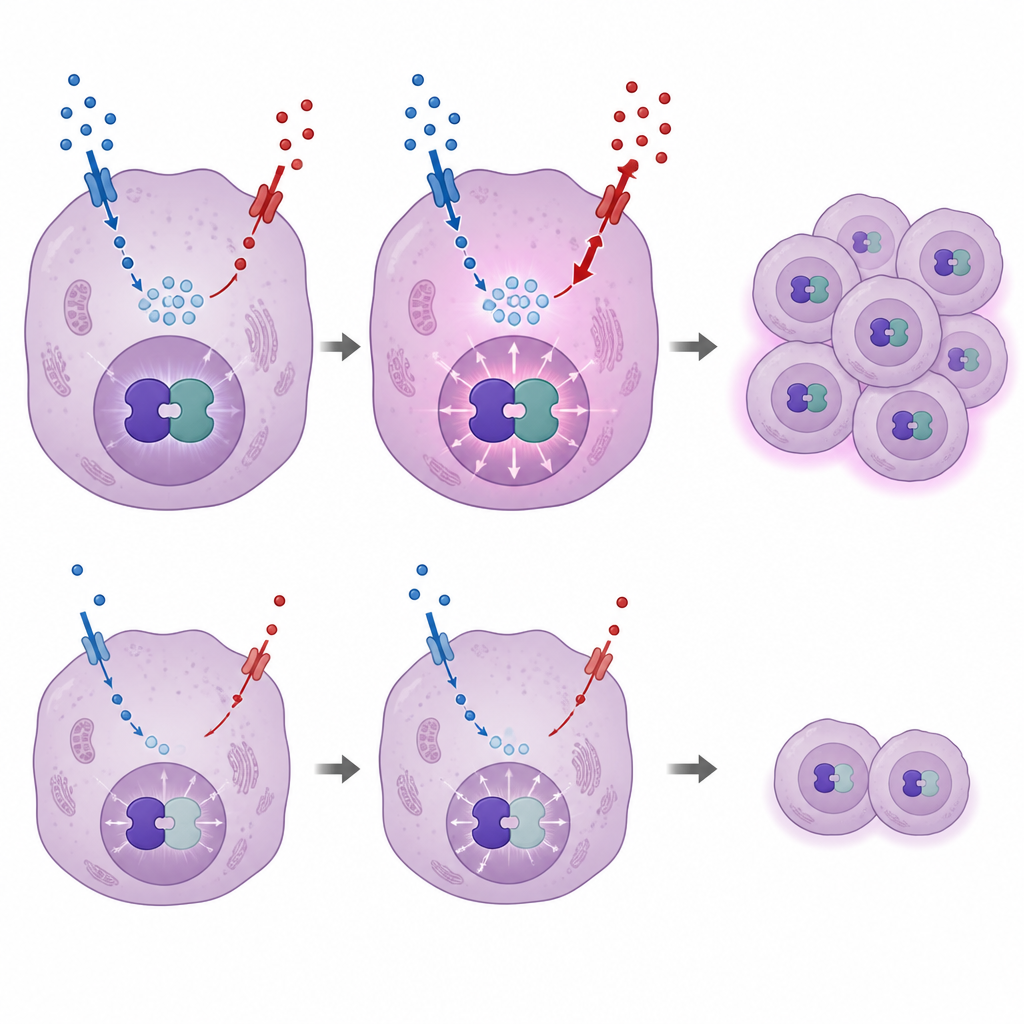
To test this idea, the scientists engineered ovarian cancer cell lines to produce extra KDM8 or c-Myc, or to reduce c-Myc using small interfering RNA. Cells with more KDM8 or more c-Myc consumed more glucose and released more lactate, clear signs of an overactive glycolysis pathway. Specialized Seahorse assays confirmed that these cells relied more on glycolysis and less on oxygen-based energy production. At the same time, boosted KDM8 and c-Myc made cancer cells divide faster, form more colonies, move and invade through artificial membranes more readily, and resist programmed cell death. When c-Myc was knocked down, many of these changes were partially reversed, even if KDM8 was still high, indicating that KDM8’s cancer-promoting effects depend in part on c-Myc.
Evidence from animal models
The researchers then moved from dishes to living systems, using nude mice implanted with ovarian cancer cells. Mice given cells engineered to overproduce KDM8 developed larger, faster-growing tumors that showed higher levels of both KDM8 and c-Myc proteins. These tumors also took up more glucose and released more lactate, mirroring the lab dish findings. When c-Myc levels were reduced in KDM8-overexpressing cells before implantation, tumor growth slowed and the metabolic changes were dampened. Tissue staining showed that tumors with both switches fully active were denser and more aggressive looking, while those with reduced c-Myc showed more cell death and looser structure.
What this could mean for future care
To a lay reader, the key message is that ovarian cancer cells can behave like sugar-hungry engines, and the duo of KDM8 and c-Myc acts as a paired throttle that pushes them to run hotter and faster. This study shows that when both switches are turned up, tumors grow and spread more readily, while dialing down c-Myc weakens the impact of KDM8. Although the work is still early and based on a small number of patient samples and animal experiments, it suggests that testing for KDM8 and c-Myc together might help spot more aggressive disease, and that treatments aimed at this pair could one day help slow ovarian cancer by cutting off its altered fuel supply.
Citation: Liu, C., Xu, Q., Li, Z. et al. KDM8/c-Myc axis-mediated glucose metabolism reprogramming promotes the progression of ovarian cancer. Sci Rep 16, 15865 (2026). https://doi.org/10.1038/s41598-026-47344-6
Keywords: ovarian cancer, glucose metabolism, KDM8, c-Myc, tumor progression