Clear Sky Science · en
Clinical impact of proteinuria and blood pressure variability on long-term outcomes after percutaneous coronary intervention
Why this heart health study matters
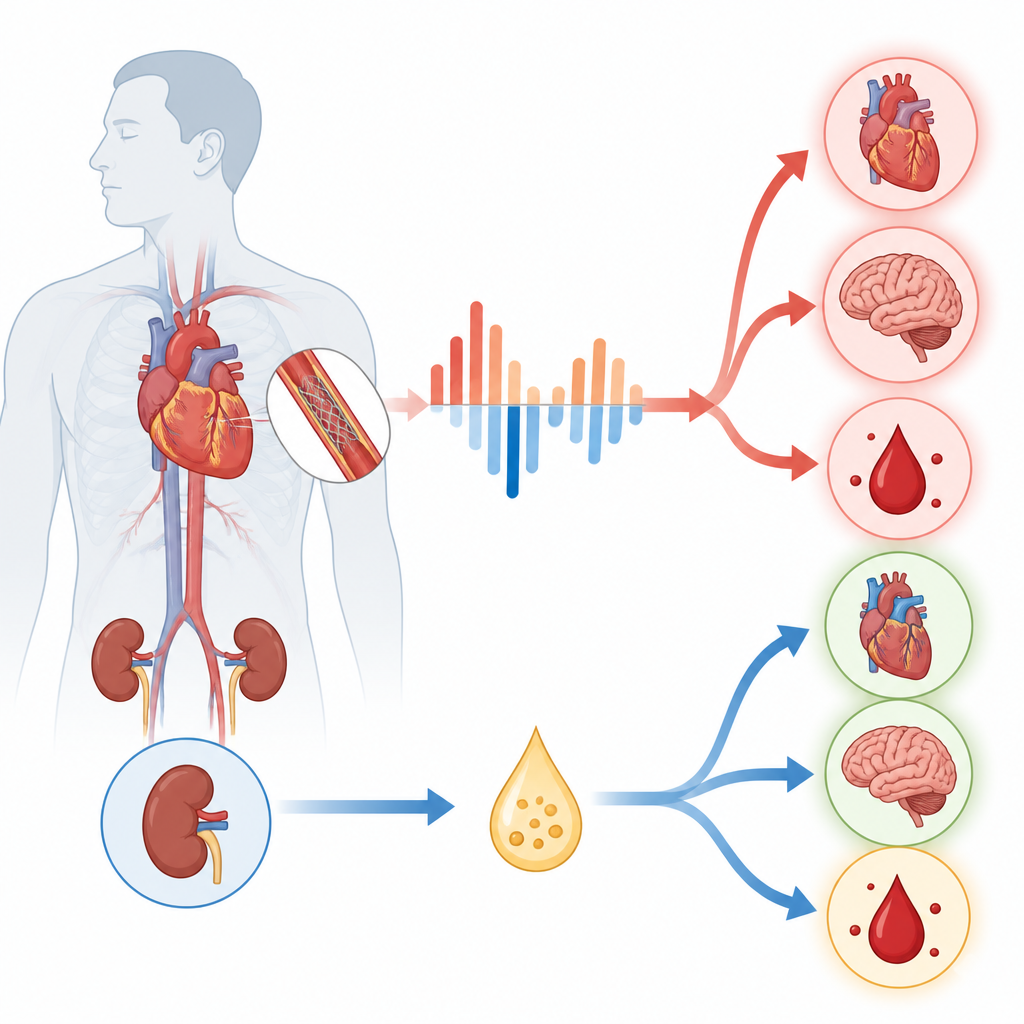
People who have had a stent placed to open clogged heart arteries often wonder what comes next for their long term health. This study looks at two everyday checks a doctor can do a simple urine dipstick and repeated blood pressure readings and asks whether they can help flag which patients face higher risks of future heart problems, strokes, or serious bleeding after their procedure.
Two simple clues from kidneys and blood pressure
The researchers focused on protein in the urine, called proteinuria, and how much a person’s blood pressure swings up and down from visit to visit, known as blood pressure variability. Protein in the urine is a sign that small blood vessels, especially in the kidneys, are under strain. Large swings in blood pressure can stress artery walls in ways that a single clinic reading may miss. Both clues are easy to obtain in routine care, which makes them attractive candidates for improving follow up for patients who have undergone a coronary stent procedure.
Who was studied and how
The team analyzed 2,539 adults in Korea who had stents placed for coronary artery disease between 2012 and 2016. Everyone had a urine dipstick test while in the hospital, and their systolic blood pressure the top number was recorded repeatedly during follow up visits for up to five years. Protein in the urine was counted as present if the dipstick read 1 plus or higher. Blood pressure swings were measured using the standard deviation of those repeated readings and patients were split into low or high variability groups at the median value. That created four groups with or without protein in the urine, each with either low or high blood pressure variability.
What happened over five years
Over a median of about five and a half years, more than a quarter of the patients experienced at least one serious event, such as death, heart attack, stroke, repeat artery opening, or major bleeding. Patients who had protein in the urine at the time of their stent procedure were more likely to have these problems, even after taking into account age, kidney function, diabetes, and many other risk factors. Larger swings in blood pressure were also linked to higher rates of these bad outcomes. Those with both proteinuria and high blood pressure variability fared worst, with clearly higher rates of combined events, major heart and brain events, serious bleeding, and death than those with no proteinuria and steadier blood pressure.
How the two clues work together
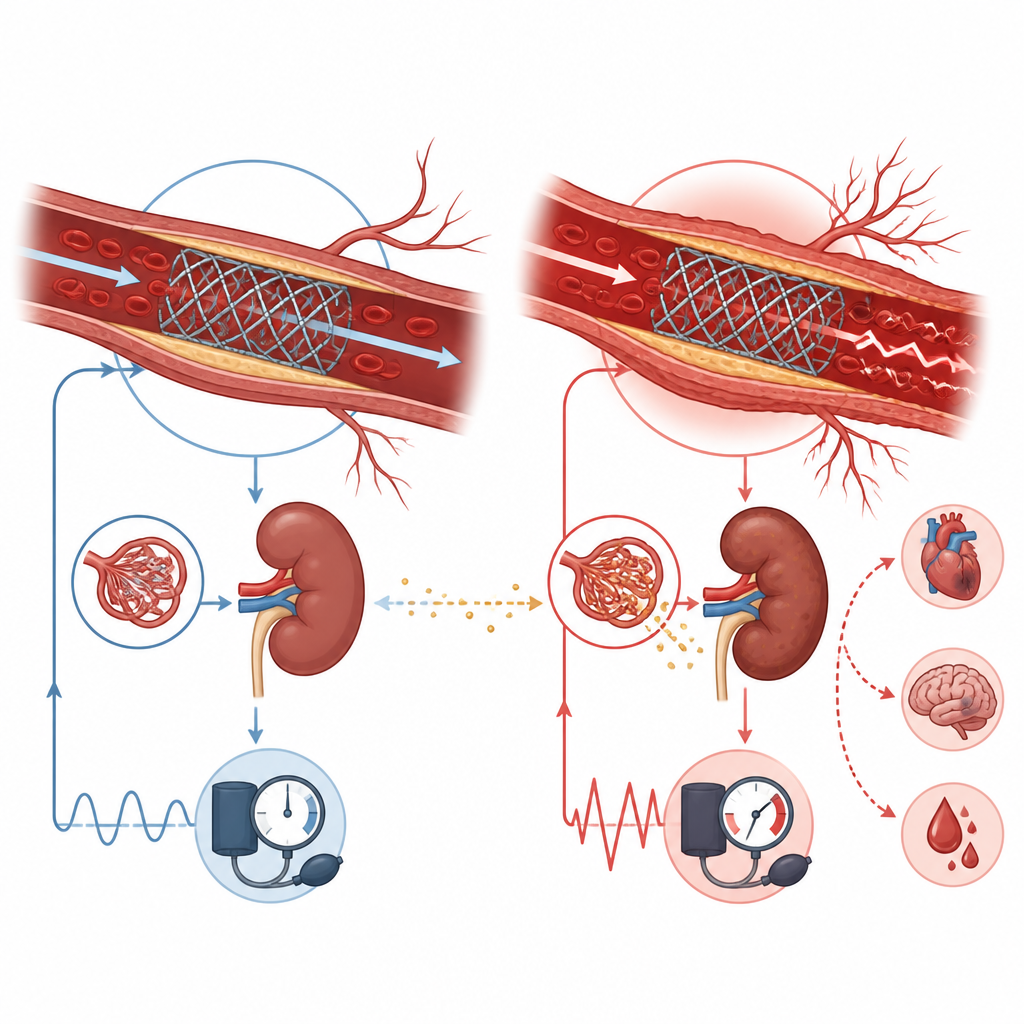
The study found that people with more severe proteinuria also tended to have more variable blood pressure, suggesting shared damage to blood vessels and control systems that steady circulation. Yet having high blood pressure swings alone, without protein in the urine, was not clearly tied to worse outcomes after accounting for other factors. This pattern points to proteinuria as a strong marker of underlying organ injury, with blood pressure variability adding further information about ongoing strain on the circulation. When the researchers added these two measures to a standard risk model that already included age, smoking, kidney function, and other factors, the model became modestly better at sorting patients into lower and higher risk groups.
What this means for patients and doctors
For people living with stents, the study suggests that a simple one time urine dipstick and careful tracking of blood pressure from visit to visit can help doctors see who may need closer monitoring and more intensive prevention efforts. Protein in the urine and unstable blood pressure appear to signal that blood vessels and organs are under extra stress and that the long term chances of heart attacks, strokes, major bleeding, or death are higher. While this research cannot prove cause and effect, it supports using these low cost checks as part of routine follow up to better identify high risk patients after coronary stenting and to guide efforts to protect the heart, brain, and kidneys over the years that follow.
Citation: Jeong, J., Kim, B.S., Kim, W. et al. Clinical impact of proteinuria and blood pressure variability on long-term outcomes after percutaneous coronary intervention. Sci Rep 16, 15760 (2026). https://doi.org/10.1038/s41598-026-47258-3
Keywords: proteinuria, blood pressure variability, coronary stent, cardiovascular risk, kidney and heart health