Clear Sky Science · en
Investigating the association between marital status and survival outcomes in patients with follicular thyroid carcinoma: a population-based analysis
Why social ties matter in thyroid cancer
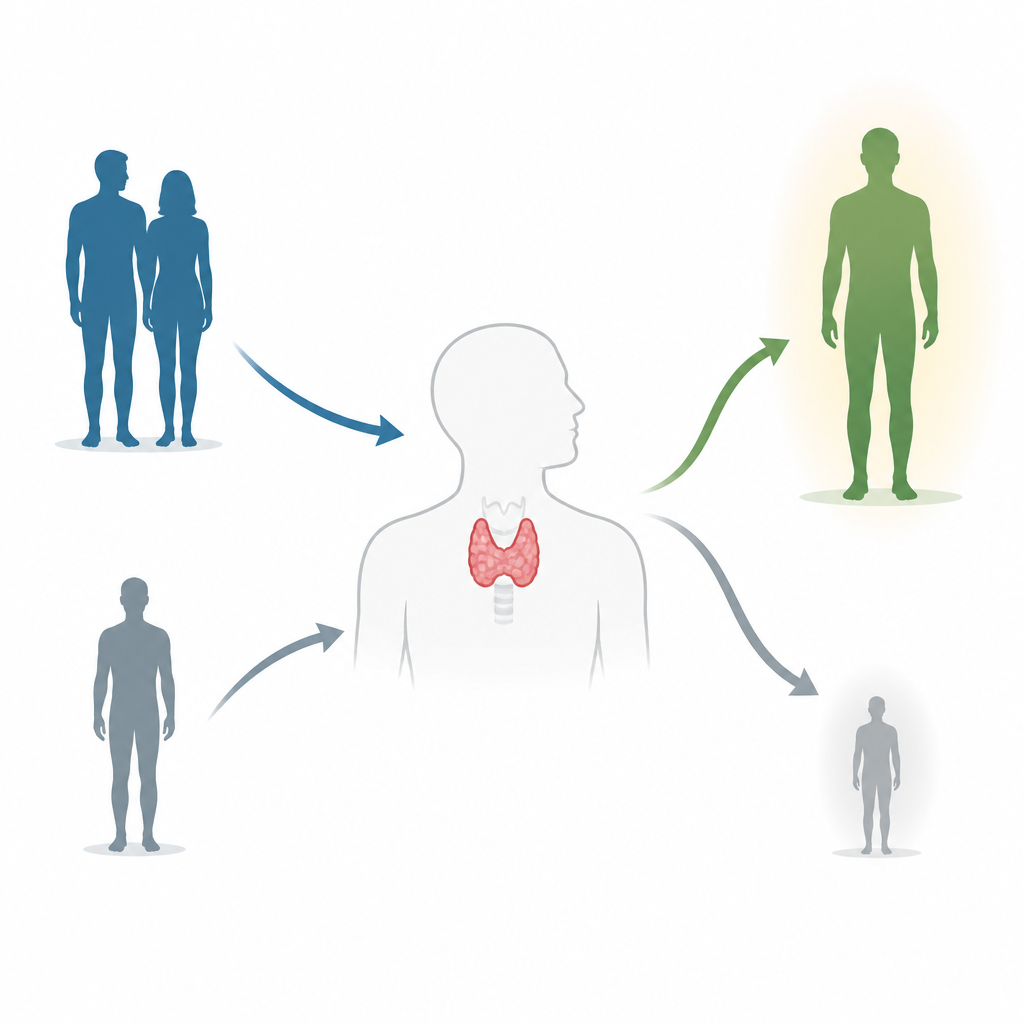
When we think about cancer, we tend to focus on tumors, genes, and treatments. But our relationships may quietly shape how long we live with the disease. This study asked a simple question with big human meaning: among people with a particular thyroid cancer, do those who are married live longer than those who are not, even when they receive similar medical care?
A closer look at a particular thyroid cancer
The researchers focused on follicular thyroid carcinoma, a less common but often more aggressive form of thyroid cancer. Although it makes up only a small share of thyroid cancers, it is more likely to invade blood vessels and spread beyond the thyroid gland, which makes understanding its risk factors especially important. Many studies have linked marital status to survival in other cancers, but its role in this specific thyroid cancer had not been carefully examined in a large group of patients.
Using a national cancer registry as a window
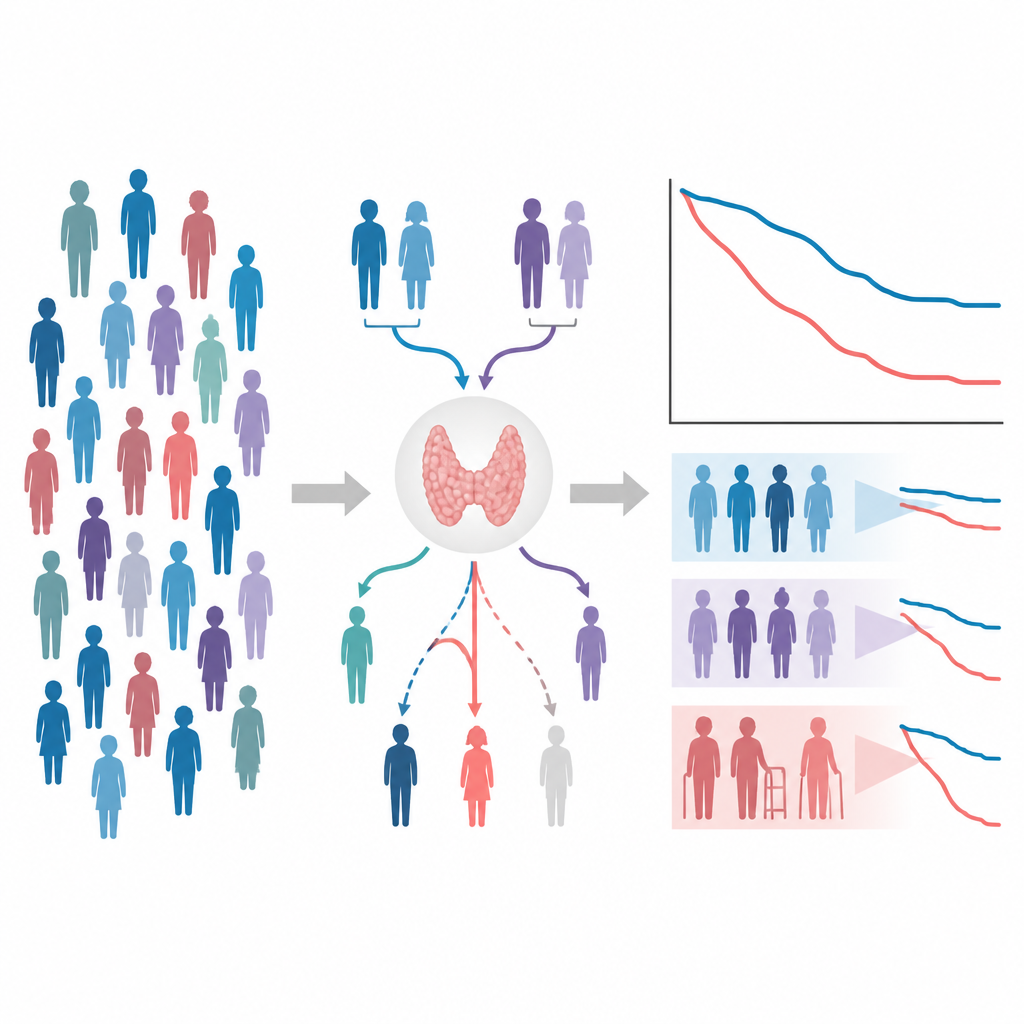
To explore this question, the team used the U.S. Surveillance, Epidemiology, and End Results (SEER) database, which collects information on cancer cases from about one quarter of the population. They identified 7,954 adults diagnosed with follicular thyroid carcinoma between 2004 and 2015. Each person was classified as married or unmarried, with the latter group including those who were single, divorced, separated, widowed, or in an unmarried partnership. The researchers then tracked two outcomes: overall survival, meaning death from any cause, and cancer specific survival, meaning death directly attributed to this thyroid cancer.
Balancing the groups for a fair comparison
People who are married often differ from those who are not in many ways, including age, income, and overall health. To make a fair comparison, the team used a method called propensity score matching. In simple terms, they paired each unmarried patient with a married patient who had very similar characteristics, such as age group, sex, race, tumor stage, and whether they had surgery. This created 2,615 closely matched pairs, helping to isolate the role of marital status itself rather than other background factors.
What the numbers revealed about survival
Before and after this careful matching, a clear pattern emerged: married patients lived longer than unmarried patients. Their chances of surviving overall and of avoiding death from thyroid cancer were both higher. Even after adjusting for many medical factors, unmarried patients had roughly one and a half times the risk of dying, whether from any cause or from the cancer itself. The benefit of being married was especially strong among people aged 65 and older, while it appeared weaker and harder to measure in younger adults. Interestingly, the advantage of marriage looked similar for men and women, suggesting that both sexes may gain from the support of a partner.
What this means for patients and care teams
The study does not suggest that marriage itself is a treatment or that people should change their relationship status for health reasons. Instead, it points to the power of social support. Spouses may encourage timely checkups, help manage medications and appointments, and provide emotional and financial backing that ease stress and improve healthy habits. For doctors and nurses, marital status may be a useful signal to identify patients who need extra psychosocial and practical support. In plain terms, the findings say that for people facing this thyroid cancer, having strong, reliable human connections can be as important as any lab value when it comes to long term survival.
Citation: Yao, Z., Jiang, R., Dai, R. et al. Investigating the association between marital status and survival outcomes in patients with follicular thyroid carcinoma: a population-based analysis. Sci Rep 16, 15955 (2026). https://doi.org/10.1038/s41598-026-47247-6
Keywords: follicular thyroid carcinoma, marital status, social support, cancer survival, SEER database